Unlock Hidden Cabinet Space: Essential Kitchen Storage Strategies
Homeowners frequently face the challenge of limited kitchen storage, where cabinets overflow with essentials and everyday items compete for space. A survey by home improvement experts reveals that storage shortages rank as the primary complaint for nearly 50 percent of kitchen owners. Fortunately, untapped cabinet space exists in many kitchens, often overlooked due to outdated layouts or inefficient use of available areas.
This comprehensive guide outlines proven methods to access that hidden potential. Each strategy focuses on cost-effective implementations, drawing from professional insights to ensure practicality and durability. By implementing these approaches, readers can achieve a more organized kitchen that supports daily routines while maintaining an appealing aesthetic.
1. Harness Vertical Space for Maximum Capacity
Quick Insight: Vertical areas above upper cabinets and within lower units can yield up to four additional square feet of storage per section.
Kitchens often underutilize height, leaving gaps that accumulate dust rather than serve a purpose. Install shallow shelves atop upper cabinets to store lightweight items such as seasonal platters or extra glassware. Inside cabinets, add risers or adjustable brackets to create layered storage, allowing items to stack without compromising accessibility.
Cabinet specialist Marc Duran of SmartFit Remodeling notes, "Clients frequently overload single shelves with heavy pots, leading to instability. Dividing the vertical space into distinct levels prevents accidents and improves retrieval efficiency."
For taller ceilings, consider mounting narrow wall cabinets high above the main units. These hold infrequently used appliances like blenders or holiday baking tools. Always secure installations with robust hardware and pair them with a stable step stool to ensure safety during use.
2. Leverage Cabinet Doors for Supplementary Storage
Quick Insight: Door-mounted racks and hooks can add 20 percent more storage without encroaching on interior space.
Cabinet doors represent an underappreciated surface for organization. Attach slim racks to the inside of doors to hold spices, utensils, or cleaning supplies, keeping them within easy reach during meal preparation. Opt for over-the-door systems that adjust to fit various door sizes and weights.
In pantries or deep cabinets, magnetic strips or adhesive hooks secure metal lids, knives, or small tools directly to the door. This method frees up shelf space for bulkier items and reduces clutter on counters. Professional organizers recommend selecting rust-resistant materials to withstand kitchen humidity and frequent handling.
Homeowners can complete this upgrade in under an hour with basic tools. The result offers immediate relief from drawer overflow, creating a smoother workflow in high-traffic areas.
3. Implement Pull-Out Systems for Effortless Access
Quick Insight: Pull-out mechanisms expand accessible cabinet volume by 30 percent, eliminating the need to rummage through depths.
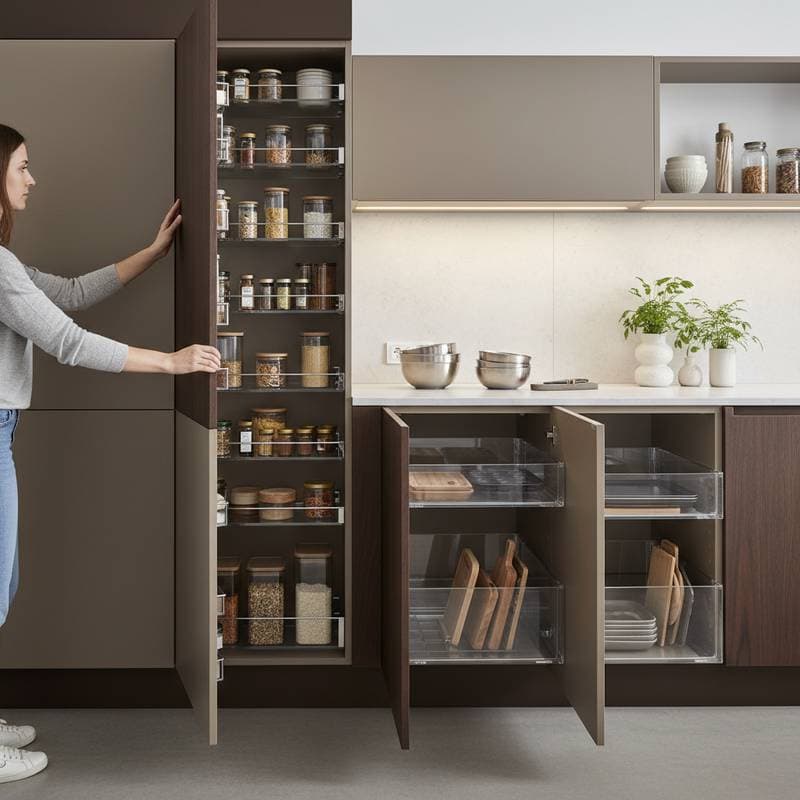
Deep cabinets often hide items at the back, turning simple tasks into frustrating searches. Pull-out shelves and trays slide forward on smooth glides, bringing contents into view and within grasp. These systems prove ideal for pots, pans, and dry goods storage.
Key options include sliding pantry units for jars and boxes, pull-out bins for recycling under sinks, and rotating carousels for corner spaces. A standard installation kit, priced affordably, requires minimal carpentry skills or professional assistance.
Interior designer Elena Vasquez shares, "Pull-outs transform dead space into dynamic areas. In one project, we increased a client's usable storage by reorganizing a single base cabinet, saving them hours weekly on meal prep."
Maintenance remains straightforward; lubricate tracks periodically to preserve smooth operation over years of use.
4. Optimize Corners with Rotating and Extending Solutions
Quick Insight: Corner-specific organizers recover up to 40 percent of otherwise wasted angular space in L-shaped cabinets.
Blind corners in kitchens trap items out of sight, reducing overall efficiency. Lazy Susan trays rotate fully to expose contents, while pull-out corner units extend forward for complete access. These solutions fit standard cabinet dimensions and accommodate heavy loads like mixers or storage bins.
Select wood or metal constructions with ball-bearing mechanisms for durability. For smaller corners, swing-out racks pivot to reveal hidden compartments. This approach not only maximizes space but also enhances safety by preventing items from toppling during retrieval.
Many retailers offer customizable kits that integrate seamlessly with existing setups. Testing the rotation in-store ensures compatibility with your cabinet's layout, providing long-term functionality without frequent adjustments.
5. Revitalize Under-Sink Areas with Custom Organizers
Quick Insight: Tiered, pipe-accommodating racks convert chaotic under-sink zones into structured storage for cleaners and tools.
Plumbing and irregular shapes render under-sink spaces notoriously difficult to organize. Install adjustable caddies that navigate around pipes, featuring multiple levels for bottles, sponges, and trash bins. Tension rods or slide-out drawers further compartmentalize the area.
Choose moisture-resistant options like vinyl-coated wire or sealed plastic to combat dampness. A weekend DIY project suffices for most installations, using measuring tape and brackets for precise fitting.
This upgrade yields quick wins: items stay contained, leaks become easier to spot, and floor space clears for other uses. The transformation often feels like gaining an entirely new cabinet.
6. Upgrade Drawers with Modular Dividers and Inserts
Quick Insight: Custom dividers in deep drawers consolidate storage, replacing the need for multiple shallow units and improving visibility.
Drawers excel at holding utensils and gadgets but quickly devolve into jumbles without proper division. Insert adjustable partitions or bamboo trays to section off silverware, linens, or baking tools. Soft-close features prevent slamming and protect contents.
For base cabinets, convert fixed shelves into pull-out drawers using retrofit kits. This change suits heavy items like stand mixers, distributing weight evenly across the floor.
Kitchen consultant Raj Patel advises, "Modular systems adapt to changing needs. Start with basic dividers and expand as your storage habits evolve, ensuring sustained organization."
Budget for quality materials to avoid warping; the investment pays off through reduced search times and a tidier appearance.
7. Incorporate Hidden Compartments and Wall-Mounted Features
Quick Insight: Concealed panels and wall racks add discreet storage layers, blending functionality with design elegance.
For advanced users, integrate toe-kick drawers under lower cabinets or magnetic wall strips beside units. These hide essentials like cutting boards or spices without altering visible layouts.
In island setups, build slim pull-outs within base moldings. Wall-mounted pegboards near sinks organize pots and drying racks vertically, freeing counter space.
Ensure installations align with load-bearing limits; consult measurements for seamless integration. These elements elevate kitchen aesthetics while solving persistent storage challenges.
Prioritize and Execute Your Storage Upgrades
Select upgrades based on your kitchen's pain points, such as corner access or under-sink disarray. Begin with low-cost options like door racks or risers to build momentum. Measure spaces accurately before purchasing to guarantee fit and avoid returns.
Track improvements in daily efficiency, from faster meal prep to less clutter. As needs evolve, layer additional solutions for a customized, enduring setup. These targeted changes deliver substantial benefits, fostering a kitchen that supports lifestyle demands without the upheaval of remodeling.