Mastering Waterproofing for Leak-Proof Wet Rooms
Home renovation trends indicate a rising popularity of wet rooms, particularly in urban apartments and contemporary residences. These spaces feature open layouts, continuous flooring, and a luxurious, spa-inspired ambiance. However, the success of such designs hinges on robust waterproofing. A overlooked seam or inadequate seal can result in extensive water damage and structural issues. This guide outlines ten essential strategies to safeguard your wet room, drawing on professional insights and practical examples to support your 2025 remodel.
Effective waterproofing integrates multiple layers of protection, beginning with site preparation and extending to ongoing maintenance. Designers emphasize precision in every detail to balance form and function. The following strategies provide a comprehensive framework, illustrated with real-world applications from leading projects.
1. Assess Site Conditions and Plan Drainage
Before installation, evaluate the room's location and environmental factors, such as humidity levels or proximity to exterior walls. In coastal or high-moisture areas, prioritize enhanced ventilation and sloped flooring to direct water toward drains. Install a linear drain along the longest wall to capture runoff efficiently.
This approach ensures water flows away from vulnerable areas. For instance, in humid climates, a minimum slope of 1/4 inch per foot prevents pooling. Such planning forms the foundation for all subsequent layers, reducing the risk of subsurface moisture buildup.
2. Apply Continuous Waterproof Membranes
Location: Seattle loft
Designer: Formhaus Studio
Materials: Schluter waterproof membrane, porcelain terrazzo tiles
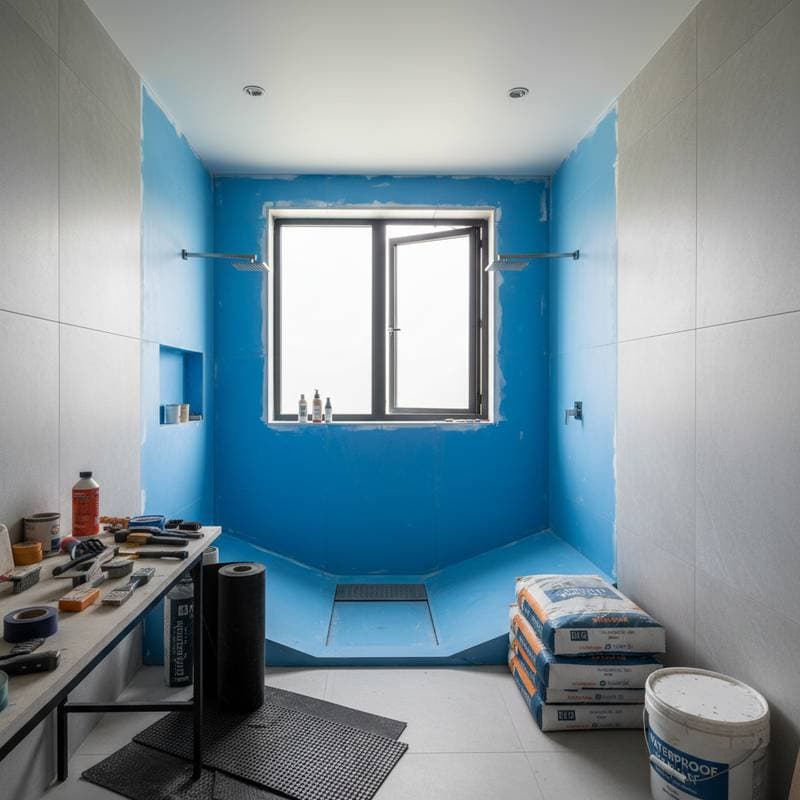
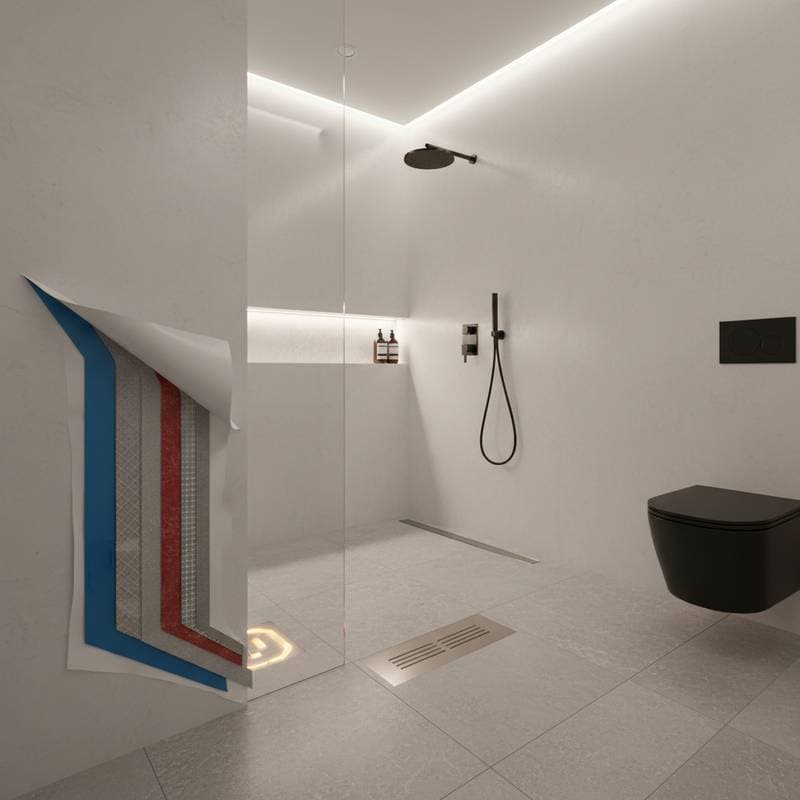
Encase the floor and lower walls in a seamless waterproof membrane to create a protective barrier. Extend the membrane up walls by at least 6 inches and overlap all joints by 2 inches for full coverage. Seal tile edges with epoxy grout to reinforce the system.
This method shields subfloor materials from moisture, prolonging their durability and inhibiting mold growth. In the Seattle project, the membrane's continuity prevented water penetration during heavy use. Visually, large terrazzo tiles provide a rhythmic pattern that complements minimalist fixtures, evoking stability and elegance.
3. Select Moisture-Resistant Materials
Choose materials with inherent water resistance, such as porcelain tiles or cement-based renders, over absorbent options like natural stone. Verify that substrates, including backer boards, carry certifications for wet environments. Apply a primer to enhance adhesion and seal all cut edges.
These selections minimize absorption and expansion risks. In practice, testing samples in simulated wet conditions confirms performance. This strategy integrates seamlessly with design goals, maintaining a cohesive appearance while prioritizing protection.
4. Incorporate Flexible Expansion Joints
Location: Vancouver townhouse
Designer: Kendra Lee Design
Materials: Cement-look porcelain tiles, silicone expansion joints
Position silicone joints at wall-floor transitions and corners to accommodate thermal movement. Space joints every 12 to 16 feet and fill them with a flexible, waterproof sealant. Slightly elevate the outer floor edge to form a low curb, containing splashes within the wet zone.
Flexible elements absorb shifts without compromising the waterproof layer. The Vancouver design used these joints to maintain integrity amid seasonal changes. The industrial cement aesthetic preserves clean lines, enhancing the room's geometric precision.
5. Optimize Shower and Drain Placement
Position the shower area to maximize natural drainage paths, avoiding corners where water might accumulate. Use offset drains or multiple points for even distribution. Ensure drain grates are flush with the floor and equipped with hair traps to prevent clogs.
Proper placement reduces standing water and eases cleaning. Calculations for flow rates, typically 2 gallons per minute, guide sizing. This foundational step supports layered defenses, ensuring efficient water evacuation.
6. Integrate Textured and Glazed Surfaces
Location: New York loft
Designer: Mason + Hill Interiors
Materials: Glossy white Moroccan zellige tile, stainless steel niche trim
Select tiles with dense glazes and textured profiles to repel water and simplify maintenance. Install stainless steel edging around niches and shelves to channel runoff away from seams. Apply a clear sealer post-installation for added resilience.
These features enhance light reflection and brightness in compact spaces. In the New York loft, zellige's artisanal irregularity created a luminous effect while directing water effectively. The setup promotes longevity without sacrificing visual appeal.
7. Reinforce Wall and Ceiling Transitions
Seal transitions between walls and ceilings with waterproof tape and caulk, especially in steam-prone areas. Use cement board or fiberglass panels for walls, ensuring all penetrations for fixtures are flashed properly. Test seals with a hose before final finishing.
This prevents vapor migration upward. In steamy environments, such reinforcements maintain dry conditions above the wet zone. The result is a unified enclosure that supports the overall design integrity.
8. Secure Corners with Prefabricated Panels
Location: Dublin row house
Designer: Carra Interiors
Materials: Vinyl waterproof backing boards, ceramic wall tiles
Employ interlocking waterproof panels for corners, applying a secondary sealant at every joint prior to tiling. Opt for materials resistant to delamination in damp settings. Align panels precisely to avoid gaps.
Corners represent high-risk zones for leaks, and this method provides robust defense. The Dublin project benefited from panels that withstood local moisture, preserving the space's compactness. Crisp tile alignments deliver a tailored, professional finish.
9. Layer Thermal Breaks and Insulation
Incorporate thermal breaks to manage temperature differentials that could cause condensation. Use insulated backer boards behind tiles and ensure ventilation gaps around fixtures. Monitor for cold spots during planning to adjust accordingly.
These layers prevent interstitial moisture from forming. Combined with heating elements, they maintain comfort and dryness. This strategy elevates the wet room's habitability, aligning protection with user experience.
10. Finish with Seamless Coatings
Location: Toronto condo
Designer: Harper & Grey Design
Materials: Waterproofing tape, microcement finish
Apply waterproof tape at all seams, followed by a microcement overlay for a monolithic surface. Trowel the finish in thin layers, curing each before the next. Avoid grout lines entirely to eliminate potential failure points.
The seamless application facilitates cleaning and resists wear. In the Toronto condo, this created an airy, sculptural quality through even light reflection. The technique ensures enduring performance in a compact layout.
Sustaining Your Wet Room's Performance
Regular maintenance preserves the waterproofing system's effectiveness. Clear drains monthly to avoid backups, and clean surfaces with mild, non-abrasive solutions. Conduct annual inspections of seals and joints, resealing as needed to address minor wear.
These habits extend the lifespan of your investment. A well-maintained wet room delivers ongoing serenity, where design and durability coexist. Approach your remodel with attention to these details, and enjoy a space that withstands time and use.