
Introduction to Wet Room Waterproofing
A wet room transforms a standard bathroom into an open, seamless environment where water flows freely without barriers. Proper waterproofing ensures durability, prevents leaks, and maintains aesthetic appeal over time. This 2026 checklist provides a structured approach, from initial planning to final touches, tailored for both DIY enthusiasts and professionals seeking reliable results.
1. Plan the Layout and Wet Zones
Effective planning lays the foundation for a successful wet room. Identify areas exposed to water, such as the shower zone, and design the space to accommodate smooth water drainage.
- Materials: Blueprints, laser level, and moisture-resistant flooring plans.
- Design Strategy: Define wet zones extending at least 1.2 meters from the showerhead; incorporate a minimum 1:40 gradient toward the drain to guide water flow.
- Functionality: This prevents water pooling and protects adjacent dry areas from splashback.
- Visual Impact: A well-planned layout creates an illusion of spaciousness, enhancing the room's serene atmosphere.
2. Prepare the Subfloor and Walls
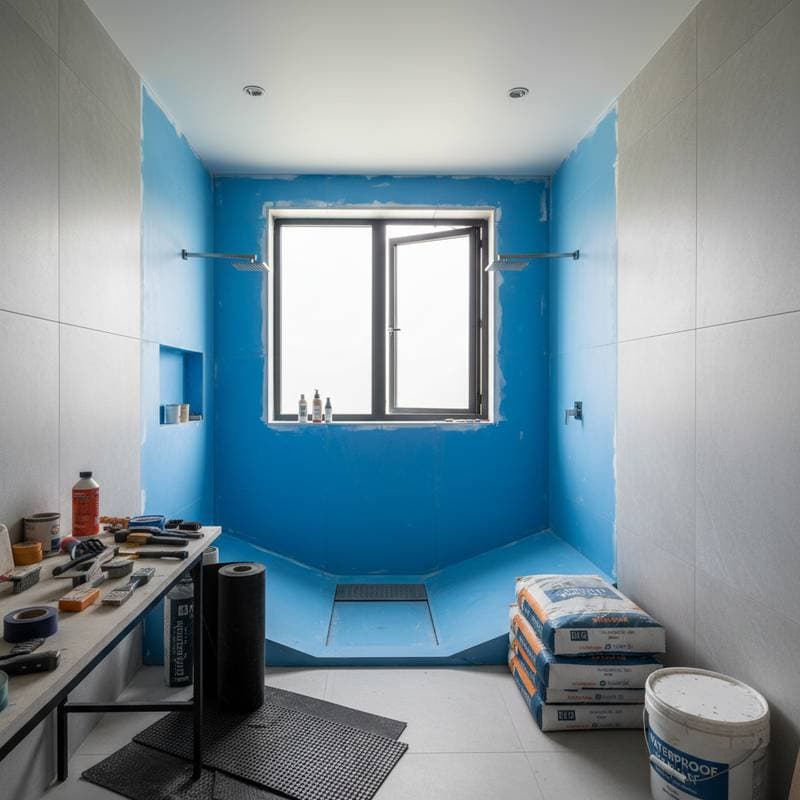
Preparation ensures a stable base for subsequent layers. Remove old flooring and inspect for structural integrity before building up the substrate.
- Materials: Cement backer board, self-leveling compound, and waterproof primers.
- Design Strategy: Install backer board on walls up to 2 meters high; apply self-leveling compound to achieve a flat, sloped subfloor.
- Functionality: A level surface supports even membrane adhesion and tile placement, reducing future cracks.
- Visual Impact: Solid preparation allows for clean lines in the final design, contributing to a polished appearance.
3. Install the Drainage System
Drainage forms the core of water management in a wet room. Position and secure drains to handle volume efficiently without backups.
- Materials: Linear trench drains, PVC piping, and silicone sealants.
- Design Strategy: Center the primary drain in the wet zone; connect secondary overflows for added safety.
- Functionality: Efficient drainage removes water quickly, minimizing slip hazards and subfloor saturation.
- Visual Impact: Sleek, integrated drains maintain the floor's continuous surface, promoting a minimalist aesthetic.
4. Apply the Waterproof Membrane
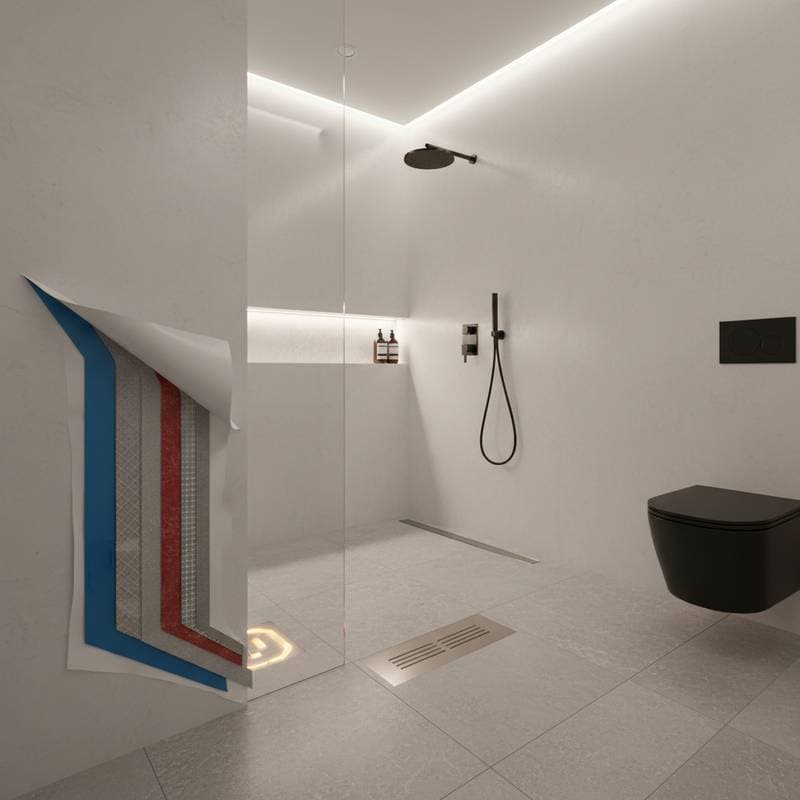
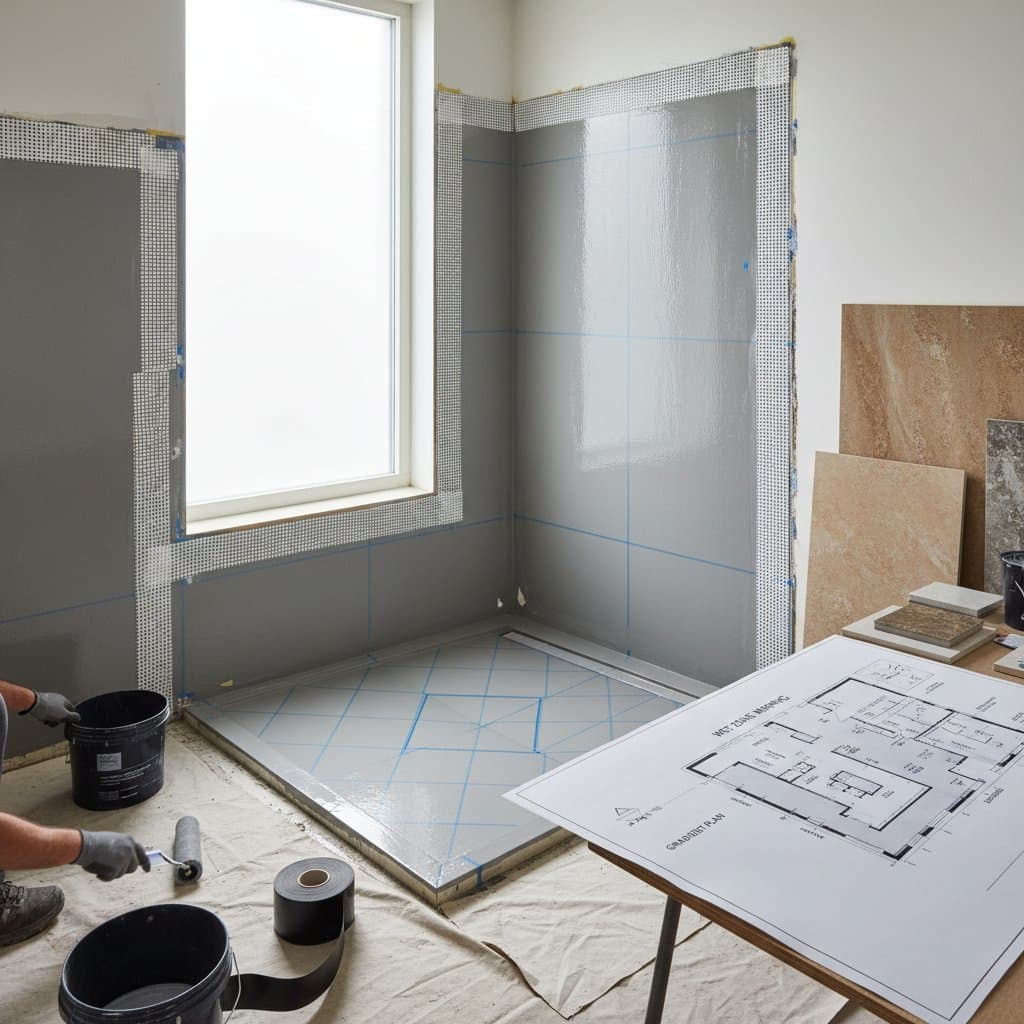
This step serves as the protective core of the wet room. Coat the floor and walls with a continuous membrane extending at least 300 millimeters above the planned tile height to form a reliable barrier.
- Materials: Liquid-applied membranes, sealing tapes, and corner reinforcing strips.
- Design Strategy: Overlap all joints by a minimum of 50 millimeters; reinforce corners and floor-wall transitions with specialized strips for comprehensive coverage.
- Functionality: The membrane prevents water penetration into subfloors and wall cavities, safeguarding against mold and structural damage.
- Visual Impact: Hidden beneath finishes, it preserves the design's integrity, ensuring long-term vibrancy without visible wear.
5. Test the Waterproof Membrane
Testing verifies the membrane's effectiveness before proceeding. Simulate real-world conditions to detect and address any vulnerabilities early.
- Materials: Water hoses, flood trays, and inspection plugs.
- Design Strategy: Flood the area to a depth of 25 millimeters for 24 hours; monitor for leaks at joints and penetrations.
- Functionality: Successful testing confirms the system's watertightness, avoiding costly repairs post-installation.
- Visual Impact: It supports a flawless finish, allowing tiles and fixtures to shine without underlying issues.
6. Select Resilient Finishes
Finishes define the room's character while contributing to waterproofing. Opt for materials engineered to withstand constant humidity and cleaning.
- Materials: Porcelain or stone tiles, microcement overlays, and large-format porcelain slabs; prefer matte or textured options for safety.
- Design Strategy: Extend wall materials to the floor for a unified look; select sizes that minimize grout lines to reduce water entry points.
- Functionality: These choices facilitate easy cleaning and resist fading or chipping from daily use.
- Visual Impact: Reflective or light-toned surfaces brighten the space, fostering a relaxing, expansive ambiance even in compact areas.
7. Prepare Surfaces for Tiling
Surface preparation ensures tiles adhere securely and maintain alignment. Prime and adjust substrates to match the chosen finishes.
- Materials: Tile primers, uncoupling mats, and edge supports.
- Design Strategy: Apply primer over the membrane; use uncoupling mats on floors to absorb movement and prevent cracks.
- Functionality: Proper prep distributes weight evenly, enhancing the longevity of the installation.
- Visual Impact: It enables precise patterns, creating harmonious designs that elevate the room's elegance.
8. Tile with Precision
Precise tiling integrates all elements into a cohesive whole. Focus on alignment and slope to uphold both form and function.
- Materials: Flexible, waterproof tile adhesive, epoxy-based grout, and clip leveling systems.
- Design Strategy: Begin layout from the drain center and radiate outward; maintain the established gradient with adjustable spacers.
- Functionality: Sealed grout lines block moisture from reaching the substrate, preserving the waterproof barrier.
- Visual Impact: Aligned tiles guide the viewer's eye, instilling balance and tranquility in the design.
9. Seal Joints and Apply Grout
Sealing completes the tiling process. Fill and protect joints to fortify the entire system against water ingress.
- Materials: Silicone sealants for expansion joints, pre-mixed grout, and cleaning agents.
- Design Strategy: Apply sealant at wall-floor junctions and around fixtures; grout all tile gaps after initial drying.
- Functionality: These measures create flexible, impermeable barriers that accommodate minor shifts without failure.
- Visual Impact: Clean, uniform grout enhances tile patterns, contributing to a professional, inviting finish.
10. Install Fixtures and Fittings
Final installations must respect the waterproof layers. Position elements to integrate seamlessly without compromising integrity.
- Materials: Thermostatic wall-mounted mixers, hidden pipe valves, and corrosion-resistant stainless-steel components.
- Design Strategy: Secure fixings to wall studs or framing behind tiles; avoid drilling into the membrane where possible.
- Functionality: Stable installations resist vibration-induced damage, maintaining seals and preventing leaks.
- Visual Impact: Suspended elements promote a streamlined, contemporary profile that maximizes floor space.
Sustaining Your Wet Room's Performance
A well-executed wet room delivers enduring comfort and style. Regular inspections of seals and drains, combined with gentle cleaning routines, preserve its waterproof qualities. This checklist equips you to build a space that withstands daily demands while offering a rejuvenating escape for years ahead.