

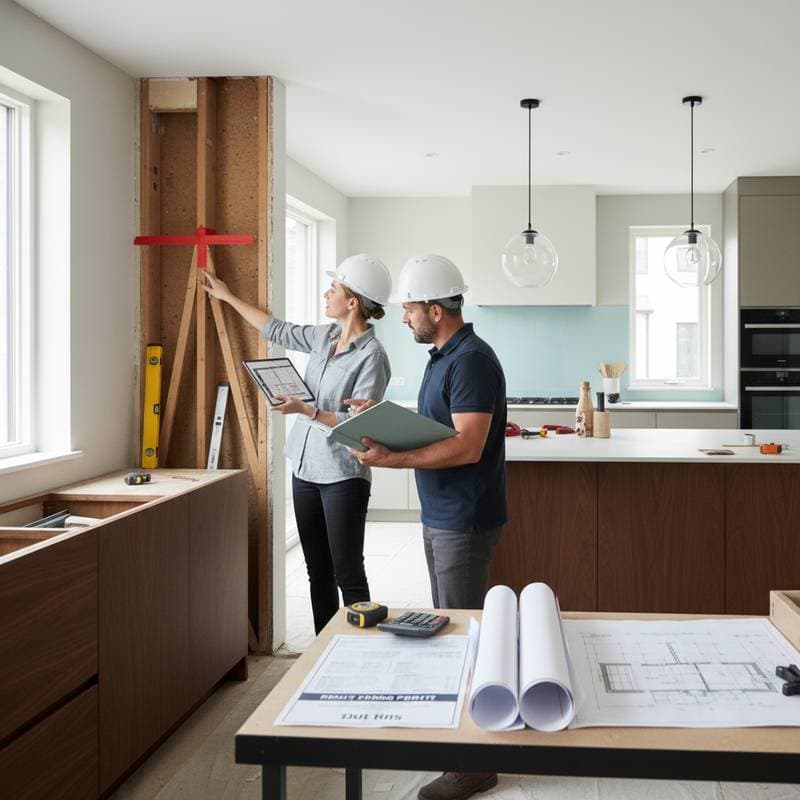
How Structural Checks Prevent Kitchen Remodel Overruns
Kitchen renovations promise enhanced functionality and aesthetic appeal, but they often encounter unexpected expenses that strain budgets. Homeowners frequently face overruns due to overlooked structural problems, unclear project definitions, or unanticipated regulatory requirements. By prioritizing structural assessments and meticulous planning, individuals can mitigate these risks and complete their projects efficiently. The strategies outlined below offer practical guidance to maintain financial control throughout the process.
1. Conduct Thorough Structural Checks at the Outset
Problem: Hidden structural flaws, such as weakened beams or outdated wiring, can halt progress and inflate costs significantly.
Context: A homeowner selects a new layout without inspecting load-bearing walls, only to discover that modifications require extensive reinforcements.
Solution: Hire a structural engineer or qualified inspector to evaluate the kitchen's framework before finalizing designs. Review reports for issues like joist damage, foundation cracks, or asbestos presence in older homes.
Technical Detail: Assessments typically involve visual inspections, moisture tests, and sometimes non-invasive scans to identify rot or pest damage without disrupting the space.
Benefit: Early detection allows for cost-effective repairs and informs design choices, preventing major rework later.
2. Define the Scope in Writing
Problem: Ambiguous project outlines lead to misunderstandings and additional charges for seemingly minor adjustments.
Context: One party interprets cabinet replacement as including hardware installation, while the other views it as an extra service.
Solution: Develop a comprehensive scope of work document that specifies every element, including demolition, installation, materials, finishes, and cleanup. Reference exact specifications, such as cabinet dimensions and countertop thicknesses.
Technical Detail: Structure estimates with separate line items for labor, materials, and overhead to ensure transparency and facilitate bid comparisons.
Benefit: This approach minimizes disputes and enables precise tracking of progress against the original plan.
3. Budget for Markups and Contingencies
Problem: Overlooking contractor margins or unforeseen issues results in budget shortfalls midway through the project.
Context: Initial quotes appear affordable, but accumulated markups on subcontractors and a 10 percent contingency for surprises push totals higher.
Solution: Allocate 15 to 20 percent of the total budget for contingencies and review quotes for built-in markups on materials and labor. Consult multiple contractors to benchmark fair pricing.
Technical Detail: Markups typically range from 10 to 30 percent; factor in inflation for 2026 material costs, which may rise due to supply chain variables.
Benefit: A buffered budget provides flexibility for adjustments without derailing the entire financial plan.
4. Plan for Permits and Inspections Early
Problem: Delays from unaccounted permits or failed inspections can extend timelines and incur fines or rework expenses.
Context: Construction begins without awareness that local codes mandate separate approvals for electrical and plumbing alterations.
Solution: Collaborate with your contractor or architect to identify all necessary permits during the planning phase. Integrate inspection dates into the project schedule to avoid bottlenecks.
Technical Detail: Fees vary by location; most areas require building permits for structural changes and specialized ones for utilities, often costing several hundred dollars combined.
Benefit: Proactive compliance ensures steady advancement and shields against penalties or mandatory corrections.
5. Account for Appliance and Fixture Upgrades
Problem: Selecting high-end appliances without considering installation complexities leads to elevated labor and adaptation costs.
Context: A premium refrigerator requires custom cabinet adjustments and reinforced flooring, which were not anticipated in the initial estimate.
Solution: Evaluate appliance specifications against your kitchen layout early, opting for standard sizes where possible to simplify integration. Discuss compatibility with your contractor before purchases.
Technical Detail: Upgrades like induction cooktops may necessitate electrical panel upgrades to handle increased amperage, potentially adding thousands to the bill.
Benefit: Thoughtful selections balance desire for quality with practical installation, preserving budget integrity.
6. Understand Utility Relocation Costs
Problem: Shifting utilities such as plumbing or electrical lines often multiplies expenses due to labor-intensive rerouting.
Context: Relocating a sink to a central island uncovers the need for new venting, gas line extensions, and wall penetrations.
Solution: Retain utilities in their approximate original positions unless the design imperative justifies relocation. Map out all moves in preliminary drawings and obtain cost estimates upfront.
Technical Detail: Plumbing shifts beyond short distances can involve joist modifications or drain rerouting, triggering additional inspections and structural reinforcements.
Benefit: Minimizing relocations sustains cost predictability while accommodating essential layout improvements.
7. Factor in Waste Management and Cleanup
Problem: Demolition debris disposal and site preparation are frequently underestimated, leading to surprise fees at project end.
Context: Accumulated waste from cabinet removal and flooring demolition requires multiple haul-aways, each billed separately.
Solution: Include waste removal in the contract scope, specifying dumpster rentals or recycling services. Plan for daily cleanup to prevent hazards and maintain workflow.
Technical Detail: Disposal costs depend on volume and material type; hazardous items like lead paint demand specialized handling compliant with environmental regulations.
Benefit: Integrated planning streamlines operations and avoids last-minute expenditures on refuse management.
8. Verify Measurements Before Ordering Custom Items
Problem: Measurement errors result in costly returns, refits, or delays as custom orders fail to align with the actual space.
Context: Cabinets arrive oversized due to overlooked wall irregularities, necessitating alterations or replacements.
Solution: Perform multiple on-site measurements with laser tools for precision, and have your contractor confirm dimensions before placing orders. Account for tolerances in irregular spaces like older homes.
Technical Detail: Standard kitchen measurements include allowances for expansion; discrepancies as small as one-quarter inch can disrupt installations.
Benefit: Accurate verification ensures seamless assembly and eliminates expenses from errors.
Achieving a Balanced Kitchen Transformation
A well-executed kitchen remodel enhances home value and daily convenience when approached with foresight. By addressing structural elements, documenting details, and anticipating common pitfalls, homeowners secure a process that aligns vision with reality. Implement these measures to collaborate effectively with professionals, safeguard investments, and revel in a space designed for enduring satisfaction.