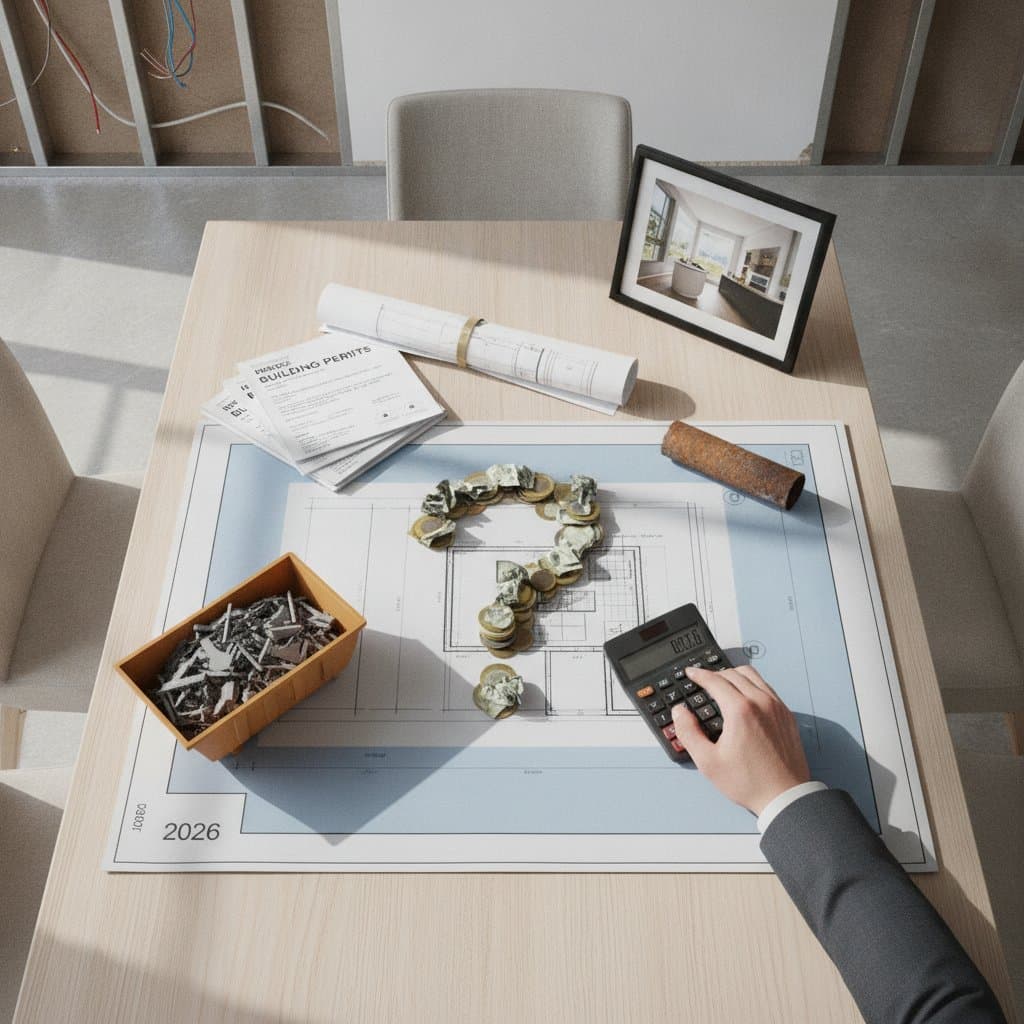

Maximize Pantry ROI: 2026 Kitchen Remodel Costs
A recent National Kitchen and Bath Association survey reveals that 42 percent of homeowners exceed their kitchen remodel budgets, with nearly one in three underestimating storage requirements. The pantry frequently emerges as an overlooked element that shapes both daily use and property appeal. Homeowners embarking on renovations must grasp pantry return on investment to curb expenses and elevate practical benefits.
1. Identifying the Real Problem: Hidden Pantry Costs
Homeowners often prioritize visible elements such as cabinets and surfaces during remodels, only to discover that inadequate storage disrupts the overall outcome. An inefficient pantry leads to crowded counters, increased food spoilage, and redundant purchases that inflate grocery bills. Research from the Home Improvement Research Institute indicates that effective organization boosts kitchen productivity by up to 35 percent, enhancing post-renovation contentment.
Pantries claim space that could support other kitchen functions. Lacking expert guidance, individuals may invest in ornamental details at the expense of usability. Effective budgeting begins by clarifying the pantry's practical role in routines, rather than focusing solely on appearance.
2. Professional Context: Where the Money Goes
Kitchen renovations rank among the priciest home upgrades, typically consuming 12 to 25 percent of a property's worth. Pantries represent 8 to 15 percent of the total kitchen allocation, varying by project scale and region. A simple reach-in pantry with adaptable shelves ranges from $1,200 to $3,000, whereas walk-in or butler's pantries can exceed $10,000 with additions like cabinets, illumination, and water lines.
Laura Jensen, Certified Kitchen Designer at Jensen Interiors, states, "A pantry remodel yields stronger ROI when it aligns with kitchen operations. Homeowners integrating storage from the outset save 10 to 20 percent over later additions." Her Midwest-based firm handles moderate renovations, noting pantry ROI of 60 to 80 percent in unified designs.
3. Actionable Solutions: Designing for Efficiency and Value
Successful pantry updates harmonize practicality and style through a structured process that emphasizes utility first.
Step 1: Define storage categories.
Sort items based on access frequency. Position everyday essentials at waist level for ease, reserving upper and lower areas for less-used bulk goods.
Step 2: Choose modular systems.
Ready-made shelves and adjustable units cost 30 to 50 percent less than bespoke woodworking while offering versatility. Modular wire options average $25 per linear foot, versus $75 for wooden builds.
Step 3: Optimize lighting and ventilation.
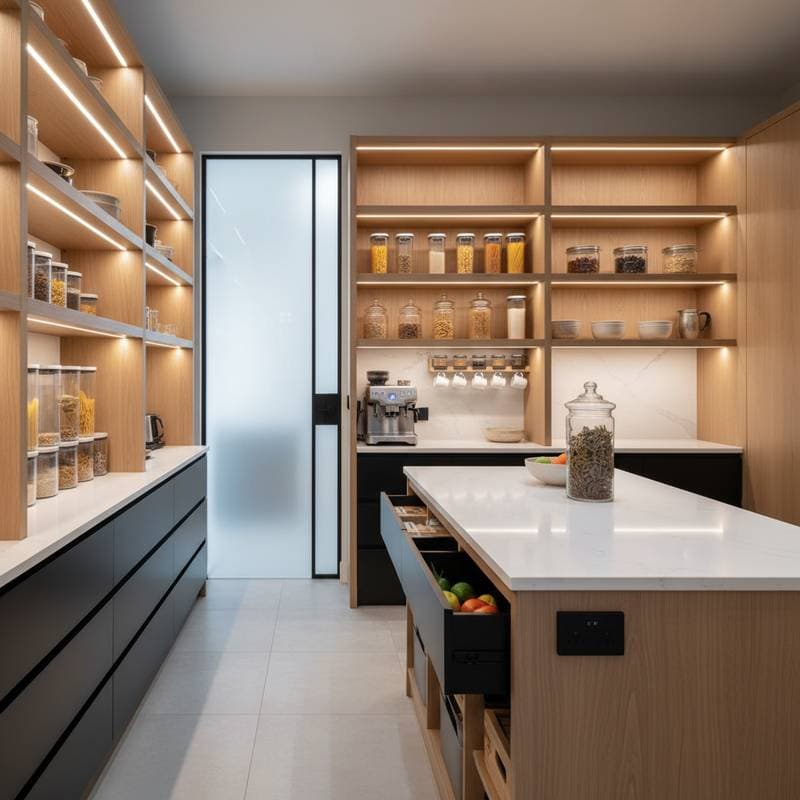
Install LED strips with motion activation for $200 to $500, including setup, to enhance visibility and curb spoilage. Add vents to manage moisture, preserving food longer in damp climates.
Step 4: Integrate smart organization.
Incorporate sliding drawers, rotating trays, and clear containers to minimize waste and simplify stock checks. Miguel Alvarez, project manager at Summit Home Renovations, observes, "Clients adding optimization tools recover expenses quicker through less spoilage and fewer shopping trips."
4. Cost Considerations: Budgeting with Transparency
Pantry projects fluctuate based on size, finishes, and configuration. These ranges offer a planning baseline:
- Basic upgrade: $1,500 to $3,000 covering fresh shelving, fresh paint, and basic lights
- Mid-range remodel: $4,000 to $8,000 including tailored cabinets, advanced lighting, and minor layout shifts
- High-end transformation: $9,000 to $15,000 for expansive walk-ins, beverage plumbing, and built-in devices
Reserve 10 percent of the budget for unforeseen issues like wall fixes, wiring changes, or floor matches. Remodeling Magazine's cost-to-value analysis shows that storage-focused kitchens gain 12 percent more in market value than those lacking such features.
Karen Patel, a certified financial planner focused on renovation funding, recommends, "Begin every project with an estimate padded by 15 percent. Small tweaks in wiring or woodwork frequently escalate totals."
5. Professional Resources: Choosing the Right Team
The ideal experts maintain oversight on spending and deliver superior results. Engage a coordinator to link designers, wiring specialists, and cabinet providers. For intricate setups, select a National Kitchen and Bath Association-certified designer to ensure compliance with ergonomics and codes.
When evaluating candidates, demand:
- Detailed cost breakdowns distinguishing supplies from workmanship
- Timeline projections tied to phased payments
- Warranty documentation for fixtures and fittings
Urban areas command labor rates of $80 to $125 hourly for skilled woodworkers, while rural zones average $50. Solicit bids from three sources to benchmark expenses and schedules.
6. Long-Term Benefits: Maintaining Your Investment
Post-renovation upkeep sustains the pantry's returns. Conduct periodic stock reviews to avoid excess that burdens structures and hampers flow. Opt for resilient surfaces like melamine coatings, which withstand spills and dampness at reduced prices compared to hardwoods, ensuring durability alongside visual quality.
Beyond sales potential, an ordered pantry fosters nutritious cooking, cuts discards, and streamlines prep. Track pre- and post-remodel food costs to observe savings that recoup outlays in two to three years.
Implement Your Pantry Plan
Achieve pantry ROI through rigorous budgeting and structured oversight. Establish clear financial limits, outline usage objectives, and collaborate with skilled teams to secure lasting advantages. Strategic choices in storage, illumination, and finishes amplify ease and equity growth. Treat the pantry as a core remodel component for optimal results.