

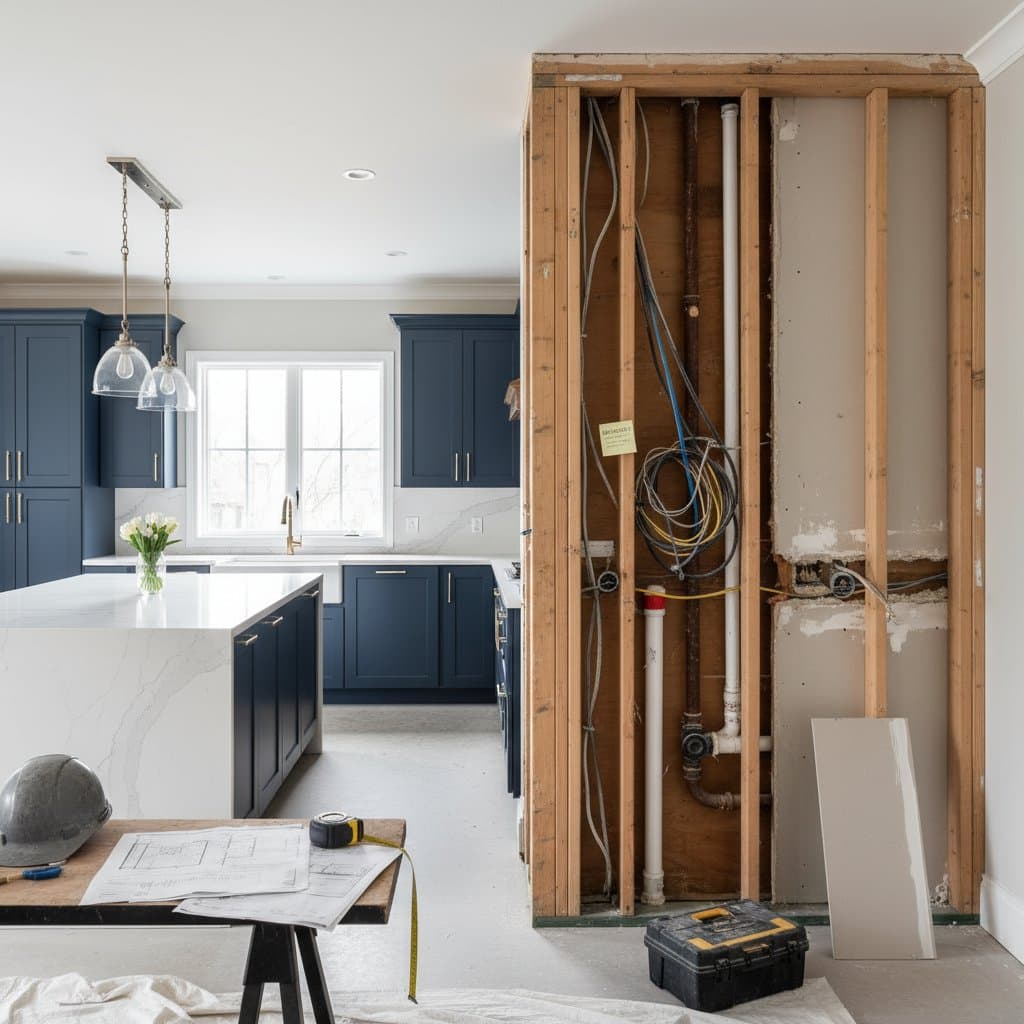
Hidden Kitchen Remodel Costs That Derail Your Budget
Kitchen renovations vary widely in scope, but certain unforeseen expenses consistently surprise homeowners. These hidden costs emerge from incomplete planning, ambiguous contracts, or overlooked home specifics. The key to success lies in foresight and detail-oriented preparation. This article details ten common pitfalls, each with clear explanations, contexts, solutions, and benefits to help you navigate the process effectively.
1. Overlooked Permits and Inspection Fees
Problem: Homeowners frequently underestimate the necessity and expense of required permits.
Context: Local regulations mandate permits for electrical, plumbing, and structural alterations. Inspections at various stages add to the tally, with fees varying by jurisdiction and project scale.
Solution: Consult your local building department early to compile a permit checklist. Include these costs in your initial budget, allocating 5 to 10 percent for unforeseen regulatory demands. Engage your contractor to handle submissions and inspections to streamline compliance.
Benefit: Compliance avoids fines, delays, or rework, ensuring your project proceeds smoothly and meets safety standards.
2. Structural Changes Trigger Chain Reactions
Problem: Removing walls or altering layouts often reveals complexities beyond initial expectations.
Context: Load-bearing walls demand reinforcement to preserve home stability. Such modifications involve engineering assessments, specialized materials, and potential foundation work.
Solution: Retain a structural engineer for a pre-demolition evaluation of load paths. Budget for beams like laminated veneer lumber or steel I-beams, plus installation labor. Obtain detailed plans to guide contractors accurately.
Benefit: This approach upholds building integrity, prevents costly halts during inspections, and delivers the desired open-concept space securely.
3. Electrical Upgrades Exceed Basic Expectations
Problem: Modern kitchens require robust electrical systems that older homes lack.
Context: High-wattage appliances, multiple outlets, and lighting circuits necessitate panel upgrades or dedicated lines. Code requirements evolve, often mandating ground-fault circuit interrupters in wet areas.
Solution: Commission an electrician to perform a load calculation early. Plan for subpanel additions if your main service proves insufficient. Specify outlet placements and circuit needs in your design phase to minimize rerouting.
Benefit: Reliable power distribution supports appliance performance, enhances safety, and eliminates future disruptions from overloaded systems.
4. Cabinetry Customization Adds Layered Fees
Problem: Selections for bespoke cabinet features accumulate unexpected charges.
Context: Adjustments in dimensions, hardware, or materials increase production time and costs. Sourcing from multiple vendors can introduce coordination fees and extended delivery schedules.
Solution: Prioritize essential customizations while opting for stock sizes in non-visible areas. Request a full breakdown of pricing tiers from suppliers, including any surcharges for mixed collections. Confirm all specifications in writing before ordering.
Benefit: This strategy yields a unified aesthetic that aligns with your layout, without unnecessary premiums on superficial details.
5. Plumbing Relocations Uncover Hidden Challenges
Problem: Shifting sinks, dishwashers, or islands disrupts existing pipework.
Context: Older plumbing may involve cast-iron lines prone to corrosion or misalignment. New configurations require venting adjustments and possible sewer line modifications.
Solution: Hire a plumber for a preliminary survey to map current infrastructure. Factor in costs for rerouting pipes, installing shutoff valves, and testing for leaks. Coordinate with other trades to avoid redundant wall openings.
Benefit: Efficient plumbing ensures optimal functionality, prevents water damage risks, and maintains project momentum.
6. Appliance Installation Is Not Always Included
Problem: Delivery services rarely encompass full setup for complex units.
Context: Gas ranges demand certified connections, while refrigerators need precise alignment and water line integrations. Built-ins require custom cabinet modifications for seamless fit.
Solution: Secure written confirmation of installation scopes from retailers and contractors. Verify requirements for venting, electrical grounding, and calibration. Schedule professional hookups concurrently with cabinet delivery to optimize timing.
Benefit: Comprehensive installation guarantees operational safety and efficiency, avoiding post-project service calls.
7. Countertop Fabrication and Installation Surprises
Problem: Material selections lead to overlooked fabrication complexities.
Context: Natural stone slabs vary in yield, causing waste fees for small remnants. Edge treatments, cutouts for sinks, and seams add labor-intensive steps.
Solution: Select slab sizes that match your layout to reduce trimming losses. Obtain templating services before final measurements. Include under-mount sink installations and sealing processes in your quote.
Benefit: Precise fabrication results in durable, visually appealing surfaces that withstand daily use without premature wear.
8. Flooring Transitions and Leveling Are Overlooked
Problem: Subfloor issues emerge during replacement, complicating smooth installations.
Context: Settling foundations create slopes, while moisture exposure damages joists. Transitions to adjacent rooms demand threshold materials for seamless flow.
Solution: Conduct a thorough subfloor inspection post-demolition, repairing any rot or unevenness with self-leveling compounds. Choose flexible transition strips for differing floor heights. Ensure adequate expansion gaps for materials like hardwood or vinyl.
Benefit: Level foundations promote even wear, minimize accident risks, and enhance the overall aesthetic cohesion.
9. Ventilation and HVAC Adjustments Accumulate
Problem: Enhanced cooking areas strain existing exhaust systems.
Context: Range hoods require ductwork extensions, often through attics or exteriors. Makeup air provisions comply with energy codes in tighter homes.
Solution: Assess current airflow capacity with an HVAC specialist. Plan for insulated ducts and exterior terminations to maintain efficiency. Integrate smart controls for optimal performance without excess energy use.
Benefit: Effective ventilation removes odors and moisture, improving indoor air quality and appliance longevity.
10. Design Revisions Inflate Labor Costs
Problem: Alterations during construction cascade into broader disruptions.
Context: Changes post-material procurement incur restocking penalties and rescheduling fees. Subcontractor downtime multiplies hourly charges.
Solution: Lock in designs using comprehensive blueprints and virtual models for pre-approval. Establish a change-order protocol with fixed pricing for modifications. Foster regular check-ins to resolve ambiguities promptly.
Benefit: Disciplined planning sustains timelines, curbs expense overruns, and reserves funds for genuine needs.
Securing Value in Your Renovated Kitchen
A well-executed kitchen renovation hinges on proactive cost management rather than mere expense reduction. By addressing these ten areas, homeowners allocate resources toward elements that elevate daily life. Select resilient finishes, honor architectural constraints, and formalize all terms in contracts. This method transforms potential obstacles into opportunities for a space that endures and delights for years.