

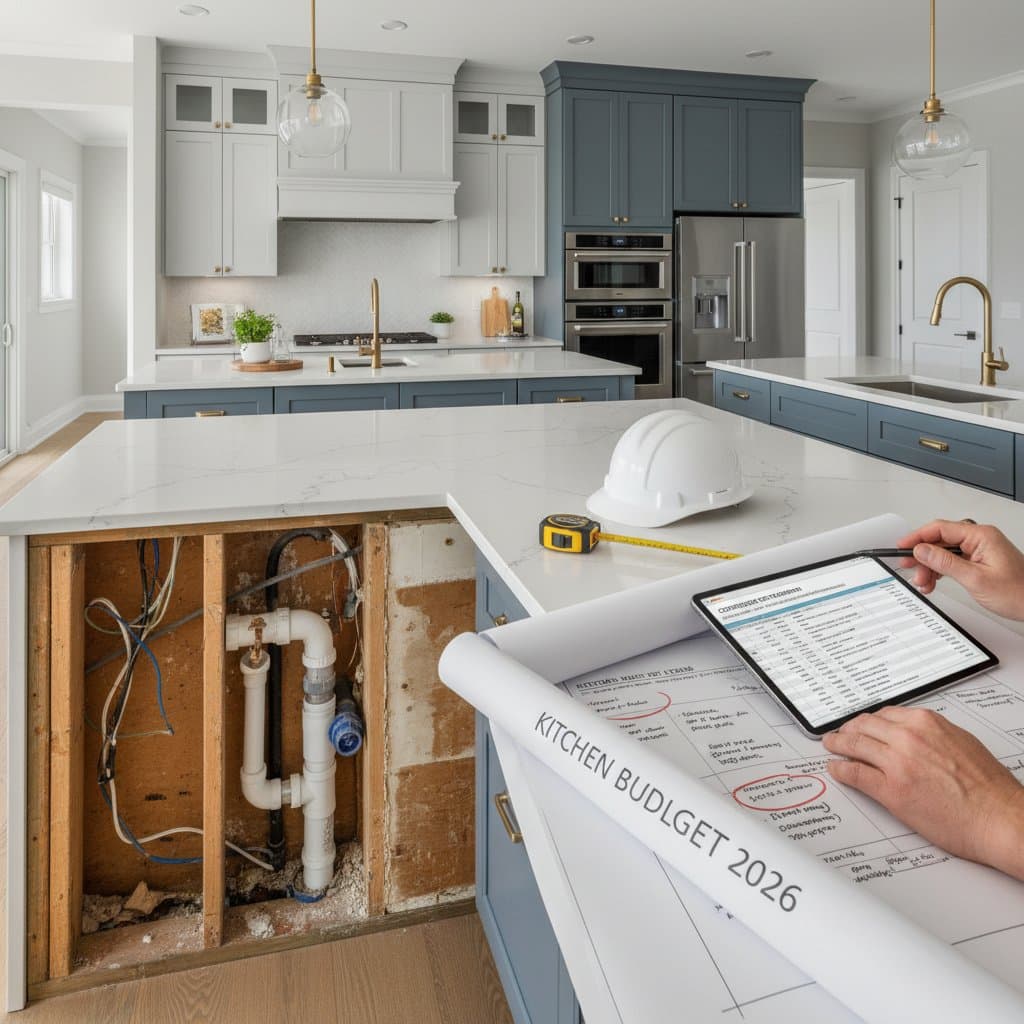
Anticipate Hidden Costs in Your Kitchen Remodel
Imagine planning the perfect kitchen update, from selecting cabinet finishes to envisioning family meals in the revamped space. Enthusiasm builds as designs take shape, yet unforeseen expenses frequently transform this vision into a budgetary challenge. Hidden fees arise in kitchen projects because of the intricate interplay among plumbing, electrical systems, cabinetry, and appliances. Proactive planning reveals these potential pitfalls early, allowing for a controlled and rewarding renovation process.
Reasons Hidden Costs Emerge
Homeowners encounter unexpected expenses even with meticulous preparation. Kitchens involve multiple interconnected elements, and initial estimates rely on surface-level assessments. Issues concealed within walls or beneath floors surface during demolition, necessitating additional work.
Recognizing the origins of these costs enables better preparation. Structural modifications or seemingly simple design choices often demand extra labor and materials. Targeted vigilance serves as the primary safeguard against financial overruns.
1. Plumbing and Electrical Discoveries
Relocating sinks, dishwashers, or ovens requires more than repositioning items. Redirecting pipes or wiring escalates expenses rapidly. Problems like obsolete wiring, rusted pipes, or non-compliant setups typically emerge post-demolition.
Action steps: Engage a certified plumber and electrician for pre-design inspections of current systems. They identify risks and estimate necessary upgrades accurately. Factor in minor enhancements, such as updated shutoff valves or additional outlets, regardless of fixture placements.
2. Cabinet Adjustments and Customizations
Cabinets represent a major investment in kitchen remodels, and minor tweaks can incur significant charges. Tailored dimensions, supplementary trim, or installation hurdles accumulate costs swiftly.
Action steps: Conduct precise measurements and verify all specifications prior to ordering. Inquire about standard cabinet options that align with your configuration to minimize custom work. When combining off-the-shelf and bespoke units, ensure consistent finishes and hardware to prevent costly reorders.
3. Subfloor and Structural Fixes
Removing outdated cabinets and flooring often exposes concealed damage. Moisture intrusion, decay, or irregular subfloors demand immediate attention before installing new surfaces. Such issues remain invisible until work commences.
Action steps: Allocate a contingency reserve of 10 to 15 percent of your overall budget for these eventualities. This approach reduces stress compared to seeking funds mid-project. For older homes, prioritize evaluations for structural integrity and water damage.
4. Appliance Fit and Setup Expenses
An attractive discount on a range or refrigerator may prove costly if it mismatches your space or demands specialized connections. Requirements for hood venting, refrigerator water lines, or stove gas lines introduce additional outlays.
Action steps: Verify appliance measurements, electrical needs, and ventilation specifications before purchase. Consult your contractor to confirm seamless integration. Incorporate delivery charges, old unit removal, and any structural adjustments into your financial plan.
5. Permitting, Inspections, and Regulatory Adherence
Permits and inspections carry costs that many overlook. Local regulations may require distinct approvals for plumbing, electrical, or structural alterations. Non-compliance risks project halts or penalties.
Action steps: Request a detailed permit breakdown and associated fees from your contractor at the outset. If overseeing the project independently, contact your municipal building office for clarity. Account for inspection timing and expenses across project phases where mandated.
6. In-Process Design Modifications
Seeing progress often inspires tweaks, such as altering tile layouts or selecting premium countertops. These decisions enhance outcomes but invariably impact expenses and timelines.
Action steps: Lock in your design prior to construction and adhere to it rigorously. For unavoidable changes, obtain a documented change order specifying added costs and revised schedules. This practice fosters clear communication and averts disputes.
7. Material Delivery and Logistics Charges
Vendors impose fees for transporting cabinets, countertops, and flooring. Handling fees apply to bulky items, and damage during transit or storage leads to replacement expenses borne by the homeowner.
Action steps: Secure quotes for all delivery and handling from suppliers in advance. Time arrivals to facilitate secure indoor storage. Examine materials upon receipt to address defects promptly before fitting.
8. Debris Removal and Site Management
Disposing of waste, worn cabinets, and flooring generates notable costs, particularly with substantial debris volumes. Certain contractors bundle basic cleanup, while others bill disposal independently.
Action steps: Define responsibility for debris handling and inclusion of dump fees in contracts. Coordinate among trades to eliminate redundant charges. Consider a project-wide dumpster rental as a potentially economical alternative to incremental disposal.
9. Detail-Oriented Finalizations
Overlooking elements like hardware, fixtures, or grout application allows small items to inflate totals. Enhancements such as damped hinges or cabinet illumination involve extra installation labor.
Action steps: Compile a comprehensive list of finishings ahead of time, covering pulls, bulbs, covers, and sealants. Procure these in bulk beforehand to manage quality and pricing effectively, avoiding on-site haste.
10. Timeline Disruptions and Contractor Adjustments
Delays in scheduling trigger rescheduling penalties or elevated labor rates. Interruptions from late designs or absent supplies prompt contractors to impose fees for work stoppages.
Action steps: Maintain ongoing dialogue and deliberate scheduling. Procure materials ahead to meet deadlines, and document timelines formally. Effective planning not only curbs fees but ensures steady project advancement.
Secure a Budget-Conscious Kitchen Outcome
A completed kitchen should evoke satisfaction, free from recollections of fiscal strain. Addressing hidden costs upfront safeguards your finances and serenity. Successful remodels balance aesthetics, functionality, and fiscal prudence.
Evaluate opportunities to economize without sacrificing standards, such as opting for durable mid-tier surfaces or restoring viable cabinets to redirect funds toward key features. Maintain thorough documentation of estimates, bills, and adjustments to monitor expenditures proactively and detect escalations early.