Hidden Costs That Derail 2026 Home Remodel Budgets
Data from the National Association of Home Builders indicates that over 61 percent of homeowners surpass their renovation budgets annually, with nearly half incurring at least 20 percent more than anticipated. These overruns stem not from lavish choices, but from unforeseen expenses that emerge during demolition, permitting, and material procurement. Budgets falter due to overlooked elements beneath the surface, rather than inadequate initial planning.
Drawing from analysis of numerous remodel projects across diverse markets, the most costly surprises prove structural, regulatory, and operational in nature. The following sections detail these hidden expenses and outline preventive measures to preserve your 2026 budget.
1. Demolition and Structural Surprises
The Problem
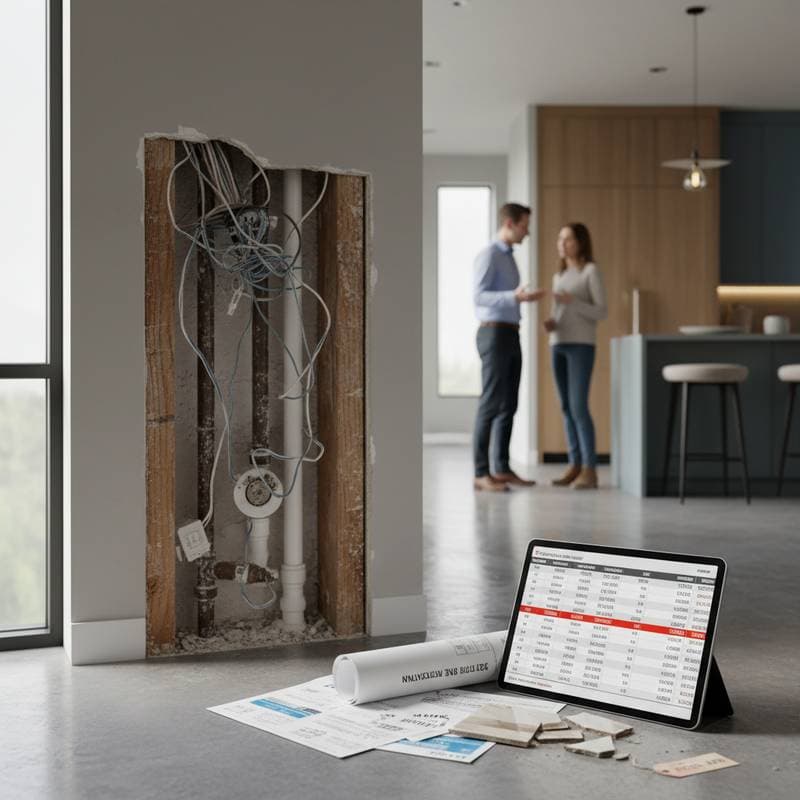
Demolition appears simple, yet it frequently initiates budget disruptions. A HomeAdvisor survey reveals that 37 percent of homeowners encounter unanticipated structural problems upon starting demolition, such as obsolete wiring or compromised foundations, which can inflate expenses by thousands of dollars.
Professional Context
Structural engineer Marissa Feldman, PE, of Feldman Structural Group, with more than 18 years of experience, notes, “Once you expose framing or load-bearing elements, you are playing with the unknown. Older homes, especially those built before modern codes, often hide framing deficiencies or moisture damage.” Feldman estimates that one in three remodels requires unforeseen structural reinforcement.
Actionable Solutions
- Allocate a discovery contingency of 10 to 15 percent of the total project budget for structural issues.
- Arrange pre-demolition inspections by a structural engineer and licensed electrician.
- Perform exploratory demolition on select wall sections near load-bearing areas before committing to full teardown.
Cost Considerations
Basic demolition ranges from $2 to $5 per square foot, but structural repairs add $8 to $15 per square foot. Correcting a sagging beam or rot damage often exceeds $4,000, threatening budgets without early foresight.
2. Permits, Fees, and Code Compliance
The Problem
Permits represent a frequently undervalued cost in remodeling. The National Association of Realtors Remodeling Impact Report shows that 29 percent of homeowners express surprise at the total fees for permits and inspections.
Professional Context
David Crowe, Certified Building Official and founder of CodeSmart Consulting, explains, “Permit fees are not just a flat rate. They scale based on valuation, square footage, and jurisdiction. Missing one permit or inspection cycle can delay your project and increase holding costs.” Crowe observes that municipal review delays can prolong timelines by weeks, incurring extra interest or rental fees.
Actionable Solutions
- Conduct a permit audit by consulting your local building department’s fee schedules prior to hiring contractors.
- Schedule bundled inspections to minimize repeated visits and associated charges.
- Delegate compliance management to your general contractor, ensuring all filings and records remain accessible.
Cost Considerations
In large metropolitan areas, permit and inspection fees for a moderate remodel span $1,000 to $5,000. Projects altering plumbing, electrical, or structural components may double these amounts. Failed inspections trigger re-inspection fees and labor delays that escalate costs rapidly.
3. Fluctuating Material Costs
The Problem
Material price instability poses a major budget threat. Lumber, steel, drywall, and copper prices vary due to supply chain disruptions, with BuildZoom’s index showing fluctuations up to 25 percent in a quarter.
Professional Context
Sanjay Patel, procurement director at Pacific Build Supply, states, “Contractors often quote based on current supplier rates, but those rates can change before delivery. Without material price locks, homeowners absorb the difference.” Patel suggests incorporating escalation clauses in contracts to clarify cost increase responsibilities.
Actionable Solutions
- Negotiate price holds from suppliers for a minimum of 60 days.
- Procure non-perishable items like fixtures and tiles in advance, storing them securely off-site.
- Authorize flexible substitutions for materials in case of shortages, predefined in contracts.
Cost Considerations
A 10 percent material price rise on a $75,000 project adds $7,500. Material insurance or bulk buys via contractors can offset volatility, provided they receive upfront negotiation.
4. Contractor Miscommunication and Change Orders
The Problem
Change orders constitute a primary source of hidden expenses. Fixr’s national study finds that 42 percent of homeowners face overruns from scope misunderstandings or incomplete specifications.
Professional Context
Rita Alvarez, project manager at Horizon Build Partners, warns, “Change orders are where budgets go to die. A client adds one small adjustment, and suddenly the domino effect touches plumbing, electrical, and finish schedules.” Alvarez advises requiring detailed scope documents that specify allowances and exclusions.
Actionable Solutions
- Finalize designs before construction commences to prevent mid-project alterations.
- Implement a shared digital platform for tracking updates and avoiding verbal discrepancies.
- Establish caps on change orders, restricting unapproved modifications beyond 5 percent of the budget.
Cost Considerations
Each change order increases costs by 2 to 5 percent. On a $100,000 remodel, this translates to $2,000 to $5,000 per change, doubling for impacts on mechanical or finish elements.
5. Site Conditions and Access Challenges
The Problem
Planning often overlooks logistical hurdles like narrow driveways or delivery restrictions, leading to incremental expenses. The Home Remodeling Trends Report indicates that 18 percent of projects incur additional costs from site access limitations.
Professional Context
Leo Turner, logistics manager at MetroBuild Contractors, describes, “Deliveries delayed by narrow driveways or urban restrictions can add daily labor charges. Equipment rental extensions, traffic control fees, and parking permits can quietly pile up.” Turner recommends pre-project site assessments to pinpoint obstacles.
Actionable Solutions
- Organize a comprehensive site logistics evaluation with contractors and suppliers prior to starting work.
- Reserve funds for access enhancements, such as temporary fencing or crane operations.
- Engage neighbors early to align schedules and mitigate delays or penalties.
Cost Considerations
Challenging urban or sloped sites contribute 5 to 10 percent extra in logistics. Projects needing cranes or staggered deliveries may add $3,000 to $8,000.
6. Utilities, Wiring, and Hidden Infrastructure
The Problem
Plumbing and electrical revelations deliver severe budget shocks. Non-compliant legacy systems demand full replacement. The National Electrical Contractors Association reports that unexpected electrical work adds 12 percent to renovation totals.
Professional Context
Ellen Driscoll, master electrician at CurrentFlow Systems, observes, “Many older homes still have outdated wiring that cannot handle modern loads. Once we open walls, safety compliance becomes mandatory.” Driscoll stresses budgeting adequately for rewiring, grounding, and panel enhancements.
Actionable Solutions
- Schedule electrical and plumbing inspections before renovation, an investment of a few hundred dollars that prevents larger outlays.
- Incorporate allowances for system upgrades to maintain budget accuracy.
- Refrain from partial repairs, as integrating old and new components risks ongoing safety concerns.
Cost Considerations
Full-home rewiring costs $8,000 to $15,000, with mid-scale plumbing replacements reaching $10,000. Add 10 to 20 percent for unforeseen utility diversions.
7. Finishes, Fixtures, and the Upgrade Trap
The Problem
Disciplined planners still succumb to upgrade temptations, where late premium selections amplify expenses. The Consumer Remodeling Report notes that 34 percent of homeowners exceed finish budgets post-construction start.
Professional Context
Jennifer Lang, financial planner at HarborStone Advisors specializing in home investments, explains, “Psychologically, once a project is underway, clients rationalize upgrades as marginal costs. In reality, those marginal additions can total thousands.” Lang proposes pre-selecting finishes and imposing upgrade ceilings.
Actionable Solutions
- Develop a detailed finish matrix listing products, models, and prices before initiation.
- Institute a formal approval protocol requiring written consent for any modifications.
- Monitor cumulative upgrades with a ongoing tally to assess budget implications.
Cost Considerations
Individual fixture changes appear minor, yet premium faucets, lighting, and flooring elevate finish budgets by 15 to 20 percent. Post-installation alterations incur reordering and labor premiums.
8. Temporary Housing and Living Adjustments
The Problem
Displacement costs catch many unprepared, as unusable kitchens or bathrooms necessitate interim housing, dining, and storage. The National Association of the Remodeling Industry reports that 22 percent of clients underestimate these expenses.
Professional Context
Michael Grant, housing relocation specialist with UrbanStay Solutions, highlights, “Clients forget that living through construction carries hidden daily costs. Hotel stays, pet boarding, and eating out can exceed $200 per day.” Grant urges proactive planning for accommodations and daily needs.
Actionable Solutions
- Assess displacement duration and secure temporary housing options early, such as extended-stay rentals.
- Budget for meals, storage units, and pet care based on project timeline.
- Explore on-site alternatives like partial kitchen setups to reduce off-site reliance.
Cost Considerations
Daily living disruptions average $100 to $300, accumulating to $5,000 or more for month-long projects. Extended timelines from other delays compound these figures significantly.
Strategies to Secure Your 2026 Remodel Investment
Integrating these preventive steps fortifies your budget against common pitfalls. Begin with thorough pre-project assessments and detailed contracts to minimize surprises. By allocating contingencies and maintaining clear communication, you position your remodel for success, delivering a home enhancement that aligns with financial goals and enhances long-term value.