
Understanding 2026 Modular Kitchen Cabinet Pricing
Imagine a kitchen with sleek, handleless cabinets, drawers that close silently, and a dedicated coffee station. A contractor's quote can quickly reveal the reality behind such designs. Modular kitchen cabinets appear straightforward in images, yet their prices fluctuate based on materials, finishes, and installation requirements.
Industry reports indicate that approximately one-third of homeowners adhere to their renovation budgets. Knowledge of cost drivers serves as essential preparation for anyone considering modular cabinets, helping to prevent unexpected financial strain.
Current Pricing for Modular Kitchen Cabinets
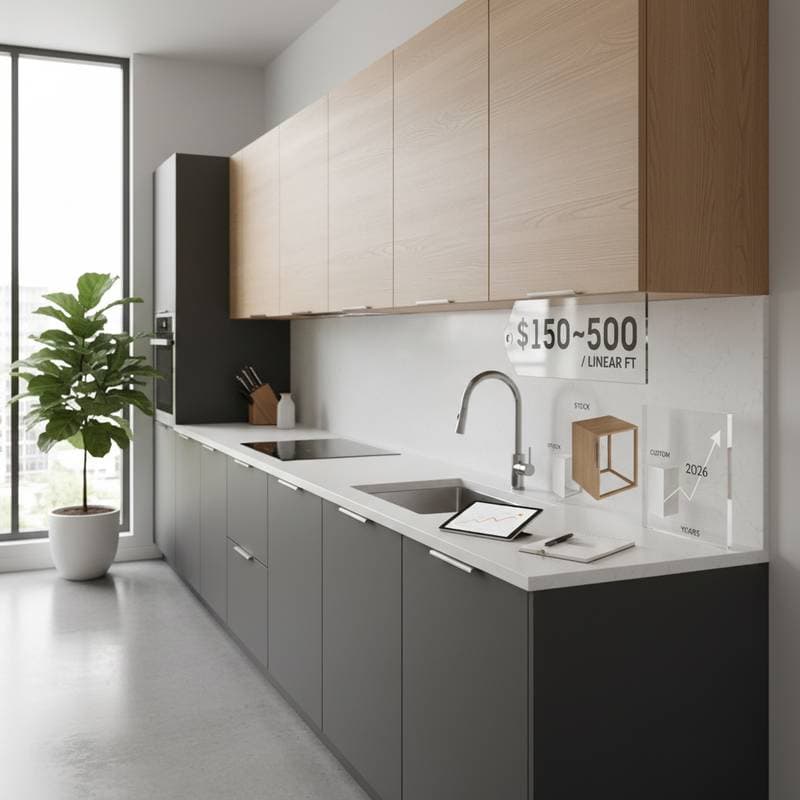
Modular kitchen cabinets typically range from $150 to $500 per linear foot. This spectrum reflects variations in materials, design elements, and installation demands. Prefabricated units occupy the lower tier, whereas semi-custom or fully custom configurations reach the upper end.
Consider a standard kitchen spanning 20 to 30 linear feet of cabinetry. Such a space would require an investment of $3,000 to $15,000, excluding additional elements like hardware or lighting. These figures provide a baseline for planning.
Primary Factors Influencing Costs
Several elements determine the final price of modular cabinets. Each contributes to both functionality and aesthetics.
- Materials: Laminate surfaces start at around $150 per foot for basic durability and easy maintenance. Solid hardwoods, such as oak or maple, elevate prices to $300 or more per foot due to their longevity and natural grain.
- Construction Approach: Ready-to-assemble kits reduce expenses by minimizing professional labor, though they require careful assembly. Fully assembled modules, priced higher, ensure precision from the factory.
- Hardware Features: Basic hinges cost little, but soft-close mechanisms add $50 to $100 per cabinet. Pull-out organizers or integrated LED lighting can increase totals by 20 percent or more.
- Installation Variables: Standard setups suit even walls, keeping labor under $100 per foot. Irregular spaces or custom integrations, however, may add $200 per foot for adjustments and reinforcements.
Interior designer Priya Mehta of Studio Hues notes, "Homeowners often underestimate labor. Even the best prefab cabinet can look sloppy without skilled installation." She advises allocating 20 percent of the cabinet budget for fitting and modifications.
Modular Versus Stock and Custom Cabinet Options
Modular cabinets occupy a middle ground in terms of expense and adaptability. They surpass stock options in versatility while remaining more affordable than bespoke designs.
Stock Cabinets
Stock units come in fixed sizes and colors, frequently constructed from particleboard for cost efficiency. Prices begin at $100 per linear foot, making them ideal for simple, rectangular kitchens. However, they seldom accommodate unique layouts without modifications, which can compromise appearance.
Modular Cabinets
These systems allow reconfiguration through interchangeable modules, supporting future expansions. Factory-built for accuracy, they range from $150 to $500 per foot and fit most spaces with minimal alteration. This flexibility enhances resale value over time.
Custom Cabinets
Tailored entirely to specific dimensions and styles, custom cabinets achieve unparalleled precision. Expect costs from $400 to $1,000 per foot, often doubling modular prices due to specialized craftsmanship and materials. Lead times extend to several months.
Contractor Miguel Santos from UrbanCraft Kitchens states, "Modular systems are the sweet spot for most households. You get customization without the endless wait times or six-figure quotes."
Identifying and Managing Hidden Expenses
Unexpected charges frequently arise during modular kitchen projects. Awareness of these allows for better financial planning.
Common overlooked costs include delivery charges of $200 to $500, depending on location. Filler strips and trim pieces add $10 to $50 each for seamless integration. Countertop alignments or hardware selections can further inflate budgets by 15 percent.
Additional expenses often involve:
- Adjustments for plumbing or electrical placements, costing $300 to $800 per alteration.
- Removal and disposal of existing cabinets, typically $500 to $1,000.
- Structural supports for stone countertops, adding $200 to $400.
- Finishing touches, such as painting or sealing, at $100 to $300.
Addressing these early through detailed site assessments minimizes surprises.
Strategies for Effective Budgeting in Modular Kitchen Projects
Achieve a balanced modular kitchen renovation with targeted planning. These approaches ensure quality without excess spending.
-
Obtain Multiple Quotes: Solicit bids from at least three suppliers using the same specifications. This reveals market rates and highlights value differences.
-
Establish a Contingency Reserve: Allocate 10 to 15 percent of the total budget for unforeseen issues. This buffer covers minor adjustments without derailing the project.
-
Focus on Essential Upgrades: Invest in durable core components like high-quality hinges over decorative inserts. Prioritizing functionality sustains long-term satisfaction.
-
Measure Precisely Before Purchasing: Conduct thorough kitchen measurements to avoid costly resizing. Tools like laser measurers provide accuracy for under $50.
-
Explore Financing Options: Inquire about vendor payment plans or home improvement loans to spread costs. Compare interest rates to select the most economical choice.
A well-planned modular kitchen delivers style and utility without financial burden. Careful selection of materials and features creates a space that enhances daily routines. In the end, reliable cabinets support practical needs while preserving household resources.