

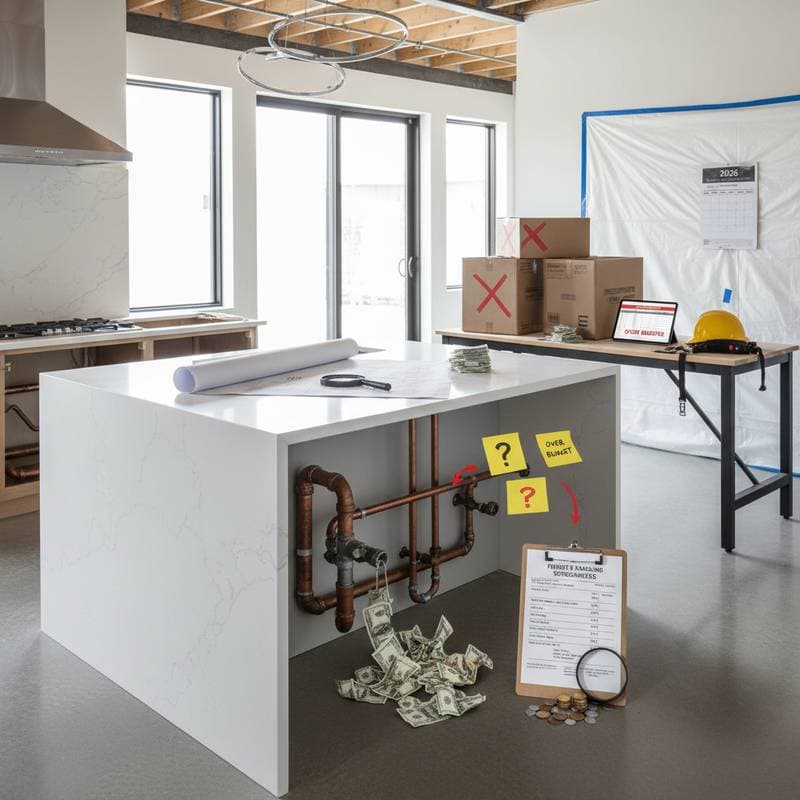
Uncover Hidden Fees in Kitchen Remodels
Imagine saving diligently, sketching detailed plans, and envisioning a kitchen that transforms daily life. The contractor presents a quote that aligns with your funds, the layout inspires confidence, and anticipation builds. Yet as bills accumulate, minor adjustments and unforeseen orders erode the financial foundation.
Kitchen renovations conceal expenses that accumulate subtly. These arise from overlooked specifics, unaccounted requirements, and decisions that escalate totals. Understanding these sources empowers homeowners to maintain oversight and shield budgets from abrupt increases.
1. Permits and Inspection Fees
Local regulations mandate permits for electrical, plumbing, or structural modifications in most areas. Homeowners often omit these from preliminary budgets. A single permit may seem minor, yet multiple approvals or amendments can accumulate significantly.
What to do: Require your contractor to detail all necessary permits and inspections upfront. If managing elements independently, consult the local building authority to identify obligations. Anticipating these expenses prevents project halts or penalties.
2. Delivery and Disposal Charges
Materials such as appliances, cabinets, and countertops incur delivery fees upon arrival, particularly from diverse suppliers. Similarly, removal of demolished items generates hauling and disposal costs for debris, old fixtures, and equipment.
What to do: Insist on a documented breakdown of delivery and disposal expenses during initial quoting. Certain contractors incorporate these into a comprehensive fee, whereas others charge independently. Clarifying the method ensures precise financial planning.
3. Electrical and Plumbing Surprises
In established homes, demolition reveals concealed issues like deteriorated wiring, rusted pipes, or moisture damage requiring remediation prior to new installations. These represent essential safety measures rather than elective enhancements.
What to do: Arrange pre-demolition evaluations by an electrician and plumber to assess accessible components. Inquire about potential concerns that could necessitate additional labor. Allocating a modest contingency reserve facilitates handling such revelations.
4. Custom Features and Modifications
Selecting ideal cabinet hues or precise fixtures tempts during design phases. Tailored dimensions, surfaces, or substances typically involve extra production and fitting charges. Relocating a fixture or incorporating specialized storage also elevates labor demands.
What to do: Define essential versus adaptable features early. Request supplier recommendations for conventional options that mimic desired aesthetics affordably. Flexibility in selections preserves budgetary integrity.
5. Design Revisions and Change Orders
Project commencement often prompts refinements, such as adjusting tile selections or light intensities observed in real settings. Each alteration demands rescheduling among trades and procurement, incurring supplementary labor and supplies.
What to do: Confirm all design aspects, including patterns, shades, and accents, prior to starting work. Post-initiation modifications invariably cost more. For inevitable shifts, secure a documented change order specifying incremental expenses.
6. Unexpected Structural Fixes
Opening walls or floors exposes concealed defects like moisture infiltration, irregular bases, or compromised supports needing strengthening or substitution. These critical interventions ensure durability and compliance.
What to do: In planning discussions, prompt your contractor to evaluate risks according to the property's age and state. Open dialogue establishes feasible projections and prepares for remedial outlays.
7. Appliance Installation and Hookups
Acquiring modern appliances thrills, yet fitting expenses separate from acquisition prices. Establishing gas connections, exhaust systems, or power enhancements introduces additional billing. Slight repositioning may require rerouting utilities.
What to do: Verify installation costs before finalizing purchases. Some outlets provide bundled services at reduced rates for bulk acquisitions. Evaluate these against contractor pricing for optimal value.
8. Cleanup and Final Detailing
Project conclusion brings exhaustion, where oversights occur. Basic tidying may feature in agreements, but comprehensive sanitizing, buffing, or refinements often incur extras. Subsequent adjustments to surfaces follow trade completions.
What to do: Clarify cleanup responsibilities and scope in contracts. Comprehensive finishing enhances the space's appeal and reveals imperfections prior to settlement.
Safeguard Your Budget from Start to Finish
Approach the kitchen remodel as incremental, intentional phases. Monitor costs regularly, pose inquiries persistently, and reserve funds for uncertainties. These practices deliver a completed space without compromising financial stability.