Why Kitchen Remodels Often Exceed Budgets
Homeowners embark on kitchen remodels with visions of modern functionality and aesthetic appeal, yet many face financial strain from unanticipated costs. Industry data indicates that projects routinely surpass initial estimates by 20 percent, primarily because of overlooked elements like regulatory requirements and structural revelations during demolition. Understanding these hidden expenses allows for better preparation and a smoother renovation process.
A well-planned budget serves as the foundation for success. Begin by researching average costs in your area, which can range from $20,000 for basic updates to over $100,000 for high-end transformations. Factor in not only materials and labor but also the intangible costs that arise once work commences.
The Role of a Contingency Fund in Safeguarding Your Project
Every remodel carries inherent uncertainties, making a contingency fund indispensable. Experts recommend setting aside 15 to 20 percent of your total budget for unexpected issues. This allocation acts as a financial buffer, preventing the need to pause construction or seek additional loans mid-project.
This fund covers surprises such as:
- Mold or water damage uncovered behind existing cabinets or walls
- Code-required upgrades to plumbing or electrical systems
- Backordered materials that necessitate costly substitutions
- Hidden structural issues, like weakened beams or uneven flooring
Without this cushion, projects can stall, leading to increased labor charges and prolonged disruption to daily life. "Think of contingency as your renovation insurance," said Larsen. "You will sleep better knowing you have it, even if you never use it."
To implement this effectively, calculate your base budget first, then add the contingency as a separate line item. Review it periodically as the project progresses to adjust for any early discoveries.
Navigating Permits, Fees, and Regulatory Hurdles
Local building codes often require permits for kitchen remodels, especially when altering electrical, plumbing, or structural elements. These fees can range from $200 to $2,000 depending on your location and project scope, yet many homeowners overlook them in initial planning.
Beyond permits, inspection costs add another layer. Professionals must verify compliance at various stages, such as after rough-ins for wiring and pipes. Failure to secure proper approvals can result in fines or the need to redo work, escalating expenses significantly.
Planning tip:
Contact your local building department early in the process. Obtain a detailed list of required permits and their associated fees to incorporate them into your budget from the outset. This proactive step avoids delays and ensures legal compliance.
Uncovering Demolition and Preparation Surprises
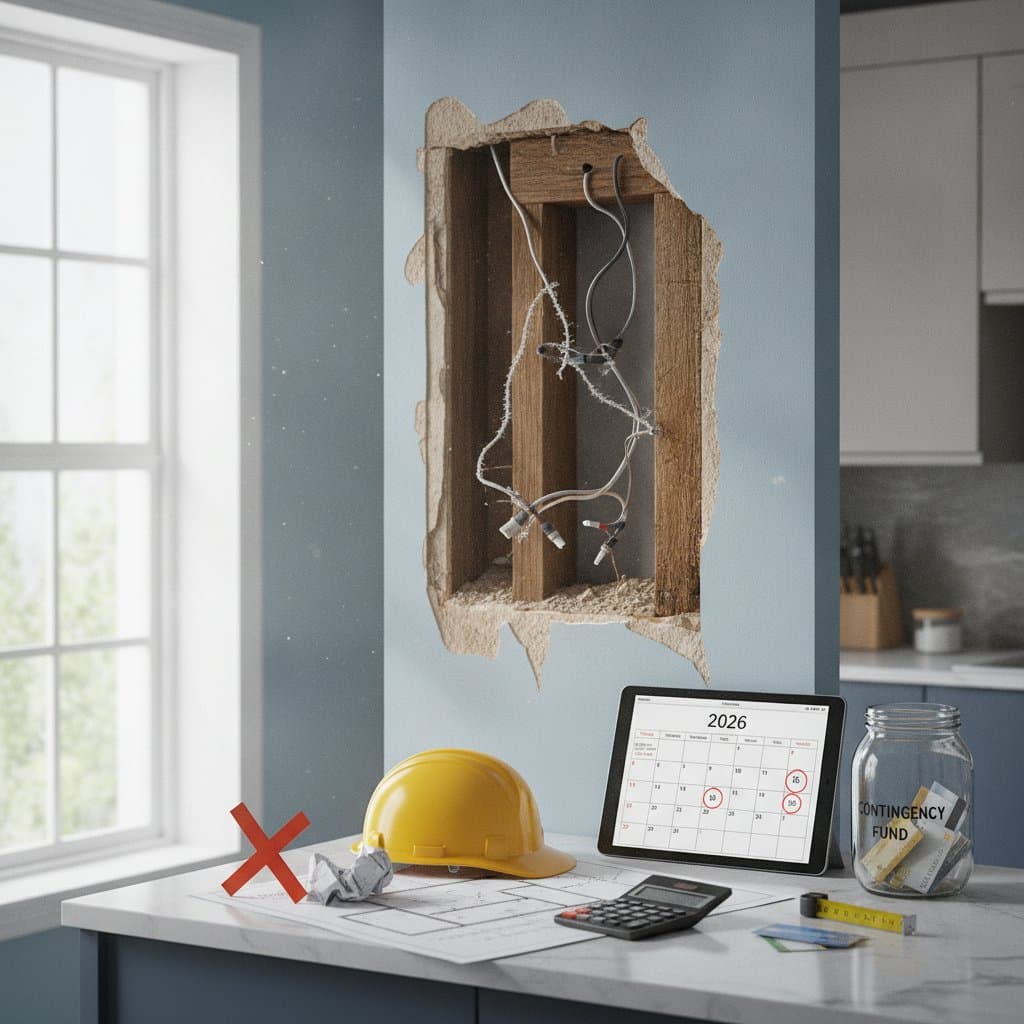
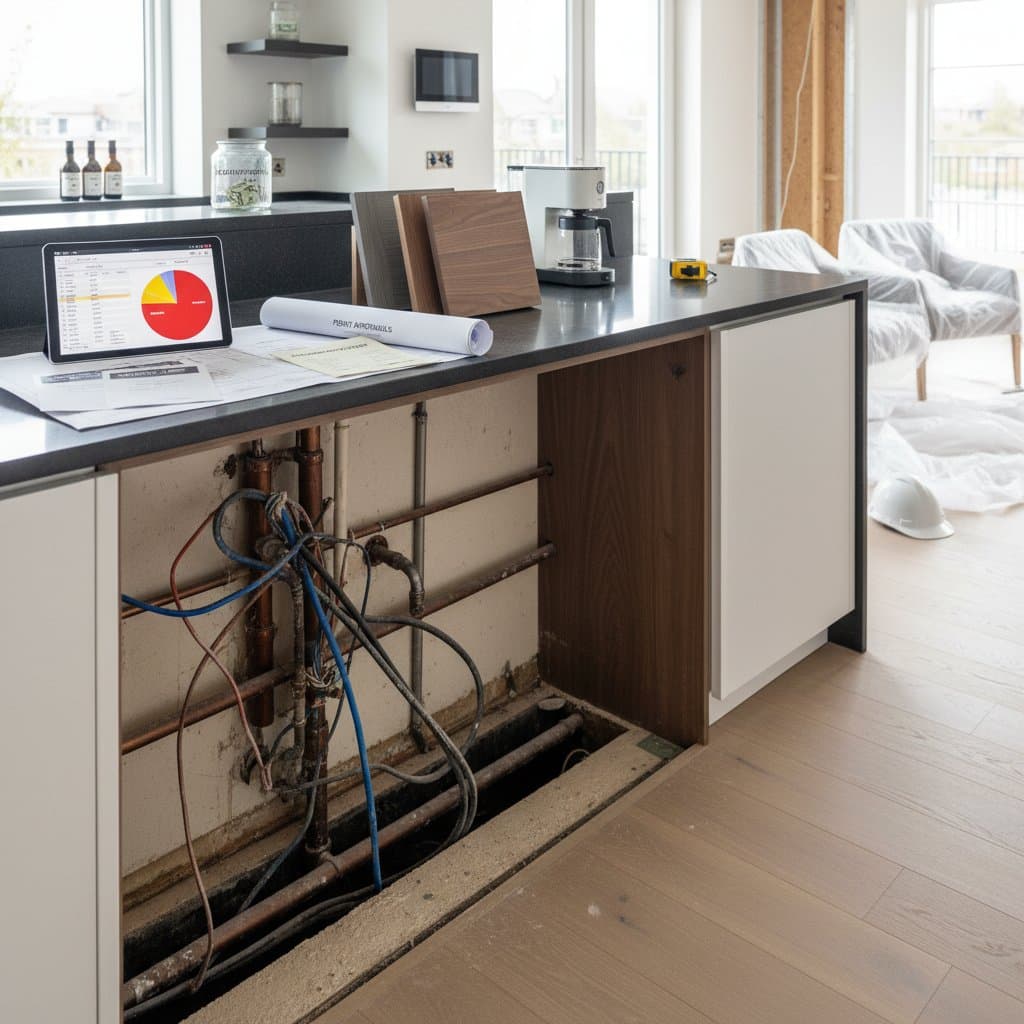
Demolition seems straightforward, but it frequently reveals issues that inflate costs. For instance, removing old cabinets might expose outdated wiring that fails modern safety standards, requiring rewiring at an additional $1,500 to $5,000.
Asbestos or lead paint in homes built before 1980 poses health and removal hazards, with abatement costs reaching $2,000 or more. Similarly, uneven subfloors or plumbing leaks discovered during this phase demand immediate attention to prevent further damage.
Preparation tip:
Hire a professional inspector before finalizing your design. A pre-demolition assessment, costing around $300 to $500, can identify potential problems and allow for accurate quoting from contractors.
Managing Scope Creep: Preventing Small Changes from Adding Up
Scope creep occurs gradually, starting with minor requests like adding an extra outlet or changing cabinet hardware. Individually, these alterations seem insignificant, but they accumulate quickly, potentially adding thousands to your total.
A backsplash extension, an upgraded faucet, and additional under-cabinet lighting might each cost $200 to $500, yet together they disrupt timelines and increase labor demands. Contractors often charge premiums for changes after the contract signing due to rescheduling and material adjustments.
To control this, establish clear decision deadlines during the planning phase. Once the contract is signed, limit modifications to essential ones only, documenting all requests in writing.
Budget tip:
Maintain a running tally of every change order. Track even minor items in a dedicated spreadsheet, noting costs and impacts, so you can monitor the cumulative effect and make informed decisions.
Appliance and Material Delivery Pitfalls
Selecting appliances and finishes excites homeowners, but delivery and installation introduce hidden costs. Shipping fees for large items like refrigerators can exceed $300, while custom-order delays might incur storage charges from suppliers.
Installation often requires modifications, such as adjusting cabinetry for a new range or reinforcing walls for heavy units. These adjustments, if not anticipated, add $500 to $2,000 per appliance.
Sourcing tip:
Choose in-stock items whenever possible to minimize wait times and fees. Verify delivery inclusions with vendors and budget for professional installation to avoid DIY errors that lead to callbacks.
Insurance, Warranties, and Liability Considerations
Standard homeowner's insurance may not fully protect against renovation-related damages. Policies often exclude coverage for work-in-progress scenarios, necessitating temporary riders or builder's risk insurance that costs 1 to 2 percent of your project total.
Contractors should provide proof of liability and workers' compensation insurance, shielding you from responsibility for on-site accidents. Warranties on materials and workmanship also vary; ensure they are clearly outlined in contracts to avoid future repair expenses.
Budget tip:
Consult your insurance agent about short-term construction coverage. This addition, though a small fraction of the overall budget, can prevent substantial out-of-pocket payments for unforeseen incidents.
Temporary Living and Lifestyle Disruptions
A kitchen remodel disrupts meal preparation, often requiring temporary relocation or reliance on takeout. Eating out for weeks can add $1,000 or more to incidental expenses, while renting a nearby apartment might cost $2,000 monthly.
Dust and noise affect the entire home, potentially necessitating cleaning services or air purifiers. Plan for these inconveniences by scheduling work during favorable times and preparing alternative spaces.
Lifestyle tip:
Create a detailed timeline with your contractor, including phased disruptions. Stock up on easy meals and designate a temporary kitchen area to maintain routines without excessive spending.
Building a Realistic Budget and Timeline
Success in kitchen remodeling hinges on meticulous planning. Compile fully itemized quotes from multiple contractors, comparing not just prices but also timelines and inclusions. Incorporate all identified hidden costs into a comprehensive spreadsheet.
Engage professionals early, such as designers and project managers, to refine your vision realistically. Adjust your lifestyle expectations during construction to minimize stress and additional expenditures.
Regular check-ins with your team keep everyone aligned, allowing early detection of potential overruns. This collaborative approach ensures the project stays on track.
Achieving Your Dream Kitchen on Budget
By anticipating hidden costs and implementing preventive measures, you transform potential setbacks into manageable aspects of the remodel. A contingency fund, strict scope control, and thorough preparation empower you to realize your ideal kitchen without financial regret.
Homeowners who follow these strategies report higher satisfaction and fewer delays. Your 2025 remodel can deliver lasting value, enhancing both functionality and home enjoyment for years to come.