
Quartz vs Quartzite: 2025 Kitchen Cost Breakdown
Kitchen countertops shape the heart of any home, influencing daily routines and overall aesthetics. As 2025 approaches, quartz and quartzite emerge as top choices for their blend of durability and visual appeal. Homeowners often debate these materials based on budget, lifestyle, and long-term value. This guide dissects their differences in cost, performance, and design, drawing from recent trends and expert insights to inform your decision.
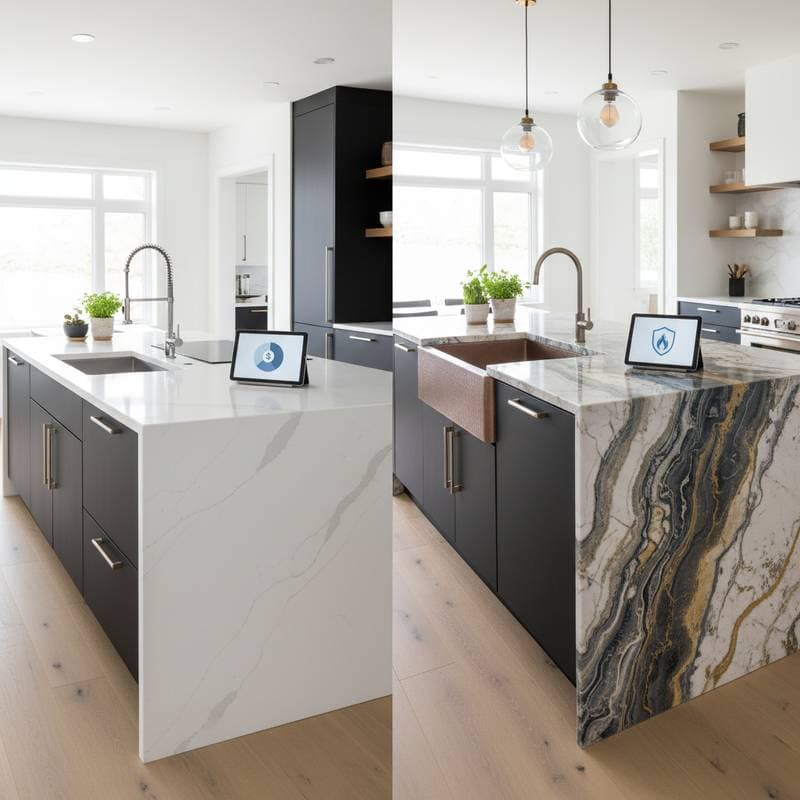
Quartz, an engineered stone, consists of crushed quartz mixed with resins and pigments. It delivers consistent patterns and colors, ideal for modern, seamless looks. Quartzite, a natural metamorphic rock, forms under intense heat and pressure, resulting in unique veining and textures that mimic marble but surpass it in hardness.
Both materials resist stains and scratches effectively, yet their origins lead to distinct care needs and price ranges. Understanding these factors helps balance initial investment with practical benefits. Consider your kitchen's usage patterns, from casual meal prep to frequent entertaining, when evaluating options.
Key Cost Factors for 2025
Costs for countertops encompass material, fabrication, installation, and potential edge treatments. In 2025, expect fluctuations due to supply chain dynamics and demand for sustainable sourcing. Average prices reflect installed rates for standard edges and basic layouts, excluding complex cuts or backsplashes.
- Quartz Pricing: Ranges from $60 to $120 per square foot. Lower-end options suit budget renovations, while premium brands like Caesarstone or Silestone command higher fees for advanced patterns.
- Quartzite Pricing: Falls between $80 and $200 per square foot, varying by slab rarity and origin. Imported varieties from Brazil or India often exceed $150, reflecting quarrying and shipping expenses.
Additional expenses include sealing for quartzite (every 1-2 years at $1-2 per square foot) and potential repairs. Quartz requires no sealing, reducing lifetime costs. Factor in a 10-20% buffer for custom installations in older homes with uneven bases.
Performance Comparison
Durability defines countertop longevity, especially in busy kitchens. Quartz scores high for uniformity and non-porous surfaces, preventing bacterial growth without special treatments. It withstands moderate heat but may scorch under direct flame, necessitating trivets.
Quartzite excels in heat resistance, suitable for hot pots straight from the oven. Its Mohs hardness rating of 7 outmatches quartz's 7 but feels more robust against daily wear. However, its natural porosity demands periodic sealing to avoid etching from acids like lemon juice.
Maintenance routines differ markedly. Clean quartz with mild soap and water; avoid harsh abrasives to preserve the finish. For quartzite, use pH-neutral cleaners and reseal annually in high-use areas. Both resist fading under sunlight, though quartzite's natural variations may subtly shift over decades.
In terms of sustainability, quartz incorporates recycled content in many formulations, appealing to eco-conscious buyers. Quartzite, being natural, boasts a lower carbon footprint during production but higher during transport. Evaluate these aspects alongside performance for a holistic view.
Design Flexibility and Trends
Design potential elevates countertops beyond functionality. Quartz offers endless customization through slab simulations of wood, concrete, or stone. Its edge-to-edge consistency suits minimalist or contemporary styles, with matte or polished finishes available.
Quartzite shines in organic, high-end designs, where each slab's unique patterns create focal points. Popular 2025 trends include soft veining in neutrals for transitional kitchens or bold hues like blue-gray for coastal vibes. Pair it with matte black hardware for contrast or warm woods for balance.
Homeowners favor quartz for predictable outcomes in smaller spaces, avoiding the risk of mismatched seams. Quartzite suits larger islands, where dramatic veining draws the eye. Lighting plays a key role; quartzite's translucency enhances ambient glow, while quartz provides even reflection.
Real-World Quartz Examples
Examine these quartz installations to see practical applications in diverse settings.
Urban Efficiency
Location: Seattle, Washington
Designer: Pacific Edge Design
Materials: Engineered quartz in a subtle gray vein pattern, paired with white shaker cabinets
This compact urban kitchen maximizes space with sleek quartz surfaces that mimic concrete. The uniform gray tone grounds the open layout, reflecting light to make the area feel larger. Designer Elena Vasquez noted that the clients prioritized low maintenance for their busy professional lives. Quartz's stain resistance handles spills from morning coffee rushes without issue.
Estimated Cost: $70 to $100 per square foot installed
The affordability allows allocation to smart appliances, enhancing overall efficiency. Over five years, its ease of care saves hours compared to natural stones.
Coastal Retreat
Location: Miami, Florida
Designer: Aqua Interiors
Materials: White quartz with faint blue flecks, glass-front cabinets
Soft white quartz countertops evoke beachside calm in this sunlit space. The subtle blue accents tie into ocean views, creating a serene prep area. The material's non-porous nature suits humid climates, resisting mold growth. Designer Marco Ruiz selected it for seamless integration with glossy tiles.
Estimated Cost: $80 to $110 per square foot installed
Budget-friendly yet upscale, quartz supports vibrant backsplashes without overwhelming the palette. Its versatility shines in resale markets, appealing to broad tastes.
Modern Farmhouse
Location: Nashville, Tennessee
Designer: Southern Stone Works
Materials: Warm taupe quartz, reclaimed wood accents
Taupe quartz brings subtle warmth to this farmhouse-inspired kitchen, blending modern edges with rustic elements. The consistent color prevents visual clutter amid open shelving. It withstands family gatherings, from baking sessions to casual dinners.
Estimated Cost: $65 to $95 per square foot installed
This choice delivers high style at mid-range pricing, ideal for growing households seeking durability without fuss.
Real-World Quartzite Examples
Quartzite installations highlight natural beauty in varied environments.
Mountain Light
Location: Boulder, Colorado
Designer: Stone & Timber Studio
Materials: Honed quartzite, natural oak cabinetry
Honed quartzite in soft gray and white swirls adorns this mountain home, contrasting warm oak for an inviting feel. The organic texture adds depth, evoking the nearby Rockies. Designer Mia Chen chose it for its refined yet natural vibe, perfect for outdoor enthusiasts who cook fresh meals.
Estimated Cost: $95 to $150 per square foot installed
Heat resistance proves invaluable during summer barbecues, justifying the premium for long-term satisfaction.
Desert Warmth
Location: Scottsdale, Arizona
Designer: Terracotta Studio
Materials: Taj Mahal quartzite, hand-glazed ceramic tile
Taj Mahal quartzite's beige and gold tones mirror the desert palette, paired with artisanal tiles for earthy elegance. Its hardness endures daily chopping without marring. Designer Rafael Ortiz recommended it for homeowners who entertain frequently, ensuring the surface ages gracefully.
Estimated Cost: $100 to $160 per square foot installed
The unique veining elevates property value, turning the kitchen into a showcase feature.
Lakeside Serenity
Location: Lake Tahoe, California
Designer: Sierra Collective
Materials: Blue Macaubas quartzite, aged brass accents
Blue Macaubas quartzite's rippling blue-gray veins connect indoors to lake views, enhanced by brass for warmth. The natural translucence plays with sunlight, creating dynamic shadows. This selection suits a family that values artistic elements in functional spaces.
Estimated Cost: $120 to $180 per square foot installed
Exclusivity fosters personal connection, making daily tasks feel inspired.
Making the Right Choice
Selecting quartz or quartzite hinges on your priorities. Assess kitchen traffic, cooking habits, and aesthetic goals. For low-maintenance uniformity, opt for quartz; its predictable costs and care suit rentals or starter homes.
Embrace quartzite if natural variation and resilience align with your vision, especially in custom builds. Calculate total ownership costs over 10-15 years, including energy savings from heat-tolerant surfaces.
Visit suppliers to handle samples, observing light interactions and textures. Consult designers for layout simulations. The ideal surface integrates seamlessly, enhancing joy in every meal prepared and shared.