Navigating Hidden Costs in Your 2025 Kitchen Remodel
Imagine launching your kitchen renovation with visions of sleek quartz counters, efficient appliances, and ample storage. Weeks into the project, unexpected fees for structural fixes, expedited deliveries, and code compliance emerge. What began as a controlled upgrade turns into a budget challenge that affects many homeowners.
A recent national survey reveals that only about 40 percent of kitchen remodels adhere to initial budgets. The remaining projects encounter surprise expenses that increase totals by thousands of dollars. These issues stem from overlooked details, fluctuating material prices, and scope creep during construction.
To safeguard your finances, identify potential cost traps early. This approach involves thorough research, multiple quotes, and a contingency fund of 15 to 20 percent of your total budget. By addressing these elements proactively, you position your remodel for success.
Demolition Discoveries: Unforeseen Structural Issues
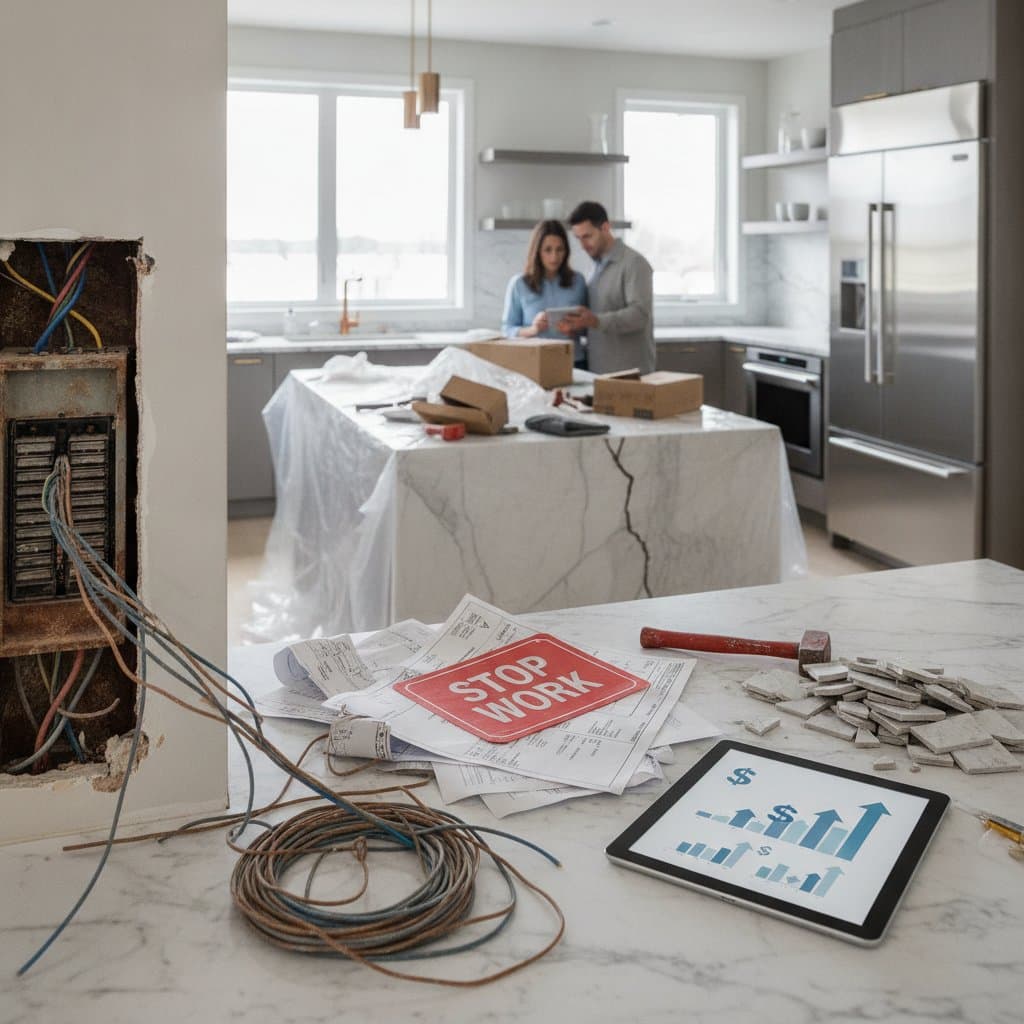
Demolition marks the exciting start of any remodel, yet it often reveals problems concealed behind existing fixtures. Outdated wiring, water damage, or non-compliant plumbing surfaces once walls come down. These discoveries necessitate immediate repairs to meet safety standards.
Homeowners frequently underestimate demolition costs, assuming they cover only labor and debris removal. In reality, addressing hidden issues like asbestos abatement or foundation reinforcements adds significant expenses. Budget at least 10 percent of your total for this phase.
Consult a structural engineer before demolition begins. This step identifies potential hazards through a pre-remodel inspection, which costs around $500 but prevents larger outlays later. Document all findings in your contract to clarify responsibility for surprises.
Cabinetry Choices: Balancing Style and Affordability
Cabinets represent one of the largest investments in a kitchen remodel, often accounting for 30 to 40 percent of the budget. Options range from ready-made stock units to bespoke designs tailored to your space. Selecting the right type requires weighing aesthetics against practical constraints.
Stock cabinets offer quick installation and lower prices, typically $100 to $300 per linear foot. Semi-custom varieties allow modifications for better fit, priced at $250 to $600 per linear foot. Full custom builds, while offering unique features like integrated appliances, start at $700 per linear foot and extend timelines by weeks.
Interior designer Laura DuPont, who focuses on mid-range projects, notes, "Most homeowners think custom equals quality, but semi-custom options often provide the same durability for half the cost."
To optimize value, measure your space precisely and explore modular systems. Request samples to assess finish quality, and negotiate bulk discounts from suppliers. These actions help achieve a custom look without the premium price tag.
Appliance Integration: Electrical and Plumbing Hurdles
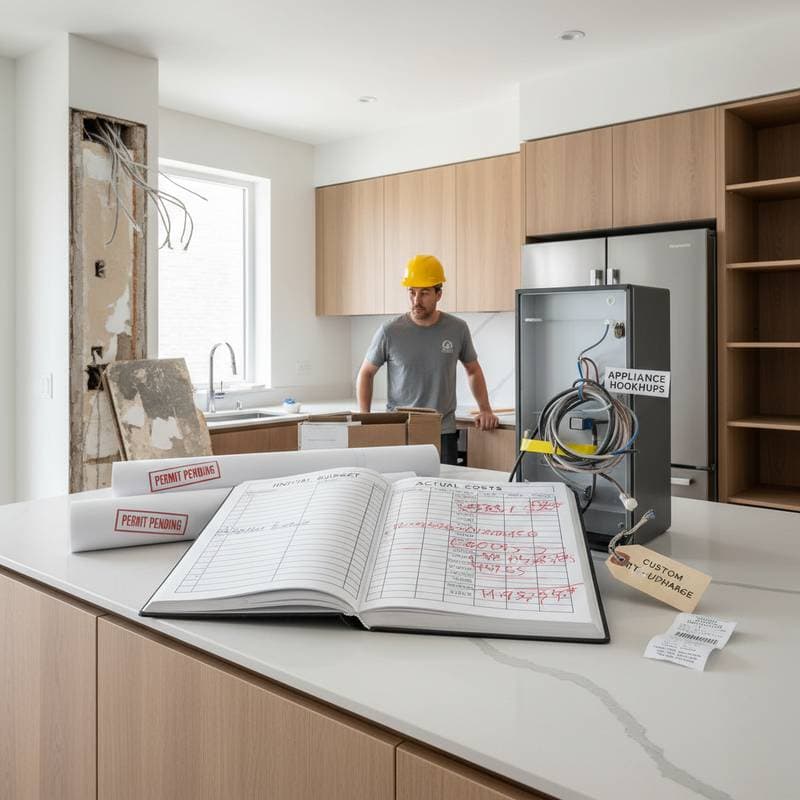
New appliances enhance functionality but introduce integration challenges. High-end refrigerators, ranges, or dishwashers demand specific hookups, such as dedicated circuits or gas lines. Retrofitting these elements into an older kitchen layout can escalate costs unexpectedly.
Standard installations add $200 to $500 per appliance, but custom configurations for built-in units reach $1,000 or more. Factor in upgrades to your electrical panel if adding energy-intensive devices like induction cooktops.
Hire a licensed electrician and plumber early in planning. They assess compatibility and provide line-item estimates for wiring, venting, and water lines. Opt for Energy Star-rated models to qualify for rebates, offsetting initial investments while ensuring long-term savings.
Countertop Selections: Material and Fabrication Expenses
Countertops transform the kitchen's workspace, yet choices in material and design influence both upfront and ongoing costs. Popular selections include durable quartz, natural granite, warm butcher block, and budget-friendly laminate. Each option carries distinct pricing for materials, cutting, and installation.
Laminate remains economical at $20 to $50 per square foot installed, suitable for rentals or temporary upgrades. Butcher block offers a natural appeal for $40 to $100 per square foot but requires regular sealing. Premium stones like quartz or granite range from $70 to $200 per square foot, with additional fees for sink cutouts and edge profiles.
Stone supplier Daniel Lopez of RockCraft Surfaces explains, "Homeowners forget that cutting for sinks, corners, or backsplashes adds labor. A simple layout can save hundreds without changing materials."
When evaluating options, request detailed quotes breaking down fabrication, sealing, and delivery. Visit showrooms to view seams and finishes in person, ensuring the selection aligns with your maintenance preferences and budget.
Flooring and Backsplash: Overlooked Surface Costs
Flooring and backsplashes complete the kitchen's aesthetic but often fall outside initial estimates. Tile, hardwood, or vinyl flooring must withstand moisture and traffic, while backsplashes protect walls from splatters. Installation complexities, such as subfloor preparation or grout sealing, contribute to hidden fees.
Vinyl or linoleum flooring installs for $3 to $10 per square foot, providing water resistance at low cost. Tile options climb to $15 to $30 per square foot, including underlayment. Backsplash materials like subway tile add $10 to $25 per square foot, with labor for patterning and edging.
Plan these elements alongside countertops to coordinate designs and minimize waste. Source remnants from suppliers for cost savings, and include demo and disposal in your contractor bid. This integrated approach streamlines the project and controls expenses.
Permit and Compliance: Regulatory Roadblocks
Local building codes require permits for most kitchen alterations, particularly those involving electrical, plumbing, or structural changes. Obtaining these documents ensures compliance but introduces fees and delays if not anticipated.
Permit costs vary by location, typically $200 to $1,000 for a full remodel, plus inspection fees. Electrical work alone may need separate approval, extending timelines by two to four weeks.
Home inspector James Patel of ClearView Services states, "Homeowners rarely budget for permits, but they are essential. The average kitchen remodel needs at least two or three permits, and each one can take time to approve."
Research requirements through your city's building department early. Allocate time and funds in your schedule, and choose contractors experienced in local regulations to avoid rework from failed inspections.
Labor and Timeline Fluctuations: Managing Contractor Costs
Skilled labor drives a significant portion of remodel expenses, often 20 to 35 percent of the total. Hourly rates for carpenters, plumbers, and electricians range from $50 to $150, depending on region and expertise. Delays from supply chain issues or weather can inflate these charges through extended on-site time.
Fixed-price contracts provide predictability, but change orders for upgrades add up quickly. Include clauses for overtime and material price adjustments in your agreement.
Vet contractors through references and licensing verification. Obtain at least three bids with detailed scopes of work, and track progress with weekly updates. This oversight keeps labor costs aligned with expectations.
Achieving a Seamless Remodel Outcome
With careful planning and attention to detail, your 2025 kitchen remodel delivers lasting value without financial strain. A well-executed project enhances daily living, boosts home equity, and provides a space tailored to your needs. Start with a comprehensive budget review, secure reliable professionals, and monitor every phase to realize your vision efficiently.