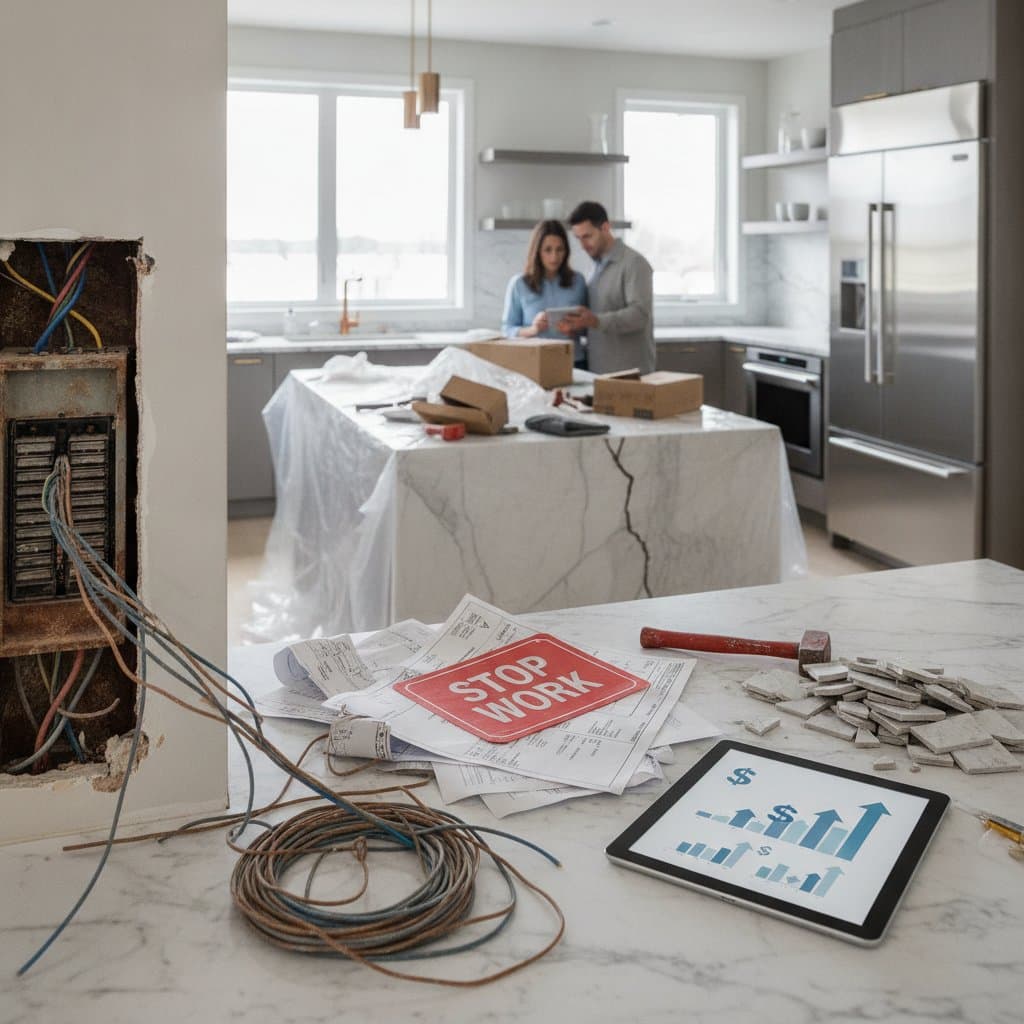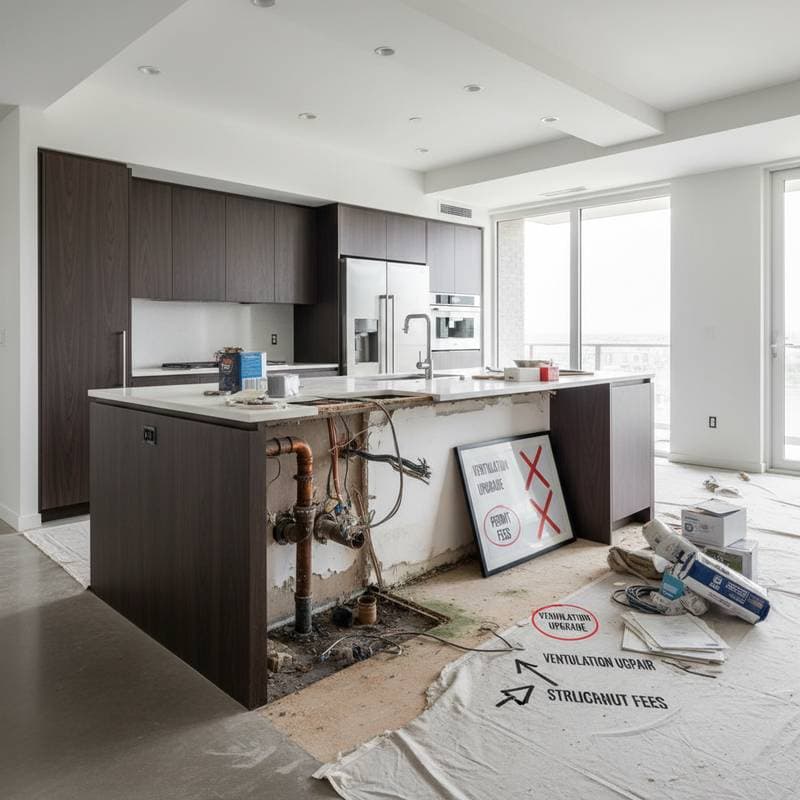
The Hidden Costs Homeowners Overlook in Kitchen Remodeling
Every homeowner envisions a kitchen that combines functionality with enduring style. Sleek countertops and innovative storage solutions promise convenience and appeal. However, beneath these appealing elements lie expenses that frequently catch owners off guard once work commences. Professional guidance and thorough preparation enable individuals to foresee and manage these costs effectively, preserving the project budget.
This article outlines nine essential considerations for 2025 kitchen remodels. Each section identifies a common pitfall, provides context, offers practical solutions, includes technical insights, and highlights key benefits. By addressing these areas proactively, homeowners secure a renovation that proceeds smoothly and delivers lasting value.
1. Permits and Inspection Fees
Problem: Renovation projects require official approvals that many homeowners neglect to budget for adequately.
Context: Local building codes mandate permits for electrical, plumbing, and structural changes. Fees vary by location and project scope, often totaling several hundred dollars.
Solution: Consult municipal offices early to compile a list of required permits. Allocate a dedicated line item in the budget for these expenses and schedule inspections promptly.
Technical detail: Standard permit costs range from 1 to 3 percent of the total project value. Delays from failed inspections can incur additional fees or halt progress for days.
Benefit: Compliance ensures legal protection and avoids fines, while timely approvals maintain the project timeline.
2. Plan for Electrical and Plumbing Upgrades
Problem: Existing wiring and plumbing in many kitchens fail to align with contemporary safety standards.
Context: Installation of advanced appliances, enhanced lighting, or expanded sinks necessitates circuit enhancements or drain line replacements. These modifications often emerge as significant unforeseen expenditures.
Solution: Engage electricians and plumbers during the initial design phase for a comprehensive review. Incorporate their assessments into pricing estimates prior to commencing work.
Technical detail: Current regulations demand dedicated circuits for ovens, dishwashers, and microwaves. Replacement of corroded copper supply lines or undersized PVC drains proves essential, with each new circuit incurring costs of several hundred dollars including drywall repairs.
Benefit: Adherence to standards minimizes risks of electrical hazards and ensures reliable performance, eliminating future maintenance disruptions.
3. Address Structural Repairs
Problem: Dated kitchens frequently conceal foundational issues such as weakened joists or uneven subfloors.
Context: Removing old cabinetry or flooring reveals damage from water exposure or settling foundations. Remediation becomes unavoidable to support new installations.
Solution: Conduct a structural assessment before demolition. Hire a licensed inspector to evaluate load-bearing elements and recommend reinforcements.
Technical detail: Joist repairs involve sistering with new lumber, while subfloor leveling requires plywood overlays. Costs escalate if asbestos or lead paint abatement proves necessary in older homes.
Benefit: A solid foundation prevents long-term settling issues, guaranteeing the durability of the remodeled space.
4. Ensure Proper Ventilation and Airflow
Problem: Inadequate venting systems compromise both functionality and code compliance in modern kitchens.
Context: Legacy setups often direct exhaust into attics or walls instead of outdoors. Proper reconfiguration demands roof penetrations or exterior modifications.
Solution: Verify the venting route during the planning stage, before committing to cabinet layouts. Opt for rigid metal ducts over flexible alternatives to enhance longevity.
Technical detail: Regulations stipulate a minimum of 100 cubic feet per minute of airflow per linear foot of cooktop. High-output ranges require 400 to 600 cubic feet per minute, necessitating wider ducts and specialized vent caps.
Benefit: Effective ventilation boosts indoor air quality and safeguards surfaces from moisture damage, preserving the kitchen's aesthetic integrity.
5. Account for Appliance Delivery and Installation
Problem: High-end appliances arrive with installation complexities that exceed basic expectations.
Context: Custom sizes or integrated units demand precise measurements and professional setup. Delays in delivery can disrupt schedules and inflate holding costs.
Solution: Select appliances early and confirm dimensions against the design. Budget for certified installers who handle connections and testing.
Technical detail: Built-in refrigerators or wall ovens require reinforced cabinetry and custom paneling. Gas line conversions for ranges add 500 to 1,000 dollars in labor and materials.
Benefit: Seamless integration avoids operational failures and extends appliance warranties through proper installation.
6. Factor in Temporary Living Costs
Problem: The absence of a functional kitchen during construction disrupts daily routines more than anticipated.
Context: Families resort to frequent dining out or makeshift cooking arrangements, leading to cumulative expenses.
Solution: Establish a contingency allocation for meals and portable equipment. Plan relocation of essentials to alternative spaces within the home.
Technical detail: A daily allowance of 50 to 100 dollars for food covers extended periods. Rental of compact appliances like induction cooktops provides practical alternatives.
Benefit: These measures sustain household normalcy, reducing stress and preventing impulsive spending.
7. Include Waste Disposal and Cleanup
Problem: Demolition generates substantial debris that requires specialized handling and removal.
Context: Hauling away old cabinets, countertops, and appliances involves dumpster rentals and disposal fees, often overlooked in initial estimates.
Solution: Partner with contractors experienced in waste management. Schedule regular cleanups to maintain site safety and efficiency.
Technical detail: Dumpster fees range from 300 to 600 dollars per load, depending on volume and recycling requirements. Hazardous materials like old wiring demand certified disposal.
Benefit: Organized debris management accelerates progress and complies with environmental regulations, avoiding penalties.
8. Allow for Finish Adjustments and Detailing
Problem: The concluding phases reveal mismatches that necessitate additional refinishing efforts.
Context: Interfaces between new elements and existing surfaces create gaps requiring fillers, touch-up painting, or hardware realignments.
Solution: Incorporate a finishing buffer in both budget and timeline. Direct contractors to anticipate adjustment needs prior to final installations.
Technical detail: Painting services bill by linear foot or hourly rates for minor tasks. Consistent material matching ensures uniformity across the space.
Benefit: These refinements yield a cohesive, high-quality appearance without last-minute financial strains.
9. Budget for Code Upgrades and Compliance
Problem: Evolving building codes in 2025 introduce mandates for energy efficiency and accessibility that older kitchens lack.
Context: Updates for insulation, lighting efficiency, or barrier-free access add layers of expense during renovations.
Solution: Review local code revisions with a building consultant. Integrate compliant features from the outset to streamline approvals.
Technical detail: LED fixtures and low-flow faucets qualify for rebates but require upfront investments. Accessibility ramps or widened doorways enhance usability for all ages.
Benefit: Forward-thinking compliance future-proofs the home, potentially increasing resale value and reducing energy bills.
Strategies for a Budget-Conscious Remodel
Implementing these insights transforms potential pitfalls into manageable aspects of the process. Homeowners who prioritize detailed planning collaborate effectively with professionals, resulting in renovations that align with financial goals. The outcome is a kitchen that not only meets immediate needs but also withstands the demands of daily life for years to come.