
Hidden Kitchen Costs Contractors Often Overlook
Homeowners envision a kitchen that combines functionality with aesthetic appeal. A sleek countertop or precisely aligned cabinets can transform the space into a hub of daily life. However, beneath these visible elements lie numerous expenses that demand careful attention. Contractors focus on major components in quotes, yet subtler costs emerge during execution. These insights, derived from extensive renovation projects, highlight key areas to scrutinize for a controlled budget.
The following sections outline essential considerations for managing hidden costs. Each addresses a common oversight, provides context from actual renovations, and offers practical steps. By addressing these proactively, homeowners maintain oversight and achieve a high-quality outcome without financial strain.
1. Permits and Inspections
Challenge: Renovations altering layout, electrical, or plumbing systems require local permits, which contractors sometimes exclude from initial estimates. Inspections add fees and potential delays if code compliance issues arise.
Project Example: In a recent overhaul, the team discovered the open-concept design necessitated structural permits. The process involved multiple inspections, incurring $1,200 in fees and halting work for a week.
Approach: Consult local building codes early and include permit costs in the contract. Engage the contractor to handle applications, or budget $500 to $2,000 depending on project scope.
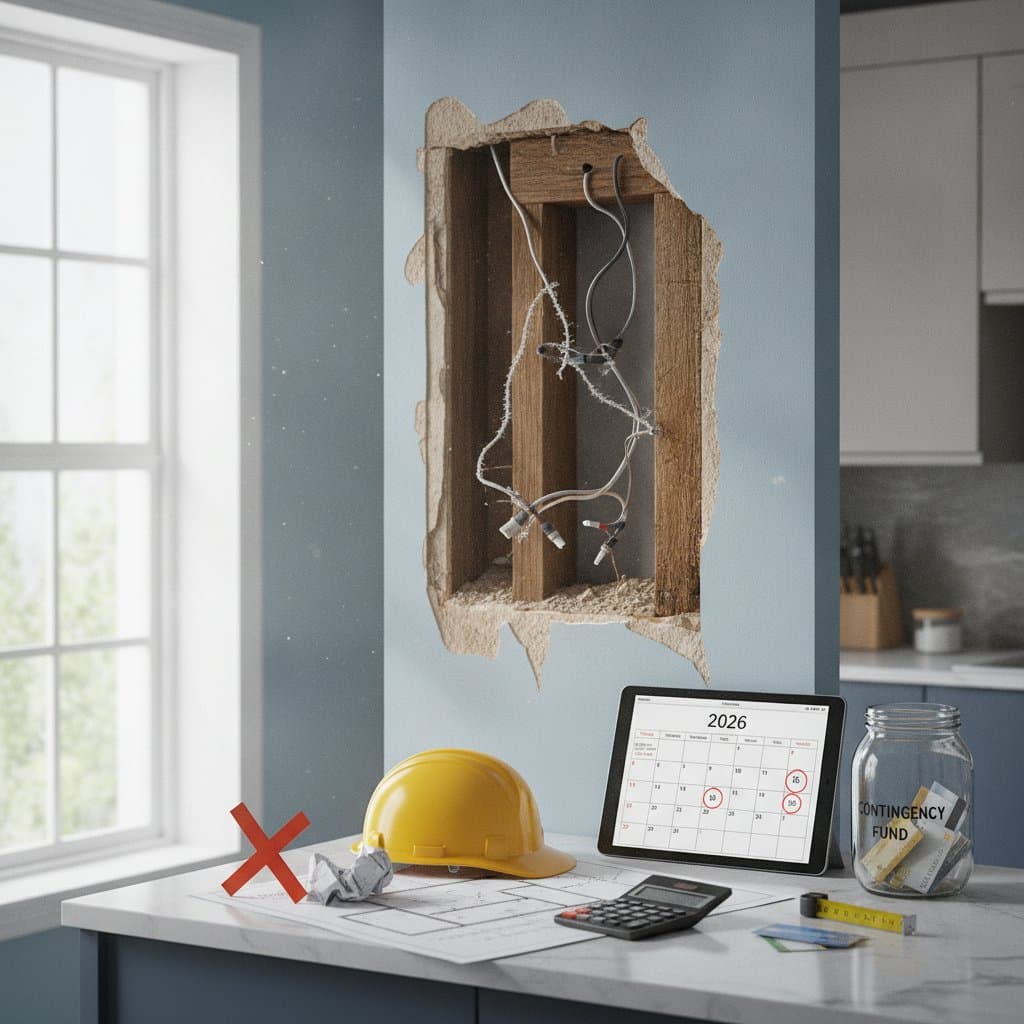
Key Aspects: Permits cover electrical, plumbing, and structural changes. Inspections verify safety standards, such as proper venting for ranges or adequate ventilation. Non-compliance risks fines or rework.
Result: Securing permits upfront ensures smooth progress and avoids penalties that escalate expenses.
2. Electrical Upgrades
Challenge: Older homes possess circuits inadequate for contemporary appliances, leading to necessary panel expansions or rewiring not always anticipated in bids.
Project Example: A client installing an induction range, wall ovens, and multiple outlets faced a full panel upgrade. The existing 100-amp service proved insufficient, requiring a 200-amp replacement and new conduits.
Approach: Commission a licensed electrician for a load analysis prior to appliance selection. Obtain quotes for potential upgrades, including GFCI protections and dedicated circuits.
Key Aspects: Kitchens demand at least two 20-amp circuits for counter outlets, plus 30- or 50-amp lines for major appliances. Costs range from $1,500 to $5,000, influenced by wall access and panel location.
Result: Early electrical planning supports reliable performance and complies with safety codes, preventing disruptions.
3. Plumbing Modifications
Challenge: Relocating sinks, dishwashers, or adding islands often involves rerouting pipes, which may expose outdated materials like galvanized steel prone to leaks.
Project Example: During a layout shift, corroded pipes beneath the floor required replacement. The work extended to installing a new drain line, adding $2,800 to the plumbing budget.
Approach: Hire a plumber for a preliminary assessment of existing lines. Specify relocation details in the contract and allocate funds for potential material upgrades.
Key Aspects: Modern codes mandate PEX or copper piping with proper venting. Island installations need air gaps or pumps for drainage. Fees include labor for accessing subfloors or walls.
Result: Thorough plumbing evaluation minimizes leaks and ensures efficient water flow, enhancing long-term durability.
4. Cabinet Installation Challenges
Challenge: Structural imperfections, such as uneven floors or bowed walls, complicate cabinet alignment, resulting in additional labor for adjustments.
Project Example: Custom units in a 1920s home required extensive shimming due to a 1.5-inch floor variance. The installer logged 16 extra hours, increasing costs by $1,600.
Approach: Conduct on-site measurements with laser tools before ordering. Prepare walls and floors, or select adjustable cabinet bases to accommodate variances.
Key Aspects: Installers use shims, scribes, and fillers for fit. Hourly rates apply to corrections, and custom modifications add material expenses.
Result: Precise preparation yields seamless installation and a polished appearance without excess charges.
5. Structural Reinforcements
Challenge: Removing load-bearing walls for open designs demands beams or posts, costs that surface only after architectural review.
Project Example: An island addition revealed a supporting wall, necessitating an engineered LVL beam. Installation, including temporary bracing, totaled $4,500.
Approach: Consult a structural engineer early for load assessments. Incorporate reinforcement plans into the contract with detailed cost breakdowns.
Key Aspects: Reinforcements involve permits, engineering stamps, and specialized labor. Materials like steel I-beams or laminated lumber vary in price based on span length.
Result: Proactive structural planning supports design goals while upholding building integrity.
6. Finishing Materials and Details
Challenge: Selections for edges, transitions, and seals often incur unforeseen fabrication or installation fees beyond base material quotes.
Project Example: A quartz slab choice overlooked bullnose edging, prompting a $900 refabrication fee after delivery.
Approach: Finalize all specifications, including profiles and heights, with fabricator quotes. Review samples and obtain written estimates for variations.
Key Aspects: Backsplashes require cement board backing and grout matching. Countertop edges affect waste and labor; flooring transitions prevent hazards.
Result: Detailed planning creates unified finishes and eliminates retroactive expenses.
7. Flooring Transitions and Preparation
Challenge: Integrating kitchen flooring with adjacent areas involves subfloor repairs and threshold materials, overlooked in surface-level bids.
Project Example: Tile installation exposed uneven subflooring, requiring leveling compound and transition strips, which added $1,200.
Approach: Inspect subfloors before material orders. Specify transition types, such as T-moldings, in the contract.
Key Aspects: Preparation includes moisture barriers and underlayment. Costs cover cutting, adhesives, and matching heights for seamless flow.
Result: Proper flooring work ensures stability and aesthetic continuity across spaces.
8. Waste Disposal and Protection
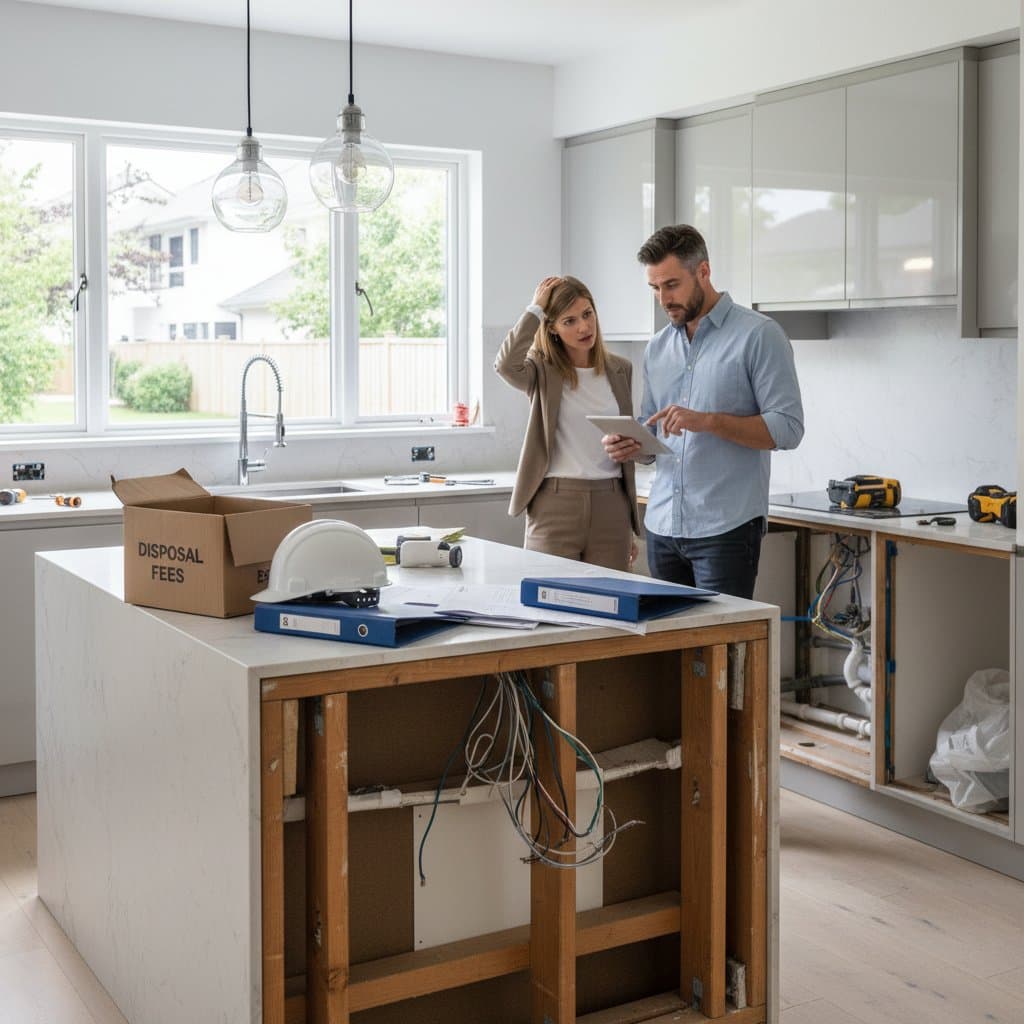
Challenge: Demolition generates debris requiring rental bins and protective measures, expenses sometimes separated from core quotes.
Project Example: Cabinet removal filled two dumpsters, with protection materials like plywood ramps adding $800 beyond the base demo fee.
Approach: Define disposal and protection scopes in writing. Compare dumpster vendors for weight-based pricing.
Key Aspects: Protection uses rosin paper, door covers, and dust barriers. Disposal fees include hauling and recycling surcharges.
Result: Clear terms maintain site cleanliness and protect unaffected areas.
9. Appliance Delivery and Integration
Challenge: Custom sizes or heavy units demand specialized delivery, plus cutouts and venting not covered in standard appliance costs.
Project Example: A built-in refrigerator required wall modifications and crane access, incurring $1,100 in logistics.
Approach: Coordinate delivery timing with installation. Measure spaces meticulously and budget for utility hookups.
Key Aspects: Integration involves gas lines, venting kits, and anti-tip brackets. Delays from scheduling amplify labor waits.
Result: Coordinated appliance handling facilitates prompt functionality.
10. Post-Construction Adjustments
Challenge: Settling materials reveal misalignments, such as door hinges or caulk gaps, leading to punch-list labor if not contractually addressed.
Project Example: Two months post-completion, countertop seams needed resealing due to humidity shifts, resolved under warranty.
Approach: Mandate a walkthrough for defect lists before payment. Secure a 1-year workmanship warranty.
Key Aspects: Adjustments cover hardware tweaks and touch-ups. Contracts should outline response times for issues.
Result: Defined protocols ensure lasting quality and resolve concerns efficiently.
Strategies for Budget Control
Implementing these measures transforms potential pitfalls into managed elements. Engage professionals for assessments, document agreements thoroughly, and review progress regularly. Such diligence not only preserves funds but also delivers a kitchen that endures daily use with elegance and efficiency.