Discover Hidden Costs Busting Bathroom Budgets
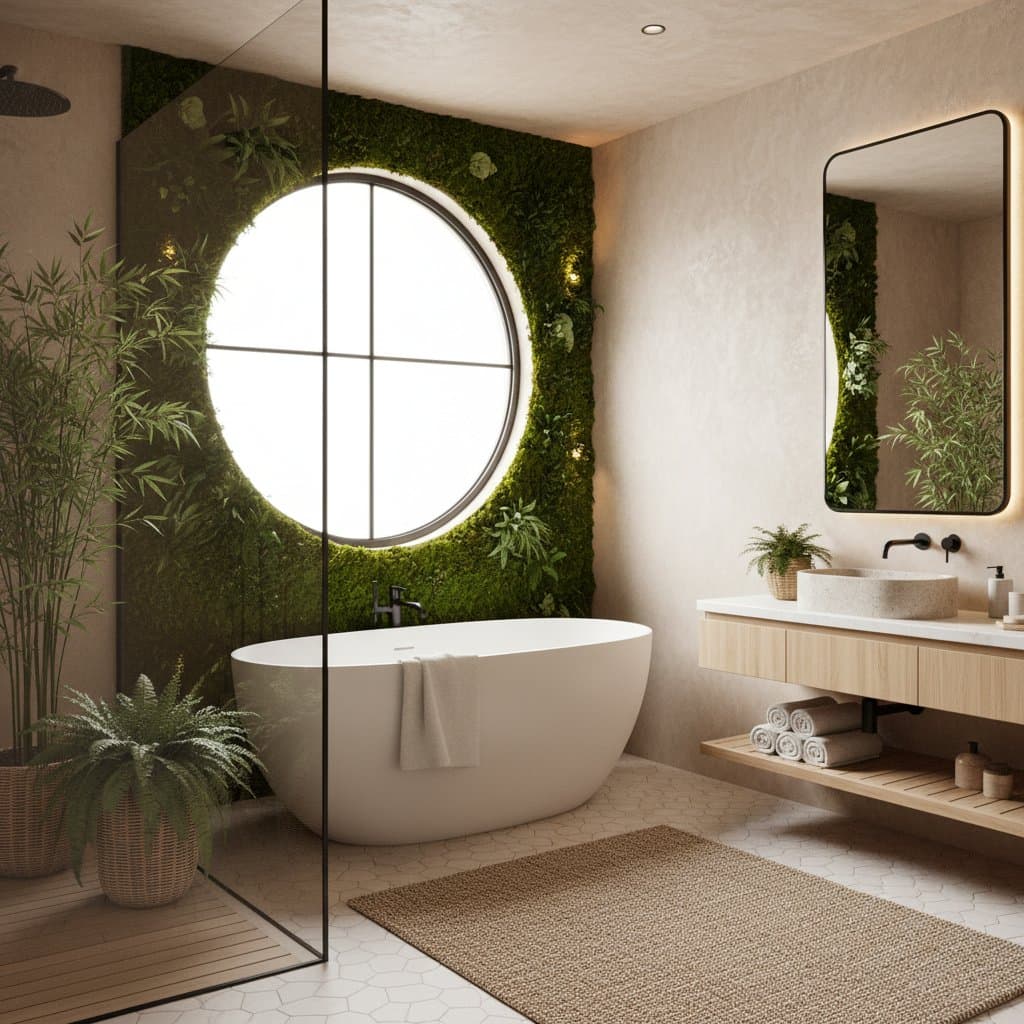
Bathroom renovations rank highly among favored home improvements, drawing countless searches for ideas on design sites each month. Visions of elegant marble vanities and spacious walk-in showers captivate homeowners. However, these appealing designs often mask underlying expenses that escalate totals well before completion.
This guide examines key factors that unexpectedly increase costs in bathroom projects. Each section details a particular challenge, supported by perspectives from experienced designers and accounts from homeowners who encountered these issues. For full overhauls or simple refreshes, awareness of these elements enables better management of aesthetics and finances.
1. Waterproofing Errors
A stunning shower loses value if water infiltrates surrounding structures. Errors in waterproofing stay hidden until mold growth or floor damage surfaces, escalating a simple fix into major rework.
Designer Credit: Amelia Tran, principal at Eastline Studio, Seattle.
Materials: Cement backer board, liquid membrane sealer.
Tran stresses the necessity of a seamless waterproof barrier in every shower, tub, and moisture-prone area, beyond mere tile and grout. Homeowners commonly believe tile repels water inherently, but tiny fissures allow intrusion. Opt for certified installers and premium sealants to secure longevity.
Effective waterproofing delivers reassurance and a pristine appearance. It preserves sharp grout edges and avoids staining, ensuring the space remains vibrant and sanitary over time. To implement this, inspect current setups during planning and allocate funds for professional assessments upfront.
2. Tile Installation Complexities
Selections in tile shape the bathroom's character, but elaborate designs or unique varieties inflate labor expenses. Options like custom mosaics, oversized porcelain slabs, or artisanal zellige demand expert handling and additional hours.
Designer Credit: Lila Nguyen, founder of Coastline Concepts, San Francisco.
Materials: Glossy white Moroccan zellige tile, matte charcoal porcelain.
Nguyen notes that irregular artisanal tiles require meticulous alignment and adjustment for a seamless result. Installation fees may rise significantly above those for basic patterns. Request detailed estimates from contractors, specifying rates per square foot according to material demands.
The outcome proves rewarding in aesthetics. Even grout joints and shimmering finishes enhance illumination, fostering an upscale ambiance that appears bespoke. Before committing, sample installations in small areas to gauge feasibility and costs accurately.
3. Unexpected Structural Repairs
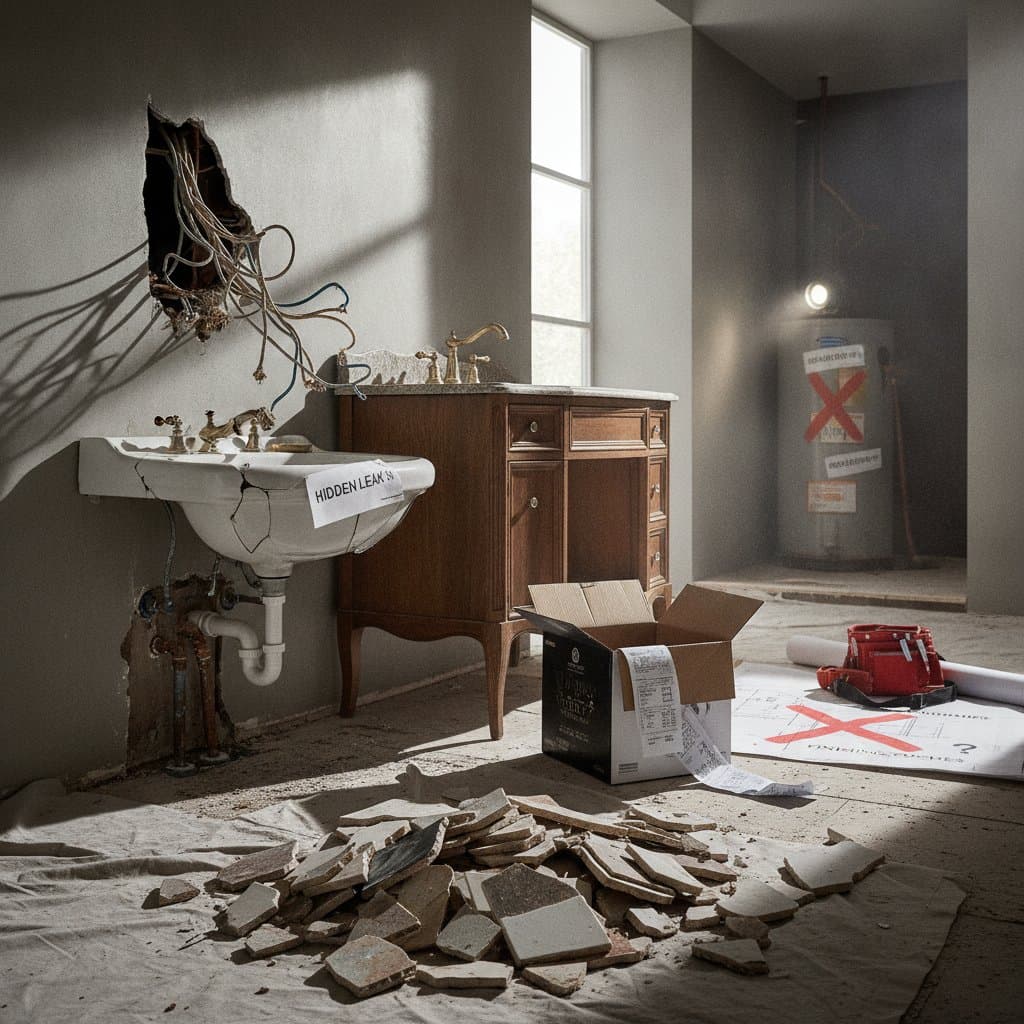
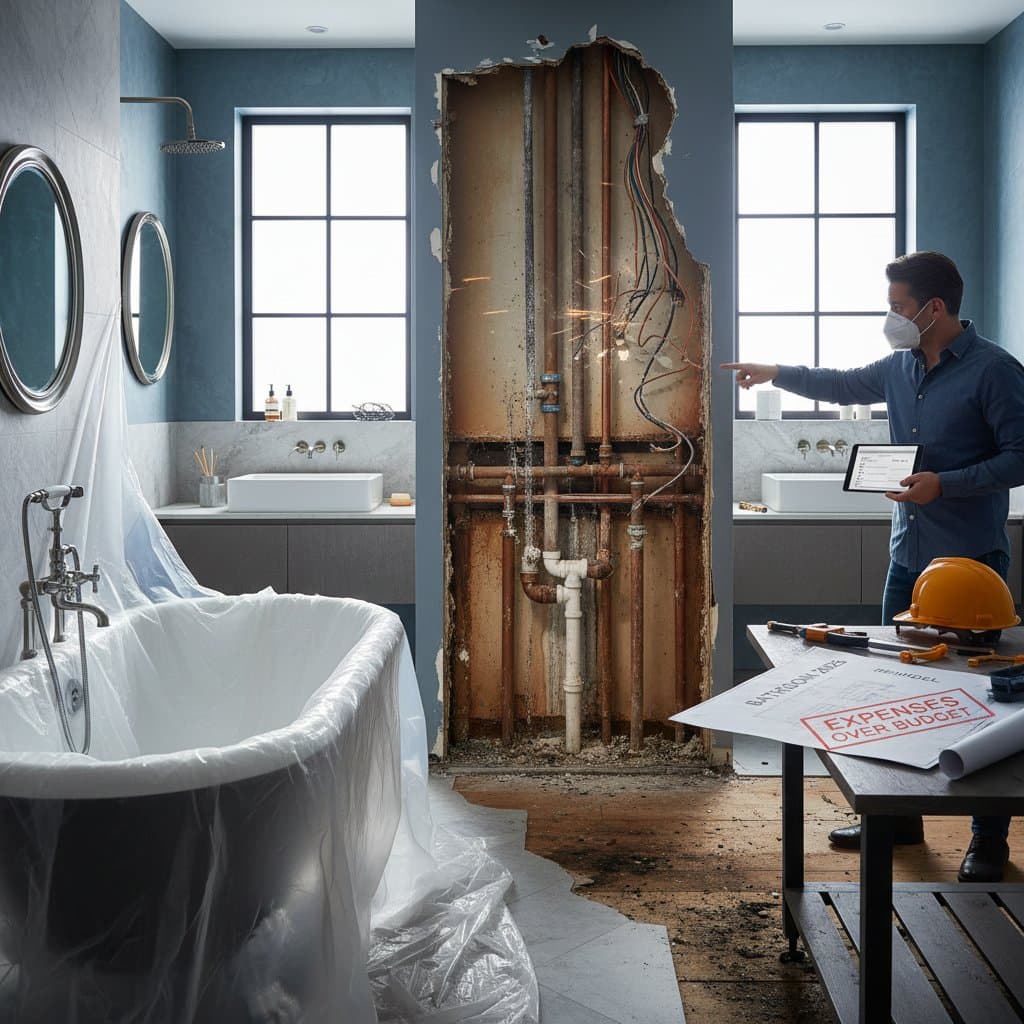
Demolition reveals concealed problems frequently. Water rot, pest damage, or compromised beams can shift a routine update into essential reinforcements.
Designer Credit: Marco Del Toro, Build Studio LA.
Materials: Pressure-treated lumber, moisture-resistant drywall.
Del Toro recommends reserving at least ten percent of the overall budget for potential discoveries. Such a reserve sustains momentum despite interruptions. Neglecting it halts progress as funds become urgently needed.
Though unglamorous, these corrections underpin reliability. A sturdy base upholds all subsequent features, securing the room's appeal for the long haul. During initial surveys, hire inspectors to probe for vulnerabilities and adjust estimates accordingly.
4. Permitting and Inspection Fees
Regulations in most areas mandate approvals for alterations involving plumbing, wiring, or frameworks. These administrative expenses surprise many, fluctuating by jurisdiction.
Designer Credit: Henry Caldwell, Caldwell Renovation Partners, Austin.
Materials: Permit documentation, code-compliant fixtures.
Caldwell points out that transformations like tub-to-shower conversions often invoke reviews. Charges accumulate, yet they verify adherence and security. Bypassing them invites penalties or future resale hurdles.
The procedure appears administrative, but it upholds excellence. Verified installations clear evaluations and confirm alignment with industry benchmarks. Consult local offices early to map requirements and incorporate fees into your financial outline.
5. Finishing Touches That Add Up
As core tasks conclude, ancillary elements frequently strain resources. Items including mirrors, fixtures, accents, and coatings appear insignificant individually but total substantial sums.
Designer Credit: Rafael Kim, Elemental Design Works, Portland.
Materials: Satin brass hardware, low-VOC paint.
Kim advises logging all minor acquisitions in a collaborative document to monitor totals. Where feasible, restore existing pieces or select durable alternatives to economize.
These refinements establish the environment's tone. Unified accents and renewed surfaces weave cohesion, elevating the area to refined completion. Prioritize essentials first and shop sales for non-essentials to curb escalation.
Balancing Design and Budget
After construction ends and surfaces set, thriving renovations emerge from thoughtful equilibrium rather than excess. Choices spanning pipe adjustments to accessory selections craft areas that perform well and reflect purpose.
Vigilance over concealed expenses empowers strategic resource distribution. A defined plan with buffers converts unforeseen elements into routine tweaks instead of crises. Homeowners who prepare thoroughly enjoy spaces that enhance daily life without financial regret.