
Build a Flawless Wet Room: 2026 Checklist Revealed
Creating a wet room transforms a standard bathroom into a seamless, spa-like space where water flows freely without barriers. This design suits modern homes seeking elegance and functionality. Proper execution requires attention to waterproofing, drainage, and materials that withstand daily use.
The 2026 checklist emphasizes durable innovations, such as advanced tanking systems and smart ventilation. Follow these steps to avoid common pitfalls like moisture damage or poor flow. Resulting spaces offer both aesthetic appeal and long-term reliability.
Step 1: Plan the Layout and Assess Your Space
Begin with a thorough evaluation of your bathroom's dimensions and plumbing. Measure the area to ensure sufficient space for a level floor and unobstructed movement. Consult local building regulations, as wet rooms demand specific structural reinforcements.
Sketch a layout that positions the shower zone centrally while integrating fixtures like the toilet and basin. Factor in accessibility features, such as grab bars for safety. Professional surveys can identify issues like uneven subfloors early, preventing costly adjustments later.
Planning Checklist:
- Measure room dimensions and mark drainage points.
- Review building codes for waterproofing requirements.
- Budget for professional installation to handle structural changes.
- Consider user needs, including mobility and daily routines.
Solid planning sets the stage for a wet room that integrates smoothly with your home.
Step 2: Get Serious About Waterproofing
Waterproofing forms the core defense against leaks in a wet room. Apply a comprehensive tanking system to the floor and walls, creating an impermeable layer beneath finishes. This prevents water from seeping into substructures and causing mold or rot.
Select systems certified for wet environments, including liquid membranes and reinforcing tapes. Professionals apply these in multiple coats for optimal coverage. Neglecting this step risks structural damage and health hazards from trapped moisture.
Waterproofing Checklist:
- Install a full tanking kit covering floor and walls up to 200mm high.
- Seal all joints, corners, and penetrations with specialized tapes.
- Use primers on porous surfaces for better adhesion.
- Allow 24-48 hours drying time before proceeding to tiling.
Reliable waterproofing ensures the space remains dry and habitable for decades.
Step 3: Install Effective Drainage
Efficient drainage keeps water contained and the floor dry. Position a linear or point drain in the shower area to channel water quickly. Opt for channels with high flow rates to handle heavy usage without pooling.
Ensure the floor slopes gently toward the drain, typically 1:40 to 1:80 gradient, for natural runoff. Connect drains to existing plumbing with secure, leak-proof fittings. Test the system thoroughly before finalizing the floor.
Drainage Checklist:
- Choose stainless steel or polymer drains resistant to corrosion.
- Verify slope with a laser level for even water flow.
- Integrate a trap to prevent odors from rising.
- Clean and test drains post-installation to confirm performance.
Proper drainage maintains hygiene and prevents slips from standing water.
Step 4: Pick the Right Flooring
Flooring must balance aesthetics, safety, and durability in a wet room. Porcelain tiles dominate for their water resistance and variety of finishes. Natural stone options require sealing to avoid stains, while microcement provides a sleek, continuous surface.
Prioritize materials with a Pendulum Test Value (PTV) of 36 or higher for slip resistance when wet. Use large-format tiles to minimize grout lines, reducing dirt accumulation. Flexible adhesives accommodate minor movements and prevent cracks.
Flooring Checklist:
- Select anti-slip tiles rated R10 or higher for wet areas.
- Apply waterproof grout and seal edges meticulously.
- Integrate underfloor heating mats for faster drying and comfort.
- Match drain grates to flooring for a monolithic appearance.
Thoughtful flooring choices enhance both safety and visual continuity.
Step 5: Optimize Lighting and Ventilation
Lighting illuminates the space while highlighting textures and colors. Install recessed LED fixtures for even illumination, supplemented by task lighting near mirrors. Dimmable options create ambiance for relaxation.
Ventilation combats humidity buildup, essential in enclosed wet rooms. Choose extractor fans with humidity sensors that activate automatically. Position vents high on walls to draw steam upward efficiently.
Lighting and Ventilation Checklist:
- Use IP65-rated lights suitable for damp environments.
- Install a fan with at least 15 liters per second airflow.
- Add a humidistat to control fan operation based on moisture levels.
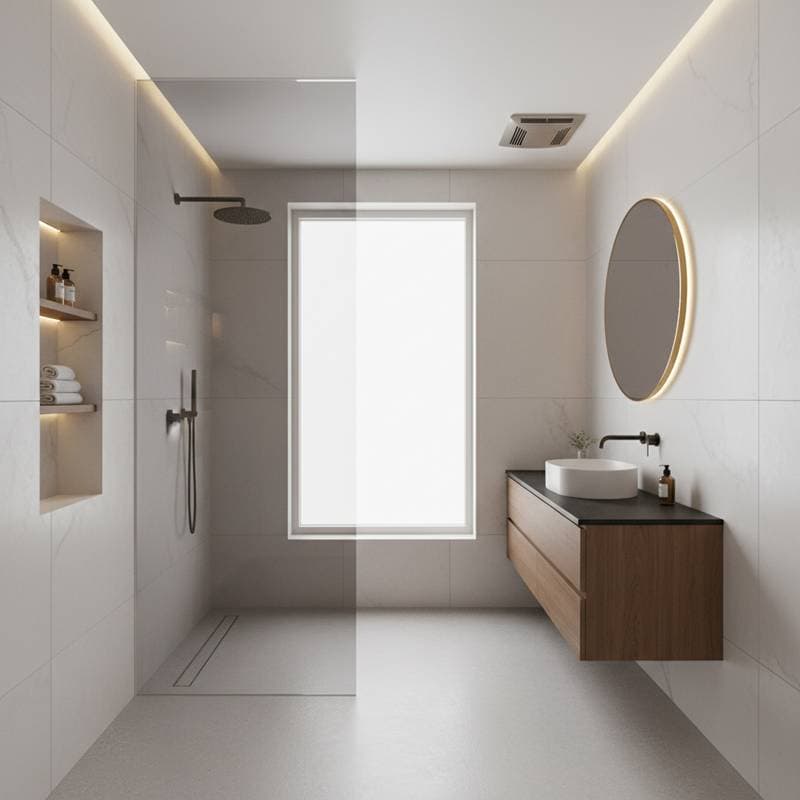
- Incorporate natural light via frosted glass if possible.
These elements promote a fresh, inviting atmosphere year-round.
Step 6: Choose Finishes That Last
Finishes endure constant exposure to water and humidity, so select corrosion-resistant options. Brushed nickel or matte black taps resist fingerprints and tarnish better than polished chrome. Wall tiles in subway or mosaic patterns add subtle interest without overwhelming the space.
Apply mold-resistant silicone sealants around fixtures. For ceilings, use semi-gloss paints that repel condensation. Regular maintenance preserves the pristine look over time.
Finishes Checklist:
- Choose fixtures with a wet-room certification.
- Seal natural stone surfaces annually.
- Use epoxy-based grouts for enhanced durability.
- Paint with anti-mold formulas on non-tiled areas.
Durable finishes maintain the wet room's sophisticated appeal.
Step 7: Integrate Fixtures and Accessories
Fixtures define the wet room's functionality and style. Select wall-mounted showers with adjustable heads for versatile use. Thermostatic mixer valves ensure consistent water temperature, enhancing safety.
Incorporate mirrors with integrated demisters to stay fog-free. Add rainfall showerheads for a spa experience, paired with handheld options for cleaning. Ensure all elements align with the minimalist aesthetic.
Fixtures Checklist:
- Install thermostatic controls to prevent scalding.
- Position accessories at ergonomic heights.
- Use foldable shower seats for space efficiency.
- Select low-profile basins to preserve floor space.
These additions elevate usability without compromising design.
Step 8: Add Storage That Blends In
Storage solutions keep essentials organized in a compact wet room. Recessed niches in shower walls hold shampoos securely. Wall-hung cabinets with solid surface doors resist moisture penetration.
Incorporate towel rails integrated into the heating system for warm, dry linens. Avoid floor-level units to facilitate cleaning and maintain the open feel.
Storage Checklist:
- Build niches with waterproof backing.
- Choose cabinets from marine-grade materials.
- Install rails away from direct spray zones.
- Use magnetic strips for small items like razors.
Organized storage contributes to a serene, clutter-free environment.
Step 9: Finalize and Maintain Your Wet Room
After installation, inspect all seals and test water flow. Clean with pH-neutral products to protect surfaces. Schedule annual checks for grout integrity and fan performance.
Enjoy the seamless luxury of your wet room, designed for enduring performance. This space now serves as a daily retreat, blending style with practicality.
Maintenance Checklist:
- Wipe surfaces daily to prevent buildup.
- Descale fixtures quarterly.
- Reapply sealants as needed.
- Monitor for early signs of leaks.