Revolutionize Your Bathroom: Wet Room Costs in 2026
Recent data from prominent home renovation platforms indicates that wet room projects rank among the top ten most popular bathroom designs saved by users online. Homeowners gravitate toward the streamlined, barrier-free aesthetic that combines practicality with elegance. This approach eliminates physical and visual obstructions, fostering a continuous flow that elevates even modest spaces into tranquil havens. The following analysis details the components of a wet room installation, associated expenses, and strategic design choices that justify the commitment.
Defining a Wet Room
A wet room constitutes a completely waterproofed bathroom in which the shower zone integrates seamlessly with the surrounding floor at the same level. Rather than relying on a conventional shower base, the flooring incorporates a subtle gradient directing water toward a central or linear drain. Proper execution involves sealing all surfaces, including tiles and joints, to avert water intrusion. This configuration yields a unified, streamlined environment that prioritizes simplicity and cohesion.
Breaking Down the Costs
Expenses for a wet room vary based on material selections, labor requirements, and customization extent. Typical investments align with mid-tier to premium bathroom renovation budgets, ranging from $15,000 to $40,000 for a standard 100-square-foot space. The waterproofing layer and drainage infrastructure represent foundational outlays, often comprising 20 to 30 percent of the total. Tile applications contribute substantially, especially with upscale options such as oversized porcelain slabs or artisanal zellige patterns.
Additional elements like frameless glass enclosures, integrated storage solutions, and radiant heating systems further influence pricing while enhancing usability. For instance, basic conversions in existing showers might limit costs to $8,000 through $15,000, whereas comprehensive overhauls featuring natural stone finishes and bespoke plumbing could exceed $50,000. Labor rates, influenced by regional factors, typically account for 40 to 50 percent of the budget, underscoring the value of skilled professionals.
Design Inspirations and Approaches
Achieving Urban Serenity
In a high-rise urban setting, the team at Elena Brooks Interiors crafted a wet room using polished porcelain tiles mimicking concrete, complemented by brushed nickel hardware. A discreet linear drain aligns with the wall to preserve a clutter-free floor plane. This method emphasizes low-upkeep surfaces and subtle industrial accents. Applying waterproof plaster to walls provides dual protection and visual interest, converting a constrained area into an expansive, breathable retreat. To replicate this, select matte finishes that minimize glare and pair with recessed lighting for depth.
Capturing Coastal Calm
Harper & Lowe Studio transformed a beachside residence with luminous white zellige tiles on walls and textured limestone underfoot. These materials amplify natural illumination from a modest window, creating a vibrant yet soothing atmosphere. A suspended oak vanity preserves the uninterrupted sightline. The threshold-free design facilitates universal access, including for mobility aids. Draw from this by incorporating reflective surfaces and soft neutrals to evoke seaside tranquility; test sample tiles in ambient light to ensure harmony.
Embracing Nordic Glow
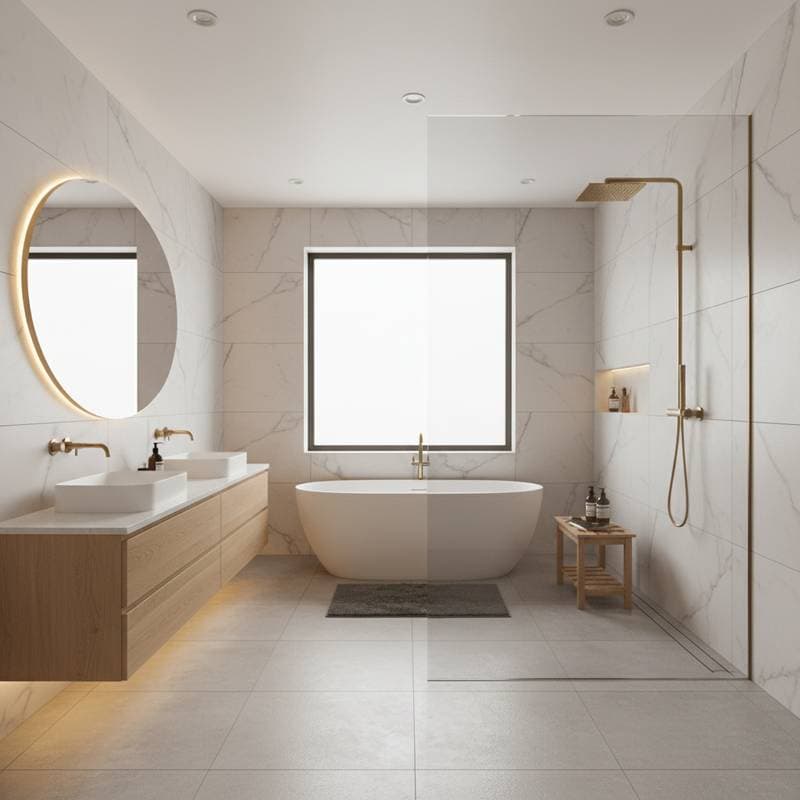
Mikkel Design Group optimized a city apartment's wet room with light gray terrazzo tiles and translucent glass dividers, diffusing light for a gentle ambiance. Embedded heating elements combat dampness and provide warmth in cooler seasons. Recessed niches in the shower wall offer accessible storage without encroaching on space. A monochromatic scheme, augmented by layered LED fixtures, channels Scandinavian minimalism. For similar results, prioritize multifunctional elements and consult flooring specialists for slip-resistant, water-compatible options.
Key Functional Advantages
The appeal of a wet room extends beyond aesthetics to enduring performance. Comprehensive sealing mitigates moisture accumulation, minimizing mold growth and structural deterioration over time. Maintenance simplifies to routine surface wiping, as the absence of enclosures eliminates hidden crevices. Barrier-free access supports multigenerational use, aligning with principles of adaptable living. These attributes position the wet room as a durable, versatile asset rather than a fleeting trend.
Strategies for Effective Budgeting
Maintain fiscal control by addressing waterproofing as the primary focus before decorative choices. Engage certified contractors versed in hydraulic systems, as precise installation determines longevity. Opt for durable porcelain over exotic stones to balance quality and affordability; for example, large-format tiles reduce grout lines and installation time. Explore modular drain assemblies for consistent performance at lower fabrication expenses.
Leverage online tools with pricing estimators and galleries to evaluate options like drain placements and surface treatments. Focus on layouts suited to smaller areas, such as corner drains to maximize openness. Detailed planning, including material swatches and 3D renderings, ensures alignment with both vision and resources.
Integrating the Design into Daily Life
Upon installation, a wet room reshapes routine rituals into moments of renewal. The expansive layout promotes a sense of clarity and repose, enhancing start-of-day transitions. Upkeep involves periodic grout refreshment and drain clearing to sustain hygiene. Heated surfaces and strategic towel placements regulate comfort and moisture levels. Ultimately, this upgrade delivers sustained practicality, inclusivity, and aesthetic enduringness that enriches homeownership.