
Unforeseen Kitchen Remodel Expenses: Strategies to Protect Your Budget
Homeowners envision a kitchen that combines style, functionality, and convenience for everyday use. Inspiration from design images often shapes these ideas, yet even meticulous plans encounter obstacles from concealed structural elements, utility systems, and local requirements. These factors accumulate expenses rapidly. Proper foresight and preparation allow control over the process and sidestep frequent monetary pitfalls.
The following ten guidelines, drawn from professional experience, illuminate common hidden costs and provide methods to address them. Apply these to foster intelligent design and construction choices that prioritize durability over mere aesthetics.
1. Assess Structural Integrity Before Demolition
Problem: Older homes frequently conceal issues such as uneven floors, load-bearing walls, or water damage that surface only after demolition begins. Ignoring these leads to mandatory reinforcements or repairs.
Context: In one project, removing outdated cabinets revealed sagging joists beneath the floor, necessitating additional support beams and delaying completion by weeks.
Solution: Hire a structural engineer for a pre-remodel inspection. Incorporate findings into your initial budget, allocating funds for potential reinforcements like sistering joists or wall shoring.
Technical Details: Engineers charge a flat fee for assessments, typically based on home age and size. Structural work involves licensed contractors who price by linear foot or square footage affected.
Benefit: Early detection prevents cascading delays and ensures a stable foundation for your new kitchen layout.
2. Update Electrical and Plumbing Systems Proactively
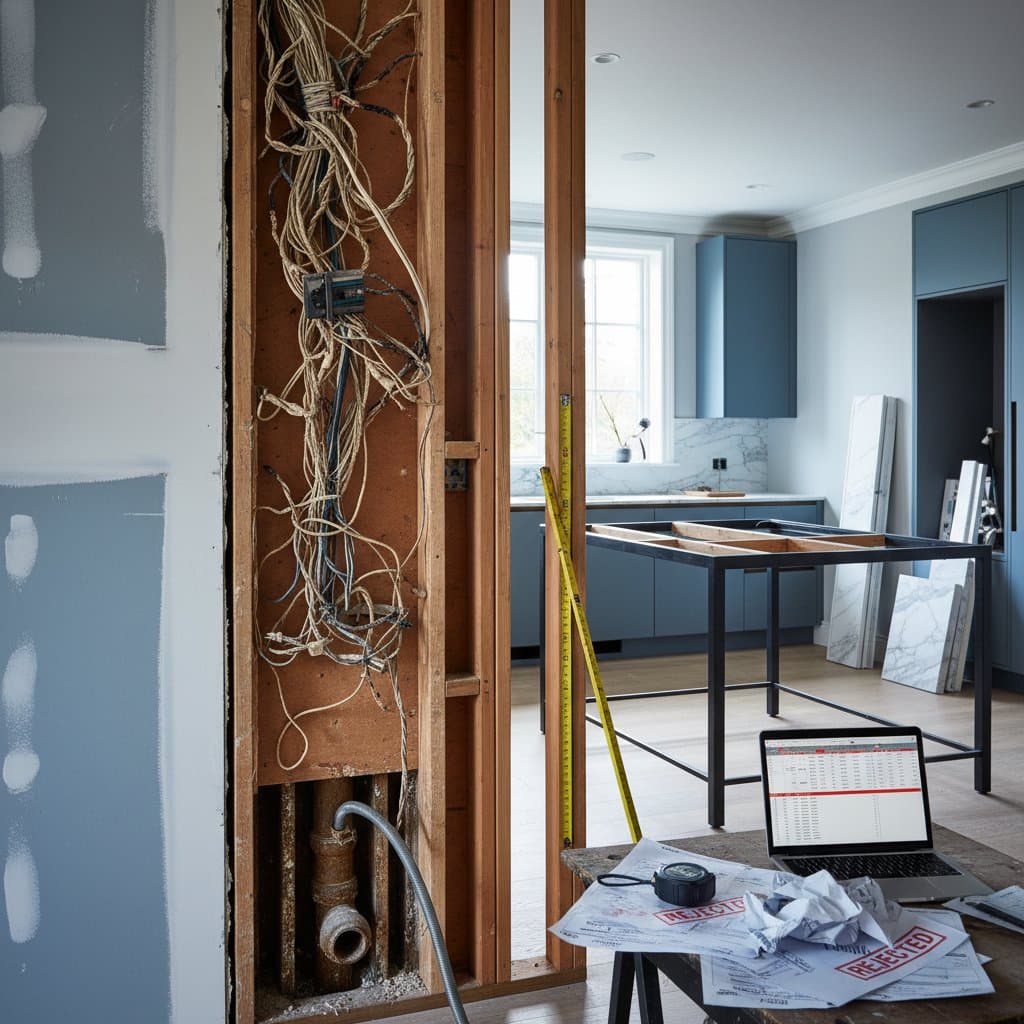
Problem: Outdated wiring and pipes in legacy kitchens fail to comply with modern safety codes. Opening walls triggers inspector mandates for full upgrades, beyond surface-level changes.
Context: A renovation in a mid-century home demanded rewiring from aluminum to copper lines after exposure, inflating costs by 20 percent.
Solution: Presume updates are necessary and reserve a contingency fund for new circuits, GFCI-protected outlets, appliance-specific lines, and PEX plumbing replacements.
Technical Details: Electrical work bills per circuit installed, while plumbing fees depend on fixture count and pipe runs. Integrate both estimates during planning.
Benefit: Modernized systems enhance safety, energy efficiency, and appeal to prospective buyers.
3. Anticipate Flooring Subfloor Repairs
Problem: Worn subfloors under existing tiles or linoleum often require leveling or replacement to support new materials, especially in moisture-prone areas.
Context: During a remodel, rotted subfloor sections from past leaks forced complete replacement, adding labor and material costs unexpectedly.
Solution: Inspect subfloors prior to selecting finishes. Budget for self-leveling compounds, plywood overlays, or full subfloor renewal based on condition reports.
Technical Details: Contractors assess damage by square footage; repairs range from minor patching to extensive demolition and reinstallation.
Benefit: A solid subfloor guarantees even, long-lasting flooring installation without future warping or cracks.
4. Prepare for Cabinetry Modifications and Fillers
Problem: Standard cabinets seldom align perfectly with irregular walls, baseboards, or protrusions like pipes, demanding on-site alterations.
Context: Installers once dedicated three extra days to trimming fillers and resizing drawers around a bowed wall, escalating labor charges.
Solution: Conduct precise measurements and incorporate filler strips, spacers, and custom trim into your design. Procure surplus panels for adjustments during fitting.
Technical Details: Modification fees accrue hourly outside base quotes; even minor obstacles like outlets necessitate cabinet repositioning.
Benefit: Proactive planning streamlines installation and curbs unexpected fees midway through the project.
5. Budget for Lighting and Ventilation Upgrades
Problem: Inadequate existing lighting or exhaust systems must conform to code, often requiring new recessed fixtures, under-cabinet lights, or powerful range hoods.
Context: A client overlooked ventilation needs, leading to a required hood upgrade that exceeded the electrical capacity and doubled appliance costs.
Solution: Evaluate current setups against local codes early. Allocate for LED fixtures, dimmers, and CFM-rated hoods compatible with your layout.
Technical Details: Electricians price per fixture; ventilation units vary by BTU output and ducting complexity.
Benefit: Enhanced lighting and air quality improve usability and comply with health standards seamlessly.
6. Include Permit and Inspection Expenses from the Start
Problem: Major alterations demand permits for electrical, plumbing, and structural modifications; neglecting them invites fines or complications during resale.
Context: A homeowner bypassed permits for minor changes, only to face retroactive fees and inspections during a home sale, totaling over $5,000.
Solution: Consult your contractor on required permits and associated costs. Schedule inspections to align with project phases.
Technical Details: Fees differ by location and project value; some jurisdictions base charges on estimated costs, others per trade involved.
Benefit: Compliance safeguards your investment, upholds safety, and maintains marketability.
7. Plan for Countertop and Backsplash Surprises
Problem: Seams, cuts for sinks, or edge treatments in countertops add complexity, while backsplash materials may need custom sizing around outlets and windows.
Context: Quartz countertop fabrication for an irregular island shape incurred premium templating and milling fees not anticipated in the quote.
Solution: Obtain detailed templates before ordering. Factor in seam allowances, edge profiles, and backsplash transitions in your material budget.
Technical Details: Fabricators charge for measurements, cuts, and installations; natural stone often commands higher rates for waste and polishing.
Benefit: Accurate planning yields a cohesive, professional finish without supplemental charges.
8. Calculate Temporary Relocation and Meal Expenses
Problem: Extended kitchen inaccessibility disrupts routines, leading to unplanned spending on dining out or alternative living arrangements.
Context: Families frequently incur $300 weekly in takeout fees due to lack of meal preparation options during peak disruption.
Solution: Establish a makeshift kitchen area with essentials like a microwave and hot plate. For larger projects, reserve funds for nearby rentals if needed.
Technical Details: Request a phased timeline from your contractor to predict usable spaces throughout construction.
Benefit: Thoughtful arrangements minimize stress and preserve your budget for core elements.
9. Detail Appliance Hookups and Custom Panels
Problem: Delivery services typically exclude connections, custom panels for integrated units, or modifications to cabinets and countertops.
Context: A refrigerator installation required gas line extensions and electrical upgrades, costs absorbed post-delivery without prior allocation.
Solution: Verify installation inclusions with vendors. Budget separately for professional hookups, venting, and panel fabrication to match cabinetry.
Technical Details: Appliance specialists bill per unit; integrated models demand precise measurements for seamless integration.
Benefit: Complete setups ensure appliances function optimally from day one, avoiding operational frustrations.
10. Reserve Funds for Cleanup, Disposal, and Final Touches
Problem: Demolition debris removal, deep cleaning, and minor finishings like painting or caulking often fall outside primary contracts.
Context: Post-remodel, hauling away old cabinets and sanitizing surfaces added $1,200 in fees for a standard project.
Solution: Include disposal services and final walkthrough checklists in your contract. Set aside a percentage for touch-ups based on project scale.
Technical Details: Waste removal fees depend on volume and local rates; cleaning crews charge by area size.
Benefit: A thorough conclusion delivers a move-in-ready space, enhancing overall satisfaction.
Secure a Rewarding Kitchen Transformation
Implementing these strategies transforms potential budget breakers into manageable aspects of your remodel. Focus on comprehensive planning to realize a kitchen that endures. Consult professionals early to tailor these insights to your specific home, ensuring a renovation that delights without financial regret.