
Costs and Layouts for 2026 Outdoor Kitchens
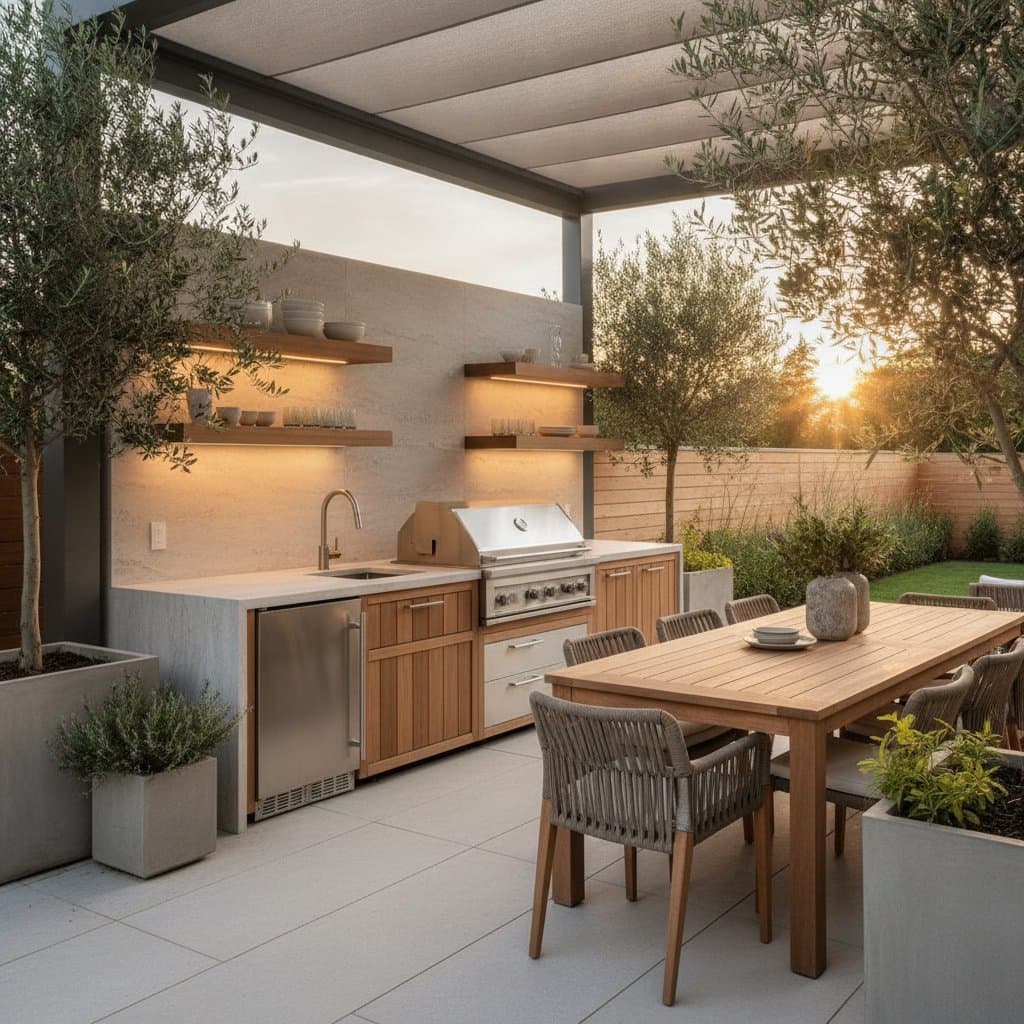
Summer visions often include a garden transformed into an inviting space for gatherings. Picture a sleek outdoor kitchen with a built-in grill, ambient lighting, and the sounds of conversation. Reality, however, frequently involves a basic barbecue setup on an unsteady table. With advancements in affordable designs, turning this vision into reality becomes achievable.
Constructing an outdoor kitchen requires careful planning to maintain style, function, and efficiency while controlling expenses. Focus on essential needs, garden usage patterns, and layout decisions that minimize costs and simplify maintenance.
Breaking Down the Costs
Financial details form the foundation of any project. Outdoor kitchen expenses range from basic configurations comparable to a mid-range appliance purchase to elaborate custom builds that approach full indoor renovations.
Categorize costs for clarity:
-
Grill or Cooking Equipment
The core element demands reliability. Opt for freestanding gas grills under £500 for versatility without installation fees. Charcoal units, often £200 to £400, deliver robust flavor but necessitate extra cleanup time. -
Countertops and Cabinets
Premium natural stone exceeds £100 per square meter and adds weight challenges. Select concrete overlays at £50 per square meter or treated wood composites for £30 to £60, ensuring UV and moisture resistance. -
Plumbing and Electrical Work
Installing a sink or powering a refrigerator involves professional labor, potentially £1,000 to £3,000. Proximity to the house allows tapping into existing lines, reducing fees by up to 50 percent. -
Shelter and Flooring
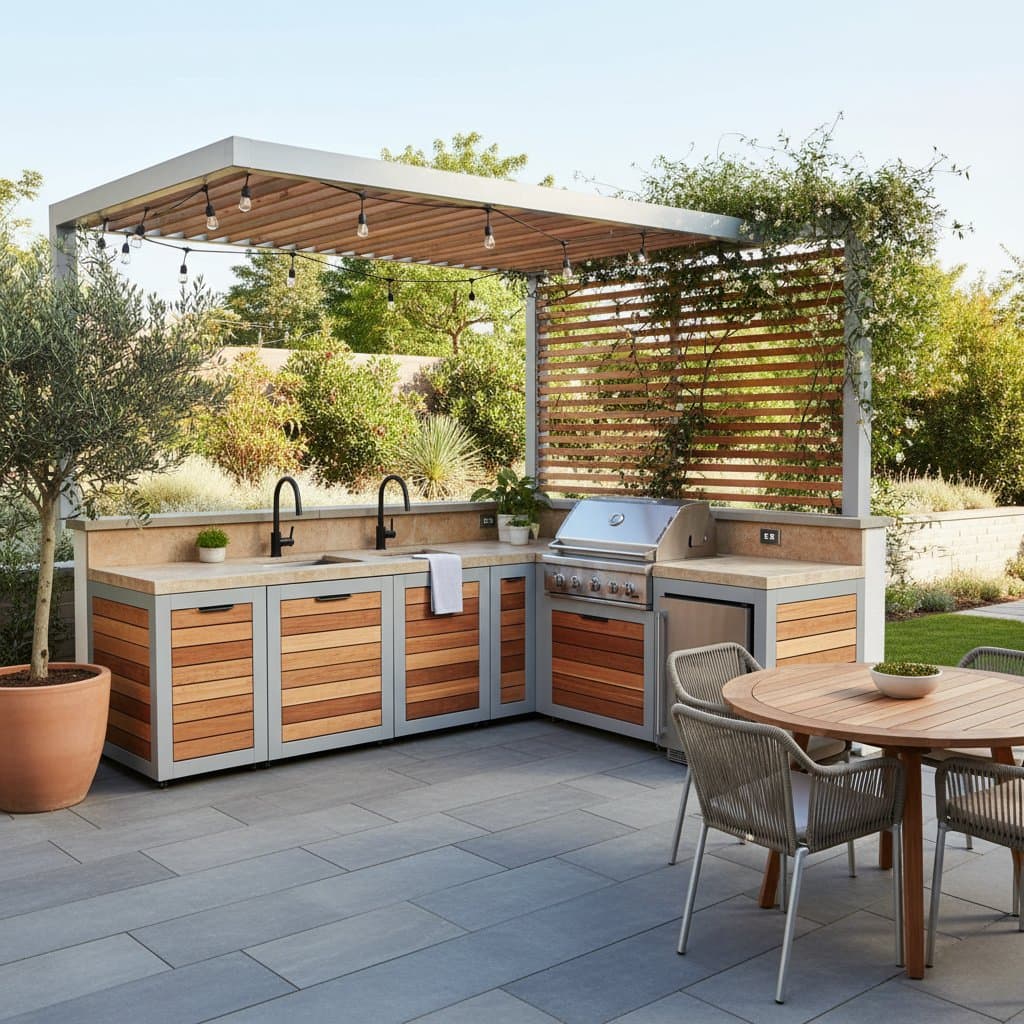
A basic pergola kit costs £300 to £800 and shields against weather. Choose gravel bases at £10 per square meter or interlocking deck tiles for £20 to £40, promoting drainage and stability. -
Extras and Finishing Touches
Incorporate LED string lights for £50 or modular seating benches at £150. These elements elevate the area into a versatile entertainment zone.
Prioritize permanent fixtures versus portable ones. A rolling cart for £100 serves as a prep station, offering adaptability without fixed commitments.
Selecting Durable Materials
British weather demands resilience against rain, sun, and temperature shifts. Materials must withstand these conditions to avoid frequent replacements.
Worktops: Granite endures with minimal upkeep but starts at £80 per square meter. Concrete requires annual sealing at £20 per application, while porcelain tiles mimic stone aesthetics for £40 to £70 per square meter.
Cabinets: Stainless steel resists corrosion yet costs £200 per unit. Aluminum frames with powder coating, priced at £100 to £150, provide lightweight durability suitable for coastal areas.
Floors: Composite decking at £25 per square meter resists rot and fading. Natural flagstone offers texture for £30 to £50, but textured surfaces prevent slips during wet conditions.
Protection: Install a retractable awning for £400 to extend usability into cooler months. These choices ensure longevity and reduce long-term repair expenses.
Evaluate how materials evolve over time. Select options that develop patina rather than deteriorate, aligning with practical outdoor demands.
Strategies to Control Expenses
Implement targeted approaches to enhance appeal while preserving funds:
- Integrate existing items, such as repurposing a wooden pallet into shelving for £0 additional spend.
- Blend textures by pairing affordable brick (£20 per square meter) with concrete accents for visual depth.
- Forego permanent plumbing; use a £30 insulated cooler with a faucet attachment for washing needs.
- Deploy solar-powered path lights at £10 each to illuminate without electrical runs.
- Incorporate lockable storage bins (£50) to organize tools and prevent weather damage.
Apply weather-resistant paint in neutral tones for £15 per liter to unify elements and refresh annually. These steps create cohesion without excess outlay.
Integrating the Space into Daily Life
After completion, the outdoor kitchen integrates seamlessly into routines. Initial uses reveal efficiencies, such as preparing meals entirely outdoors. Gatherings extend naturally, fostering relaxation amid fresh air.
Regular upkeep sustains performance. Clean surfaces weekly with mild soap, secure covers during off-seasons, and inspect connections annually. This investment yields enduring utility and enjoyment.
Steps to Launch Your Project
Begin modestly by sketching a layout that complements your garden's dimensions. Source materials from local suppliers for quality assurance. Personalize with functional add-ons like herb planters (£20) to reflect your preferences.
Outdoor kitchens thrive when they mirror user habits rather than imposed ideals. Track usage post-installation to refine further, ensuring the space evolves with your needs.