
2026 Two-Tone Cabinets: Trending Colors and Realistic Costs
Visualize entering a kitchen where sunlight highlights sage green upper cabinets above rich walnut lower ones. The room conveys freshness and stability, modernity and enduring appeal. Two-tone cabinets capture this essence, a design approach that advances with each season. Homeowners undertaking a complete renovation or minor update find this style delivers contrast and character without dominating the space.
Two-tone cabinets rank among the most compelling options for contemporary kitchen enhancements. They impart a bespoke quality while aligning with current aesthetics. Before selecting paints or materials, gain insight into emerging color palettes and the expenses involved in realizing this sophisticated effect.
Emerging Color Pairings for 2026 Kitchens
Cabinet color trends emphasize organic warmth and multidimensional textures. Designers prioritize finishes that invite interaction and reflect individual style, steering away from stark or overpowering choices. The following pairings represent predictions for influential kitchen designs next year.
1. Soft Neutrals Paired with Earthy Bases
Consider off-white upper cabinets alongside taupe or olive lower sections. Such arrangements foster serenity with underlying richness. These selections accommodate diverse accents, including brass pulls, granite surfaces, or clay tile surrounds.
Neutrals endure across styles, yet earthy undertones prevent monotony. Professionals recommend this combination for kitchens that balance innovation with everyday usability. Test samples under various lights to confirm harmony.
2. Natural Wood Integrated with Subtle Paints
Combining visible wood grains with painted surfaces stands as a persistent two-tone strategy. Opt for oak or walnut lower cabinets with upper ones in pale linen, soft sage, or terracotta hues. This blend introduces natural vitality and tactile interest, evoking an organic environment.
Balance remains essential in execution. Excessive wood may overwhelm, whereas minimal application risks fragmentation. Designers suggest a 60/40 distribution, allocating wood to base cabinets for enhanced durability against frequent contact.
3. Deep Blues Aligned with Charcoal Accents
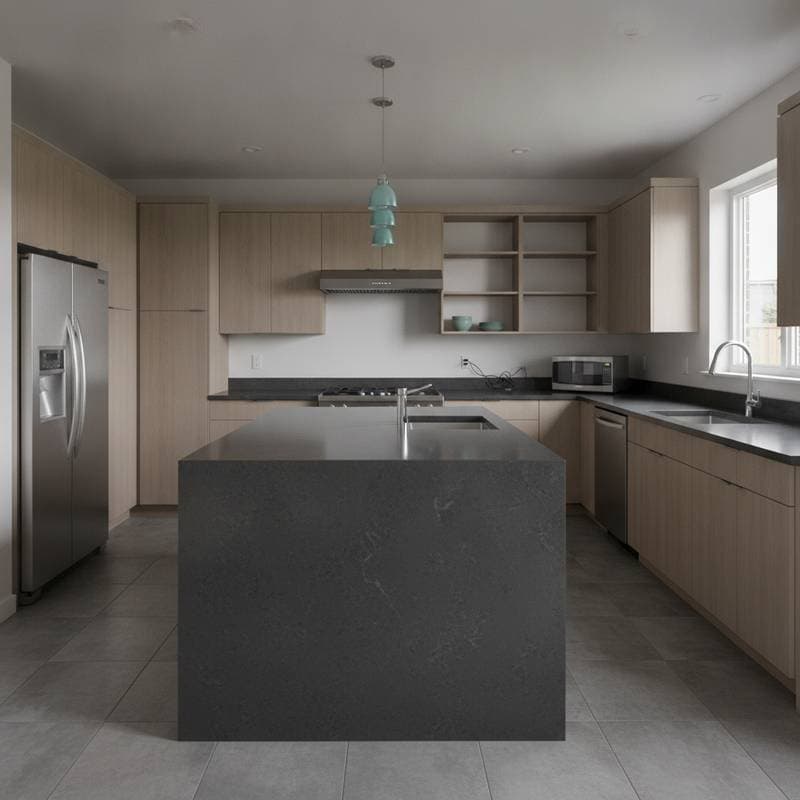
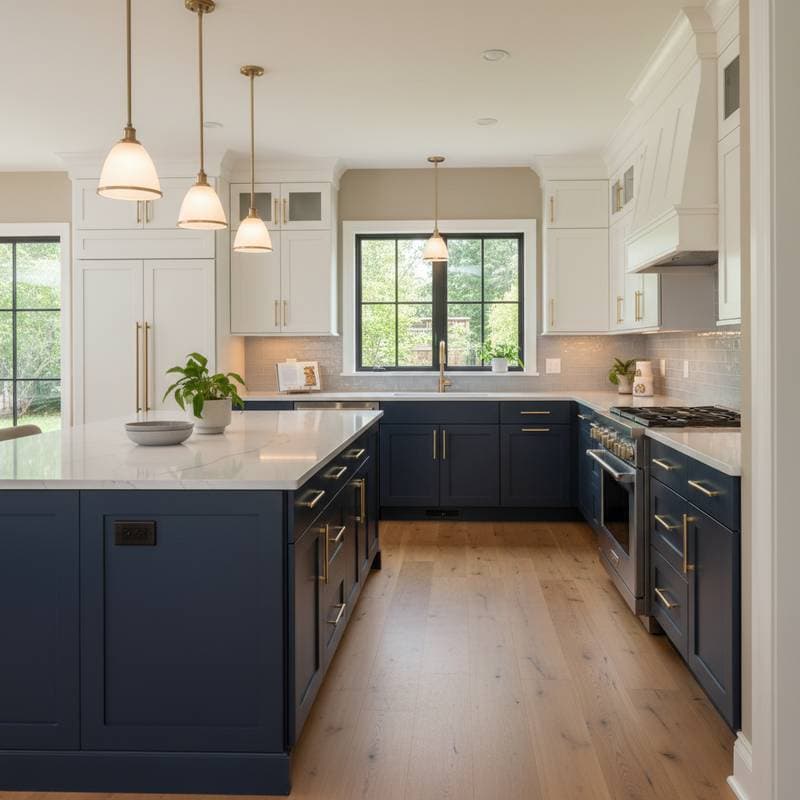
Individuals favoring dramatic elements may select navy or slate blue with charcoal or ebony counterparts. This duo of darker shades appears refined rather than oppressive when offset by bright worktops and gleaming fixtures.
Open-plan kitchens with abundant daylight amplify this palette's elegance. Marble or quartz slabs featuring faint patterns distribute illumination and temper the intensity. Consult a color specialist to calibrate proportions for optimal impact.
4. Balanced Greens for Renewed Vitality
Green persists as a favored cabinet hue. In two-tone applications, position muted green lowers beneath white or limestone uppers for equilibrium. The result energizes during day and comforts at night.
Varieties such as eucalyptus, moss green, or seafoam evoke tranquility and nature's proximity. These suit spaces adjacent to outdoor areas. Layer with plants or botanical prints to reinforce the theme.
5. Refined Black and White Contrasts
Black and white configurations endure as staples, though recent iterations soften the edges. Pair matte black bases with creamy white uppers for understated sophistication.
Incorporate wooden open shelves, gold-toned hardware, or fabric pendants to avoid rigidity. This approach merges contemporary lines with habitable warmth. Adjust ratios based on room size to maintain visual ease.
Breaking Down the Expenses of Two-Tone Cabinetry
Two-tone designs mimic bespoke craftsmanship, yet expenses fluctuate based on implementation methods. Options range from resurfacing existing units to installing new assemblies. Evaluate these paths to establish an informed financial plan.
1. Repainting Current Cabinets
For structurally sound cabinets, painting offers the most economical path to duality. Contractors often bill per linear foot or per panel. Budget extra for deep shades, non-gloss sheens, or specialty coatings that demand extensive surface preparation.
This technique provides adaptability for future shifts in preference. However, wear on high-traffic areas may cause flaking. Schedule maintenance every few years to preserve appearance.
2. Updating with Replacement Facades
Refacing retains original frameworks while swapping doors, fronts, and veneers. This approach costs less than total overhaul yet yields significant renewal. It excels in merging elements, like wooden bases with coated tops.
Integrate fixture enhancements during the process for cohesion. Homeowners view refacing as an efficient compromise between cost and transformation. Assess cabinet integrity beforehand to ensure viability.
3. Installing New Cabinet Systems
Outdated configurations or deteriorated units necessitate complete substitution. This method affords full customization in dimensions, layouts, and surfaces.
Bespoke installations enable exact hue coordination and layered applications. Pricing hinges on substrates such as hardwood, engineered composites, or synthetics, plus design intricacy. Factor in installation timelines for project planning.
4. Influences of Materials and Treatments
Labor aside, selections in substrates and coatings significantly impact outlays. Painted options incur higher fees due to priming and layering requirements. Premium sealants like urethane or conversion varnishes elevate costs but enhance resilience.
Hybrid choices, combining hardwood with coated composites, optimize value without sacrificing quality. Source samples to evaluate durability and aesthetics prior to commitment.
5. Enhancements from Fixtures and Features
Account for complementary elements that shape both expense and function. Cabinet pulls, levers, and grips vary in price and compatibility. Satin brass or dulled iron options complement diverse tones effectively.
Invest in damped closers, sliding organizers, or tailored dividers to boost utility and lifespan. These additions justify their cost through improved efficiency. Prioritize based on usage patterns.
Professional Strategies for Cohesive Execution
Experts employ precise techniques to ensure two-tone elements integrate purposefully:
-
Incorporate Tones in Surrounding Features: Reflect a cabinet shade in flooring, furnishings, or textiles. This strategy promotes continuity and softens transitions.
-
Refine Boundaries and Outlines: Achieve crisp demarcations between hues. Installers advise slim gaps or trim accents to delineate sections elegantly.
-
Leverage Surfaces for Unity: Select counter materials with veins or bases echoing both colors. This visually links the palette.
-
Maintain Uniform Fixtures: Uniform pulls across tones foster cohesion. Introduce variety in adjacent items like sconces or spigots for depth.
-
Harmonize Surface Glazes: Align matte or satin levels between sections. Divergent sheens risk discord unless intentionally contrasted.
Realizing Enduring Kitchen Appeal
Implementing two-tone cabinets transforms functional spaces into personalized retreats. By selecting harmonious colors, budgeting wisely, and applying expert refinements, achieve a kitchen that evolves with your lifestyle. This investment yields daily enjoyment and lasting value.