
2026 Biophilic Kitchens: Greenery Enhances Everyday Function
Picture a morning routine where vibrant greenery envelops your kitchen island and sunlight dances through foliage overhead. The atmosphere carries a crisp freshness, thoughts sharpen with clarity, and the room pulses with subtle vitality. This scene captures the core of biophilic kitchen design, where natural elements merge with thoughtful architecture to foster health, productivity, and aesthetic appeal.
Biophilic principles draw from humanity's innate affinity for nature, incorporating plants, organic shapes, and dynamic light to counteract urban disconnection. In kitchens, these features purify air, reduce stress, and stimulate sensory engagement. Homeowners report heightened satisfaction in spaces that evolve with the seasons, blending utility with serene beauty.
The Rising Appeal of Biophilic Kitchens
Kitchens have evolved beyond mere meal preparation zones into multifunctional hubs for socializing, working, and relaxation. This shift demands designs that support emotional well-being amid daily demands. Biophilic elements address these needs by introducing natural rhythms that promote focus and joy.
Plants actively filter pollutants like benzene and formaldehyde, common in cooking environments, while their presence softens acoustics and visual starkness from stainless steel and tile. Studies highlight how such integrations lower cortisol levels, sparking creativity during recipe experimentation or family meals. The outcome is a dynamic space that invigorates rather than exhausts.
1. Install a Living Wall for Instant Impact
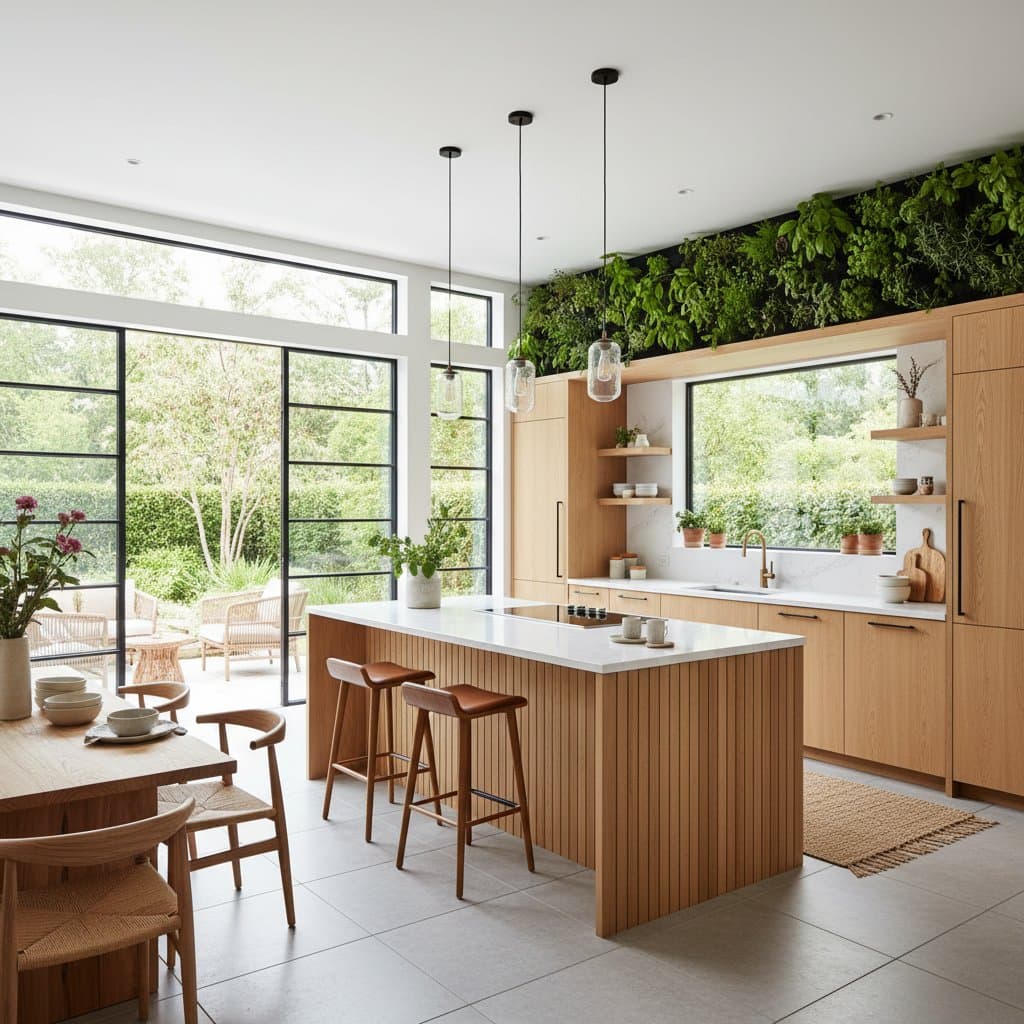
A living wall serves as a transformative centerpiece, combining visual drama with everyday utility. Position it above the countertop or along an accent wall to cultivate herbs such as basil, thyme, and cilantro within easy harvesting distance. This setup ensures a steady supply of aromatic ingredients, reducing reliance on store-bought produce.
Select species suited to your kitchen's microclimate: opt for resilient options like spider plants or snake plants in low-light areas, and sun-loving varieties such as rosemary or chives near windows. Implement a hydroponic or automated watering system to deliver precise moisture, paired with a hidden reservoir to manage excess drainage discreetly.
In compact layouts, modular panels offer scalability; attach slim units to unused vertical space beside the refrigerator or over a pantry door. Maintenance involves weekly pruning and monthly nutrient feeds, yielding a lush backdrop that evolves with your culinary adventures.
2. Incorporate Natural Materials for Tactile Depth
Beyond flora, biophilic kitchens thrive on materials that echo earth's palette and textures. Select cabinetry in reclaimed oak or teak for their warm grains, complemented by quartzite counters veined like river stones. Flooring in polished concrete or terracotta tiles grounds the room in earthy resilience.
During renovations, layer these with subtle accents: install bamboo drawer pulls or linen-upholstered bar stools to introduce softness against harder surfaces. Display artisanal elements, such as hand-thrown pottery for utensil storage or a slate chalkboard for meal planning, to infuse authenticity.
These choices not only endure daily wear but also create a multisensory haven. Touch the smooth grain of wood during prep work, or feel the cool stone underfoot, enhancing the tactile joy of cooking.
3. Harness Light to Amplify Natural Energy
Daylight stands as a cornerstone of biophilic success, illuminating plants and revealing subtle color shifts in materials. Maximize it by installing sheer linen curtains on large windows or adding clerestory panels to draw light into deeper corners. In windowless zones, full-spectrum bulbs simulate sunlight's spectrum for consistent vibrancy.
Transition to evenings with strategic illumination: position adjustable track lights to highlight foliage, and use dimmable sconces for ambient warmth. Avoid cool fluorescents; instead, choose 2700K LEDs that emulate sunset hues, fostering a seamless day-to-night flow.
This approach regulates circadian rhythms, boosting alertness for morning coffee rituals and relaxation for late-night snacks. Over time, the space adapts to seasonal light variations, maintaining its invigorating essence year-round.
4. Forge Seamless Indoor-Outdoor Links
Kitchens adjacent to yards or balconies benefit from expansive connections that invite nature indoors. Sliding glass panels or French doors expand the footprint, allowing breezes to carry garden scents while framing views of blooming borders.
Cultivate a threshold herb garden with raised beds of lavender and oregano, positioned just beyond the door for quick access. In urban settings without direct access, employ balcony planters or vertical trellises visible through glass, simulating an extended green realm.
These bridges expand perceived space and encourage outdoor integration, such as al fresco prep on mild days. Even modest implementations, like a windowsill vignette of potted succulents, cultivate a sense of boundless possibility.
Sustaining Harmony in Your Biophilic Kitchen
Maintaining a biophilic kitchen requires intentional care to preserve its living character. Monitor plant health through soil moisture checks and pest inspections, rotating positions seasonally for even growth. Adjust material patinas with gentle cleaning to retain their natural allure.
As you inhabit the space, observe how these elements shape routines: herbs inspire spontaneous salads, light invigorates breakfasts, and textures soothe evening gatherings. This design philosophy yields enduring benefits, where wellness emerges from balanced, nature-attuned living.