
Open Concepts Fade: Walls Reemerge in 2026 Kitchens
Imagine entering your kitchen with a coffee mug in hand. The space offers a clear view unobstructed by laundry heaps or living room disarray. The dishwasher operates with subdued sound. The scent of toast remains confined to the area. This scene illustrates the understated revival of walls.
Open-concept layouts have dominated renovation preferences for years. Real estate descriptions highlighted their ability to maximize light, expand perceived space, and promote seamless flow. Many homeowners, however, now pursue a different vision. They seek genuine rooms equipped with doors that close and odors that stay contained.
A recent remodeling survey reveals that more than half of homeowners favor separation between kitchen and living areas. Escalating energy costs, the rise of remote work, and a growing demand for privacy fuel this evolution. The central inquiry focuses on whether semi-closed kitchens deliver greater financial and practical advantages.
Reasons Homeowners Reconsider Open Layouts
The open-concept kitchen aimed to unite families through shared spaces. It succeeded in fostering togetherness but also exposed cooking sounds, clutter, and perpetual cleaning demands. Interior designer Lara Benson, with over a decade in kitchen remodels, notes, “People love openness until they realize it also means everyone sees their mess.”
Families increasingly manage work, study, and meal preparation in the same home simultaneously. The seamless transition between kitchen and living room hinders focus and disrupts dialogue. Financially, such designs elevate heating and cooling expenses. Vast open areas require substantial energy to achieve uniform temperatures.
In contrast, a closed or partially enclosed kitchen establishes distinct thermal zones. This approach eases the workload on air conditioning and heating systems. For an average household, the result appears as a significant reduction in yearly utility expenditures, often amounting to hundreds of dollars.
Financial Advantages of Reintroducing Walls
Reinstating walls may appear regressive, yet for numerous homeowners, it represents a prudent economic choice.
1. Energy Efficiency Gains
- Defined zones reduce expenses. Enclosed kitchens retain cooking-generated heat, minimizing additional heating needs in winter.
- Sound barriers limit accessory purchases. Walls mitigate noise, decreasing the need for costly soundproof appliances or specialized open-layout range hoods.
2. Construction Expenses
Adding walls often proves less expensive than installing support beams for completely open configurations. Licensed contractor Michael Tran from Portland states, “Removing load-bearing walls can cost thousands more than framing new ones. Clients often think open layouts save money, but the structural work usually adds cost.”
3. Impact on Property Value
Market trends affect sales potential, and prospective buyers increasingly value delineated areas. A current homebuyer analysis shows that properties listing kitchens as “separate” or “enclosed” sell faster in various urban markets. Renovators attuned to this shift position their homes advantageously.
Psychological Benefits of Spatial Separation
Beyond monetary and thermal considerations, a distinct kitchen provides profound reassurance. It delineates boundaries between activity and repose, commotion and tranquility.
Walls afford privacy within communal residences. Parents prepare meals while children concentrate in a quieter living room. Guests converse without encroaching on the cooking area. One can postpone addressing a pile of dishes until later without observation.
Psychologist Dr. Nina Delarosa, an expert in residential environments and stress, observes, “People underestimate how much visual clutter affects their mental load. A separate kitchen can give your brain a break.”
This cognitive relief does not register on financial ledgers, yet it yields substantial returns in everyday satisfaction.
Hybrid Configurations: Achieving Balance
Few homeowners desire a complete reversion to outdated fully closed kitchens. Contemporary approaches emphasize equilibrium. Designers craft hybrid layouts that integrate openness with gentle divisions.
Key features include:
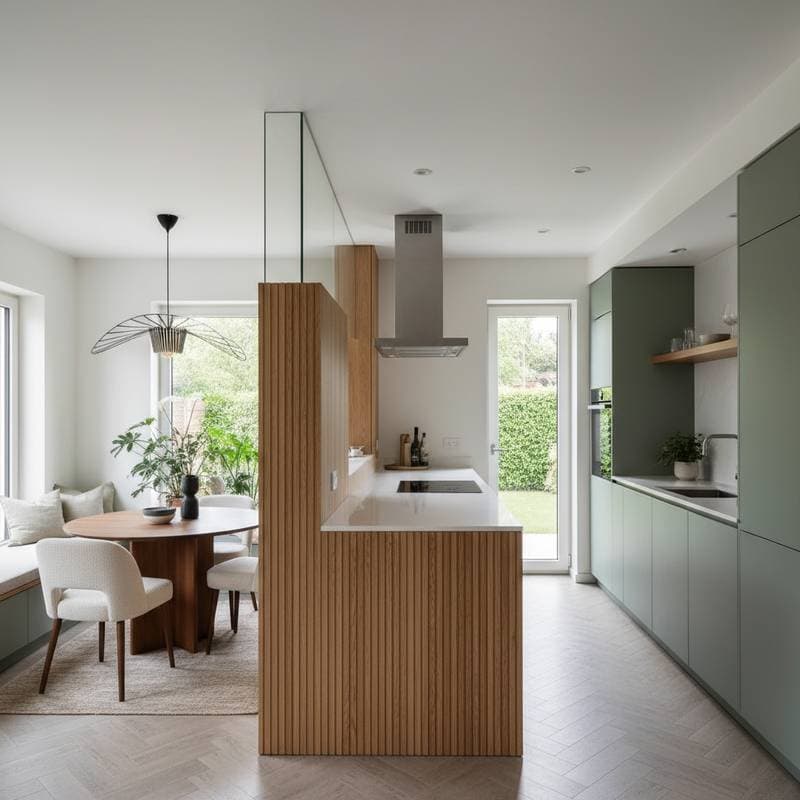
- Half-height walls or glass dividers that preserve illumination while curbing sound
- Pocket doors or sliding panels for adaptable use
- Breakfast bars or peninsula counters serving as subtle separators
- Thoughtful cabinet arrangements to delineate functional zones
These solutions retain the communal aspects of open designs while restoring seclusion. They enable adjustments as family needs evolve. Architect Julia Kim of Studio Hearth comments, “We are designing for flexibility. A kitchen can open up for entertaining but close off for daily life. It’s the best of both worlds.”
Planning a Budget for Kitchen Modifications with Walls
Incorporating walls or dividers need not involve extensive demolition. Homeowners achieve substantial improvements through targeted updates within reasonable budgets.
Consider this cost overview:
| Project Type | Typical Cost Range | Notes |
|---|---|---|
| Framing and drywall for one wall | $1,200 - $4,000 | Costs vary by dimensions and finishing |
| Adding sliding or pocket doors | $1,000 - $3,500 | Glass variants increase expenses |
| Installing partial glass wall or partition | $2,500 - $6,000 | Balances light and separation |
| Redesigning HVAC vents or lighting | $500 - $2,000 | Ensures adequate circulation |
| Full kitchen reconfiguration | $25,000 - $60,000 | Encompasses cabinets, plumbing, electrical |
Regional differences and contractor rates influence figures, but the essential point persists. Substantial privacy enhancements require no exorbitant outlays.
Emerging Design Trends Reinforcing the Change
The revival of walls permeates kitchen aesthetics, from color selections to storage solutions. Professionals favor inviting, enclosed atmospheres that embrace containment.
1. Warm, Textured Finishes
Wood paneling, patterned tiles, and subdued surfaces supplant sleek minimalism. These choices render enclosed kitchens hospitable rather than restrictive.
2. Layered Illumination Strategies
Multiple light sources prove vital. Focused beams aid preparation, general glows support meals, and highlights accentuate features, invigorating compact areas.
3. Acoustic Management
Sound-absorbing panels and pliable materials counteract echoes amplified in bounded spaces.
4. Effective Airflow Solutions
Enclosed kitchens retain warmth and aromas, necessitating robust ventilation. High-performance, low-noise hoods or integrated systems enhance usability and appeal.
Steps to Shift from Open to Enclosed Designs Successfully
For homes with expansive kitchens, introducing walls warrants a measured approach.
- Clarify objectives. Determine if the focus lies on noise reduction, expense savings, or enhanced coziness. This priority shapes the plan.
- Consult professionals promptly. Structural evaluations prove essential. Experts assess feasible additions or modifications.
- Allocate reserves. Unexpected issues arise in renovations. Reserve 10 to 15 percent of the budget for unforeseen elements.
- Evaluate market implications. Inquire with local agents about enclosed kitchen performance. Preferences differ by location.
- Address airflow and brightness. These elements determine success. Collaborate with designers to sustain ventilation and natural light.
The aim involves refining rather than eliminating openness. Strategic partial enclosures deliver comfort and utility.
Pitfalls to Sidestep in Wall Projects
Minor additions can falter without foresight. Consider these common errors:
- Obstructing daylight. Position solid barriers away from windows or key views to preserve illumination.
- Neglecting air circulation. Inadequate venting prolongs odors. Prioritize effective hoods and vent placement.
- Excessive infrastructure shifts. Relocating pipes or wiring escalates costs. Integrate changes with existing setups where feasible.
- Overlooking regulations. Partial walls may demand approvals. Verify requirements prior to commencement.
Contractor Michael Tran advises, “A wall is simple until it runs into a vent or wire. Then it’s not so simple anymore.”
Societal Influences Driving the Evolution
Design movements mirror lifestyle patterns. Rapid paces once rendered open areas freeing. With prolonged home occupancy, seclusion and hush regain premium status.
Enclosed kitchens align with this tempo. They permit one individual to conduct virtual meetings while another cooks, or allow adolescents to eat without household interruption. The solace of bounded areas redefines worth.
Interior consultant Rita Mendoza remarks, “Clients are realizing that comfort is a form of luxury. It is not about square footage anymore, it is about how a space feels to live in.”
This perspective aligns with homeowners monitoring renovation funds and operational costs.
Preserving the Value of Your Renovation
After installing walls, sustaining the upgrade demands attention and versatility.
- Harmonize elements. Match flooring and trim across spaces for cohesive appearance, despite enclosure.
- Incorporate adaptability. Use detachable panels or sliders to respond to changing routines.
- Anticipate sales appeal. Versatile kitchens that toggle between open and closed states attract buyers.
- Uphold air systems. Routine filter and vent maintenance ensures quality and longevity.
This direction endures because enclosed designs prioritize livable enjoyment over mere display.