2026 Pantry Upgrades That Transform Kitchen Storage
Picture a pantry where every item is visible and within easy reach, eliminating the frustration of overlooked supplies and forgotten purchases. Homeowners increasingly view the pantry as an integral element of kitchen design, one that supports daily routines through thoughtful organization and efficient use of space. These upgrades not only streamline meal preparation but also contribute to a more harmonious home environment.
Kitchen renovations often exceed initial budgets, with surveys indicating that only one-third of projects stay on track financially. The pantry deserves careful attention to prevent it from becoming an unexpected expense. By focusing on strategic enhancements, homeowners can achieve significant improvements without compromising their financial plans.
Establishing an Effective Pantry Layout
Effective pantry design begins with understanding personal usage patterns, ensuring that the space aligns with how family members access and store items. A mismatched layout leads to inefficiency, regardless of aesthetic appeal. Start by mapping out daily needs to create a foundation for lasting organization.
Implementing Zoned Organization
Divide the pantry into distinct zones based on accessibility and frequency of use, drawing from principles used in professional kitchens. Assign top shelves to lightweight, seldom-used items such as seasonal baking tools or extra appliances. Position eye-level shelves for frequently reached essentials like spices, canned goods, and snacks, while reserving lower areas for heavier items including bulk grains or beverage cases.
This zoning approach minimizes physical strain and promotes better inventory management. For instance, place pet food or cleaning supplies in less accessible spots to prioritize human food items. Regular reviews of these zones every few months help maintain the system as habits evolve.
Incorporating Pull-Out Mechanisms
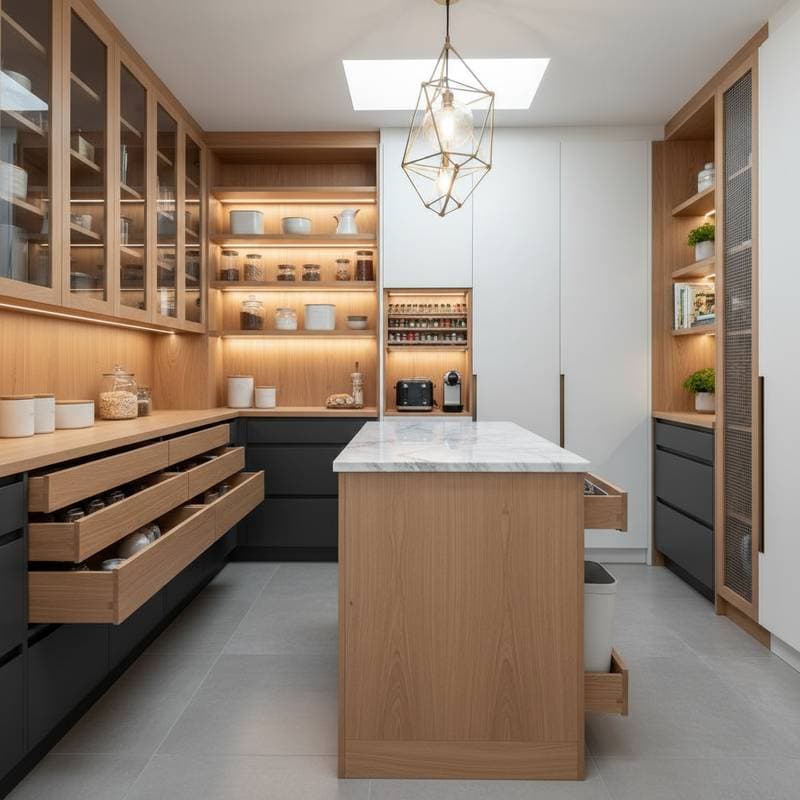
Deep pantry shelves often hide items at the back, leading to duplicate purchases and wasted space. Pull-out drawers and sliding trays address this by bringing contents forward with a simple motion. Select heavy-duty glides rated for at least 100 pounds to handle stocked loads without sagging.
Installation costs range from $100 to $200 per unit, depending on size and material. Eric Dalton of Dalton Woodworks observes, "Pull-outs transform accessibility, allowing users to spot and retrieve items quickly, which reduces overbuying." For DIY enthusiasts, kits from hardware stores simplify retrofitting existing cabinets, requiring basic tools like a drill and level.
Designing Concealed Storage Solutions
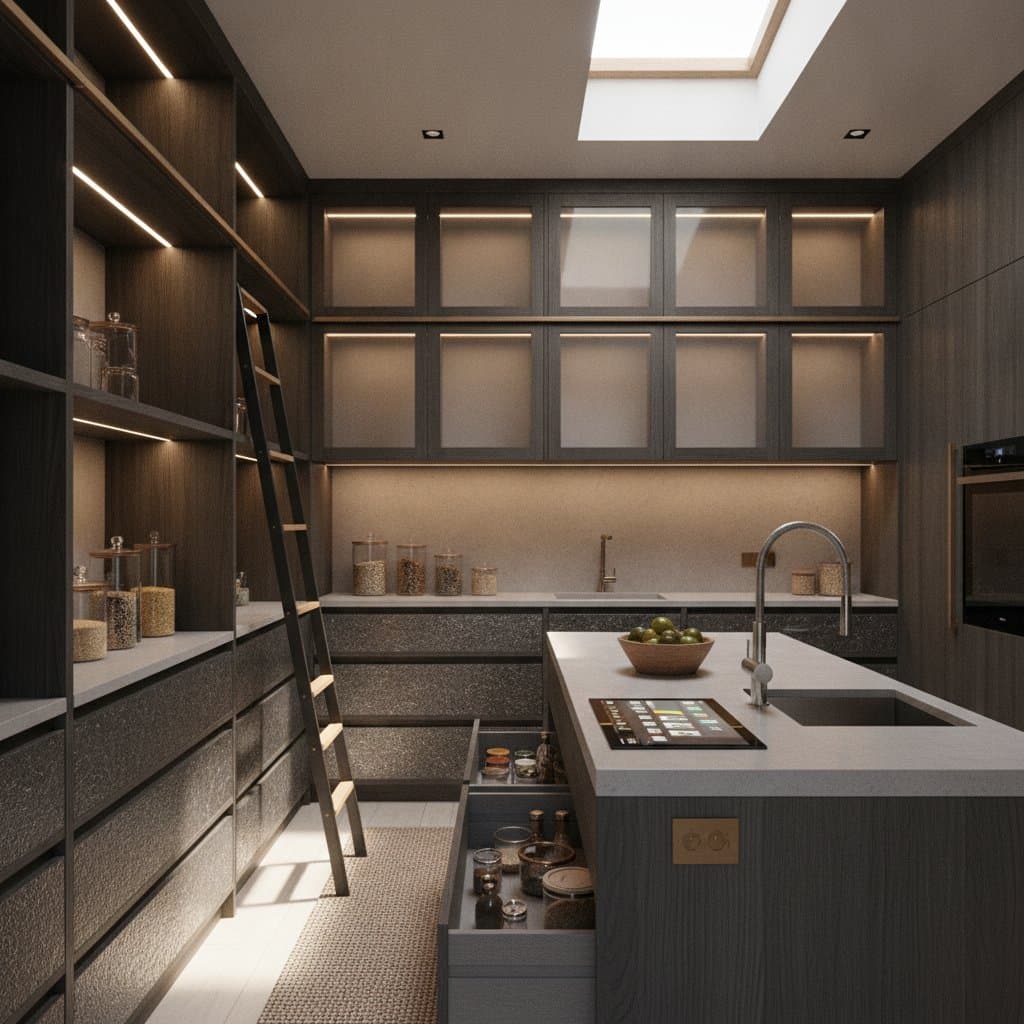
For seamless integration, consider a hidden pantry embedded within cabinetry or walls, maintaining a clean kitchen aesthetic. These setups feature custom panels that blend with surrounding surfaces, concealing storage while preserving flow. Include soft-close doors and adjustable internals for versatility.
Budget $4,000 to $7,000 for a complete installation, factoring in materials and labor. This investment suits open-concept kitchens where visual clutter detracts from design. Consult a carpenter early to ensure structural compatibility and code compliance.
Enhancing Visibility with Strategic Lighting
Poor lighting in pantries contributes to overlooked items and increased food waste. Install LED under-shelf strips or recessed cans to illuminate every corner evenly. Opt for cool white tones around 4000K to mimic natural light, aiding in quick identification of labels and expiration dates.
Motion-activated options activate upon door opening, conserving energy while providing hands-free convenience. Total costs fall between $200 and $500, with professional wiring recommended for permanent fixtures. Nadia Flynn of BrightSpace Interiors emphasizes, "Clear visibility through proper lighting encourages better habits and maximizes the pantry's utility."
For budget constraints, battery-powered LED pucks adhere easily to shelves without electrical modifications. Position them at multiple levels to eliminate shadows, and replace batteries quarterly to sustain performance. This upgrade alone can reduce search time during meal prep by up to 50 percent.
Balancing Cost and Aesthetic Appeal
Pantry projects risk escalating expenses through unplanned additions or material choices. Prioritize multifunctional elements that deliver both form and function to maintain control over spending. Thoughtful selection ensures the space remains stylish without unnecessary outlays.
Cost-Effective Material and Installation Choices
- Select modular shelving from major retailers, which offers customizable heights and depths at 50 percent less than bespoke options.
- Opt for open shelving or semi-enclosed units to cut fabrication costs while allowing air circulation.
- Handle painting and sealing personally using primer and semi-gloss finishes for durability and a professional look.
- Repurpose underutilized areas like adjacent closets to expand storage without new construction.
- Allocate 10 to 15 percent of the budget as a buffer for unforeseen issues such as subfloor adjustments.
Jared Ellis of HomeValue Advisors advises, "Prioritize upgrades that enhance usability; elegant details follow naturally when the core works well." Track expenses with a simple spreadsheet to monitor progress and adjust as needed.
Maximizing Resale and Long-Term Benefits
A thoughtfully upgraded pantry elevates the entire kitchen's appeal, signaling quality craftsmanship to potential buyers. Organized spaces evoke a sense of order and preparedness, influencing perceptions of the home's overall maintenance. Neutral palettes and adaptable features broaden marketability.
Clara Johnson of Hearth & Home Realty points out, "Buyers respond positively to pantries that demonstrate efficient living, often leading to competitive bidding." Adjustable shelving accommodates diverse needs, from family-sized stockpiles to minimalist setups. Document the upgrades with before-and-after photos for listing enhancements.
Incorporate durable materials like melamine-coated particleboard for moisture resistance, extending the pantry's lifespan. These choices not only support daily use but also protect investment value over time.
Steps to Execute Your Pantry Upgrade
Transition from planning to implementation by breaking the project into manageable phases. Begin with a thorough evaluation to identify specific challenges, such as insufficient depth or dim interiors. This assessment guides material and feature selections.
Establish a firm budget ceiling upfront, researching prices for key components like hardware and lighting. Obtain quotes from at least three professionals to compare scopes and timelines. Emphasize functionality in decisions, selecting elements that address primary pain points first.
Proceed in stages: reorganize existing contents, install core shelving, then add lighting and finishes. This phased approach allows testing and refinement without overwhelming disruption. Upon completion, the pantry becomes a reliable ally in kitchen efficiency, fostering smoother routines and reduced stress.
Achieving Clarity Through Organization
Targeted pantry upgrades deliver immediate improvements in accessibility and enjoyment of the kitchen space. By focusing on layout, lighting, and smart budgeting, homeowners create environments that support healthy habits and streamline operations. The result is a transformed area that enhances daily life with purpose and ease.