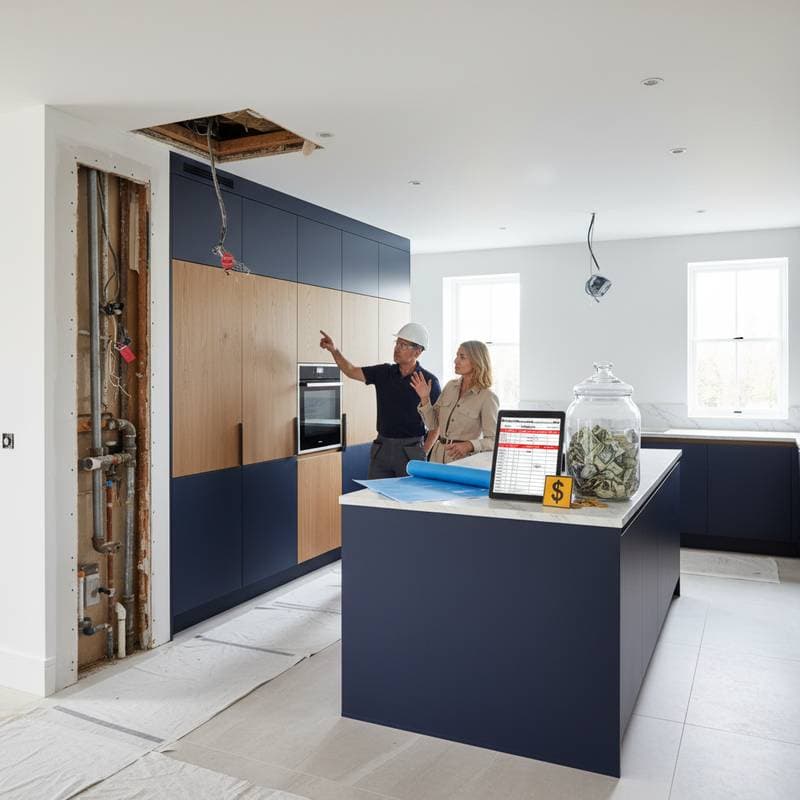
Hidden Costs That Derail 2026 Kitchen Remodel Budgets
The National Kitchen and Bath Association's recent homeowner survey indicates that just 38% of kitchen remodels adhere to initial budgets. The majority experience overruns averaging 22%, primarily from unanticipated or undervalued expenses. Homeowners embarking on a remodel benefit from recognizing these fiscal pitfalls prior to starting work, which separates a managed project from uncontrolled costs.
Understanding Budget Creep in Renovations
Many homeowners approach planning with an ideal budget, believing the estimate encompasses all elements. Such figures usually account solely for apparent items like cabinets, surfaces, and appliances. Overlooked aspects include structural modifications, compliance updates, and unexpected conditions on site.
General contractor Maria Kent from Kent Build Group, who possesses 18 years in residential renovations, notes, "Half of the budget blowouts we see come from conditions hidden behind walls or under floors. Clients rarely factor those in."
A practical budget incorporates a contingency of 15% to 20%. This reserve absorbs surprises without compromising funding or standards during execution.
Sources of Concealed Expenses in Professional Practice
Concealed costs emerge from three primary areas: pre-existing structural elements, adherence to regulations, and alterations to designs amid construction. Research from the Home Improvement Research Institute reveals that 41% of projects demand electrical or plumbing enhancements post-demolition. These problems surface because aging structures seldom comply with contemporary standards.
Building inspector Jerome Fields at Northwest Structural Consulting states, "Once you open walls, you often find undersized wiring or outdated plumbing. You cannot close the wall until those are corrected, and that adds thousands to labor and materials."
Design shifts during the process represent another frequent issue. Homeowners frequently revise arrangements or choices for appliances upon visualizing progress. Even small adjustments may initiate chain reactions, such as recutting surfaces or redirecting air systems.
Strategies to Avoid Financial Surprises
Effective financial management in remodeling starts with thorough preparation and expert records. Homeowners minimize risks of hidden costs by following these measures:
- Conduct a pre-renovation assessment. Engage a certified inspector to detect structural or system flaws before designing. This service costs $300 to $700 yet averts potential five-figure issues.
- Obtain itemized estimates. Seek breakdowns from contractors instead of total sums. This approach distinguishes allowances from firm prices.
- Finalize designs promptly. After selecting materials and layouts, record all decisions. Evaluate any subsequent orders for effects on expenses and schedules.
- Establish a contingency fund. Reserve 15% to 20% of the total budget until project end. This maintains resources for unforeseen needs without interrupting work.
Realities of Material and Labor Expenses
Rising material prices and limited skilled workers strain kitchen renovation finances. Remodeling Magazine's national analysis reports a 12% increase in cabinet costs over the recent period, alongside an 8% rise in labor fees. Homeowners who initiate projects ahead and secure pricing via contracts shield against interim escalations.
Project manager Elena Ruiz of Pacific Design Build recommends, "We advise clients to sign fixed-price material contracts as soon as selections are made. That is one of the few ways to control exposure to price escalation." Ruiz further suggests confirming that estimates cover disposal, transport, and permitting fees, which frequently emerge in concluding bills.
Resources for Informed Financial Planning
Disciplined homeowners utilize external verification. Resources like the Cost vs. Value Report, local contractor listings, and municipal fee guides set appropriate benchmarks. Prior to contracts, verify insurance, licensing, and references from three previous clients. Reputable experts furnish payment plans linked to milestones, rather than random intervals.
Safeguarding Your Renovation Returns
After completion, sustain fiscal oversight. Organize receipts, guarantees, and records for property value enhancement and deductions. Arrange periodic checks on plumbing and electrical components every few years to preserve the upgrade.
A kitchen remodel yields strong value among home enhancements when approached with clarity and anticipation. Early detection of concealed costs, expert supervision, and a dedicated reserve secure both fiscal stability and project satisfaction.