
The Return of Closed Kitchens: A Key 2026 Remodeling Trend
Imagine joining a video conference while aromas from dinner preparation fill the air. Background noise from appliances and family activity distracts, turning a professional moment into an unintended performance. Open floor plans promised seamless living, yet many homeowners now seek the separation that closed kitchens provide. This shift reflects practical needs alongside a touch of nostalgia.
Industry surveys indicate that 40 percent of homeowners favor partial or full separation between kitchen and living areas. Factors such as escalating energy expenses, acoustic challenges, and evolving daily routines fuel this preference. The once-dominant open layout now reveals limitations in privacy and control.
This article examines the drivers behind the trend, evaluates costs and benefits, and offers guidance for incorporating closed kitchens into your remodel.
Energy Efficiency Advantages
Open layouts complicate climate control across expansive areas. Cooking generates heat that spreads unevenly, while air conditioning struggles to maintain comfort. Closed kitchens isolate these zones, allowing targeted regulation.
Energy consultant Mark Reyes of EcoBuild Home Services notes, "Closed kitchens are inherently more efficient. You can contain both heat from cooking and cooled air from your HVAC system."
Such isolation reduces overall energy use. Homeowners benefit from lower utility bills, particularly with current cost increases. Enhanced ventilation and lighting in enclosed spaces further cut expenses through precise, low-wattage installations.
Financial Implications of Reinstating Walls
Restoring a wall demands investment, though typically less than initial demolition. Expect costs from $3,000 to $8,000 for framing, drywall installation, and finishing, varying by material choices and electrical integrations.
These expenses yield returns through energy savings and preserved finishes. Enclosed areas experience less exposure to cooking residues, extending the life of paint and surfaces. Real estate professionals observe growing demand for defined spaces among families and multigenerational households.
Over time, reduced maintenance offsets upfront costs. A closed kitchen enhances practicality, appealing to buyers who prioritize function in daily living.
Innovative Design Approaches
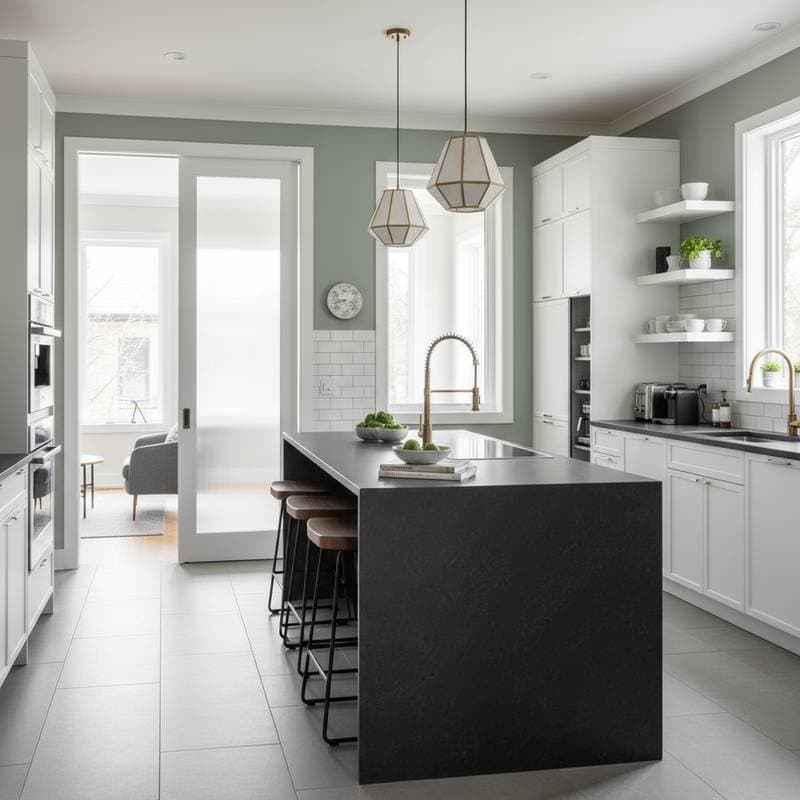
Closed kitchens evolve beyond outdated enclosures. Architects integrate elements like glass doors, interior pass-through windows, and low partitions to maintain connection without full exposure.
Semi-closed designs with pocket doors or half-walls provide versatility. Open them for gatherings; close them to contain messes. This zoned approach preserves visual continuity while offering control.
Enclosure inspires creative palettes. Homeowners select vibrant hues such as deep greens or terracotta accents, free from living room coordination. Patterned tiles add character without overwhelming a larger space.
Designer Nguyen explains, "When the footprint is contained, the per-square-foot cost of luxury finishes becomes manageable." Premium options like marble or custom woodwork fit budgets more readily in bounded areas.
Aligning with Lifestyle Demands
Assess your habits before altering layouts. Frequent entertainers may prefer hybrid setups with serving hatches or broad doorways. Those valuing solitude during meal prep or remote work find closed kitchens ideal for noise reduction.
Families benefit from boundaries that separate play areas from cooking zones. Acoustic separation supports focused tasks amid household activity.
Hybrid solutions balance openness and privacy. Consider your routine: Does central gathering define your home, or do distinct functions take precedence?
Enhancing Resale Appeal
Practicality endures beyond trends. Diverse buyers seek adaptable homes, and flexible closed kitchens meet varied needs. Opt for removable partitions over fixed walls to allow future customization.
Real estate agent Melissa Hart of Haven Realty states, "Buyers aren’t rejecting open layouts outright. They just want the option to shut the door sometimes."
Well-executed divisions boost marketability. They signal thoughtful design that accommodates modern life, from remote professionals to active families.
Steps to Adopt a Closed Kitchen
Begin with non-permanent trials. Arrange room dividers or reposition furniture to test separation. If the arrangement suits, consult contractors for quotes.
Verify structural details: Non-load-bearing walls simplify rebuilding. Plan for electrical and plumbing adjustments early.
Focus on benefits like sustained comfort and efficiency. A closed kitchen restores balance, blending seclusion with accessibility for enduring home value.