Kitchen Remodeling for Flood Resistance
Picture entering your kitchen after a severe storm, finding surfaces dry and equipment operational. Cabinets remain intact, floors show no signs of warping, and the space retains its appeal. This scenario arises from deliberate design decisions that prioritize water resistance without sacrificing aesthetics.
Flood-prone areas demand kitchens built to endure. Homeowners in river valleys or regions with intense seasonal rains benefit from targeted material selections and installation techniques. These elements ensure functionality persists through water exposure, minimizing repair needs and preserving value.
1. Select Durable Cabinetry Materials
Cabinets bear the brunt of floodwaters, absorbing moisture that leads to swelling or decay. Opt for inherently resilient options to maintain structural integrity. During selection, evaluate how materials respond to prolonged submersion and humidity.
- Marine-grade plywood or PVC bases prevent expansion and inhibit mold, ideal for coastal or low-lying homes.
- Stainless steel or aluminum frames suit modern designs, offering corrosion resistance and easy wiping after incidents.
- For traditional wood appearances, apply polyurethane sealants and elevate units on metal pedestals at least six inches high, promoting air circulation and avoiding direct contact with pooled water.
Professionals recommend stainless steel hardware and silicone-based sealants for joints. These choices extend lifespan, with some installations lasting decades in high-risk zones. Test samples in simulated wet conditions before final commitment.
2. Choose Moisture-Resistant Countertops
Countertops encounter spills routinely, but floods test their limits. Prioritize non-porous surfaces that repel water and resist bacterial growth. Inspect fabrication details, such as edge treatments, to confirm full protection.
Dense natural stones like granite or engineered quartz form a solid barrier against penetration. These materials weigh more but deliver unmatched durability, often warrantied for 25 years. Solid acrylic surfaces, including brands like Corian, seal seamlessly when installed by certified technicians.
Steer clear of laminate over particleboard, which delaminates under saturation. For wooden options, select hardwood butcher blocks sealed with food-grade mineral oil, reapplied quarterly. This routine preserves grain patterns while fortifying against cracks from moisture cycles.
3. Elevate Appliances for Safety
Standard appliance placement invites disaster during inundation. Lifting units above potential water levels safeguards electronics and simplifies recovery. Consult local codes to determine minimum heights, typically 12 to 18 inches.
Construct platforms from concrete blocks or custom metal stands coated in rust-proof finishes. This setup not only protects but also facilitates access for servicing. Pair with GFCI outlets positioned 48 inches from the floor, ensuring automatic shutoff if contact occurs.
Incorporate waterproof conduit for wiring and IP-rated enclosures for connections. Built-in models require neoprene gaskets around doors to seal against seepage. Such precautions reduce insurance claims by up to 40 percent in flood-vulnerable areas.
4. Install Resilient Wall Systems
Traditional drywall soaks up water, fostering mold in hidden spaces. Replace it with substrates designed for wet environments to simplify post-flood restoration. Focus on systems that dry quickly and support repeated exposures.
Cement backer boards or gypsum panels with fiberglass reinforcement withstand saturation without crumbling. These pair well with tile finishes, common in kitchens for their inherent water-shedding properties. Apply them from the subfloor up to avoid wicking.
Finish with eggshell or satin paints containing mildewcide additives, which clean easily and form a vapor barrier. Avoid matte finishes that trap moisture. In high-humidity setups, integrate moisture sensors linked to alerts for early detection.
5. Integrate Effective Drainage Solutions
Materials alone fall short without proper water management. Strategic drainage channels excess away, preventing stagnation. Engineers advise sloping floors toward central points for efficient flow.
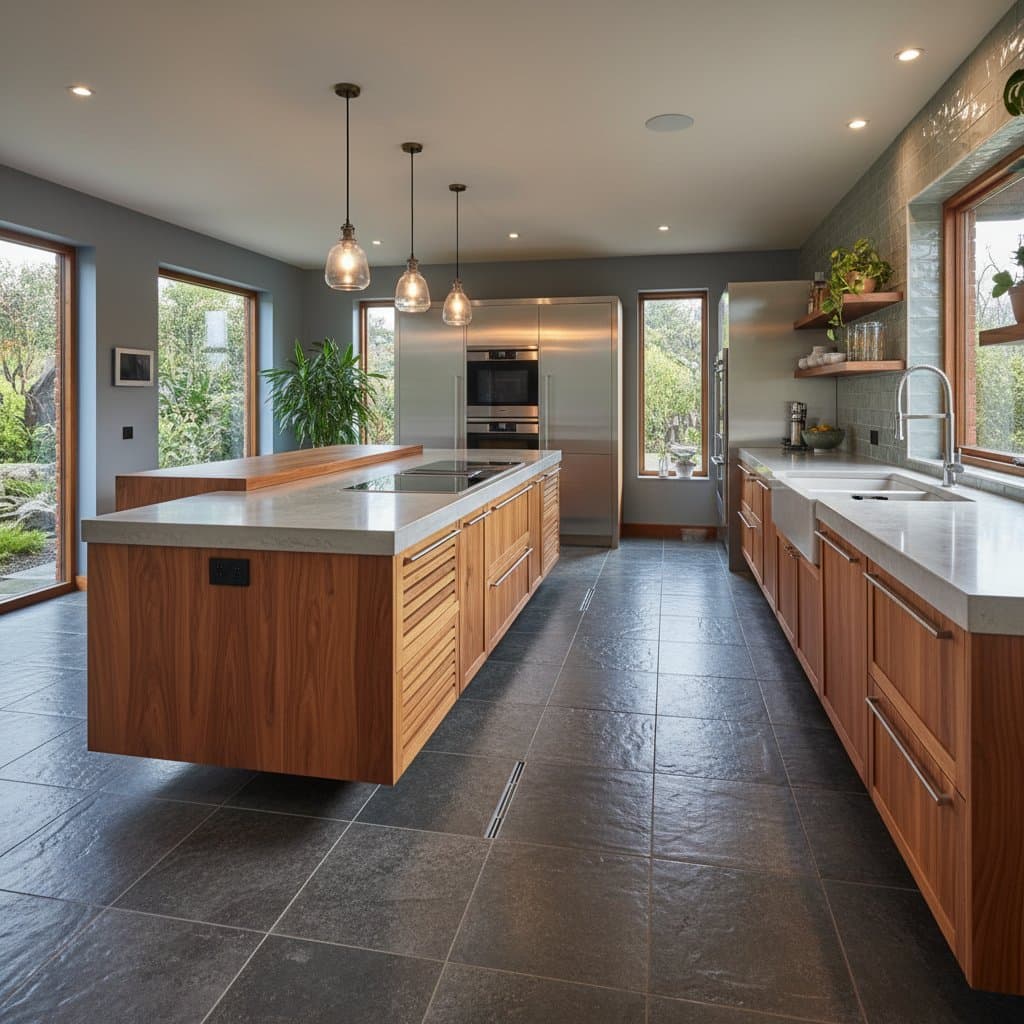
Install trench drains lined with stainless grates near entryways and sinks, connected to municipal systems. Sump pumps with battery backups activate automatically during power outages. Complement with one-way check valves on pipes to block sewer backups.
Enhance air quality using exhaust fans rated for 100 CFM and whole-room dehumidifiers set to 50 percent humidity. Schedule annual inspections to clear debris from traps. These systems keep interiors breathable and reduce long-term deterioration.
Maintaining Flood-Resistant Features
A resilient kitchen requires ongoing vigilance to perform optimally. Conduct monthly checks on caulking around fixtures, reapplying as needed to seal micro-cracks. Document installations for insurance purposes, noting material specs and warranties.
Prepare a response kit with submersible pumps, extension cords, and tarps. During alerts, elevate valuables and isolate utilities promptly. These habits transform potential crises into minor inconveniences, sustaining the space's role as a family hub.
Investing in these upgrades yields lasting returns, blending protection with everyday usability. Homeowners report greater satisfaction and lower stress in unpredictable climates. Your kitchen emerges not just surviving, but thriving amid challenges.