
Small Kitchen Remodels Pack Big Punch Under $8K
Small kitchens often carry the weight of daily life, from hurried breakfasts to elaborate dinners. Many show signs of age or inefficiency, yet they hold untapped potential. Proven design strategies can introduce order, elegance, and utility to these spaces while respecting a tight budget. Through thoughtful planning, selective upgrades, and a focus on functionality, a remodel under $8,000 yields results that rival professional designs and appear far costlier.
With years of experience in small-space renovations, the author has witnessed transformations that redefine cooking, navigation, and enjoyment. The principles outlined below guide a clear rethinking of the area. They ensure that every square foot serves a purpose and every expenditure advances the vision.
1. Plan Your Layout for Maximum Efficiency
Problem: Inefficient workflows force unnecessary steps, turning meal preparation into a chore. Crowded counters and awkward appliance placements exacerbate the issue.
Context: Layout forms the foundation of any kitchen remodel. In compact areas, optimizing traffic flow and work zones prevents frustration and enhances productivity.
Solution: Adopt the work triangle principle, positioning the sink, stove, and refrigerator within easy reach. Consider an L-shaped or galley configuration to streamline movement. For example, relocating a freestanding range to a built-in spot can free up floor space without major structural changes.
Technical Detail: Measure clearances carefully, allowing at least 36 inches for walkways and 15 inches of counter space beside key appliances. Consult local codes for ventilation and electrical requirements before finalizing positions.
Benefit: An efficient layout saves time and reduces physical strain, making the kitchen a joy to use rather than a bottleneck.
2. Prioritize Storage That Works Hard
Problem: Standard cabinets often include shallow shelves and unused corners, leading to disorganization and wasted potential.
Context: Effective storage determines how well a small kitchen functions. Thoughtless designs result in ongoing clutter and diminished appeal.
Solution: Emphasize vertical and concealed options. Install cabinets that reach the ceiling to capture overhead space. Incorporate pull-out pantry units, corner carousels, and deep drawers to replace fixed shelving. In a recent project, full-extension drawers expanded usable storage by almost 30 percent while maintaining the original dimensions.
Technical Detail: Select plywood construction over particleboard for superior strength. Equip drawers with soft-close mechanisms and hinges that remain hidden. Semi-custom options with modular inserts offer customization at reduced expense if full bespoke work exceeds the budget.
Benefit: Organized storage assigns a spot for each item, minimizing mess and elevating both workflow and aesthetics.
3. Upgrade Surfaces Strategically
Problem: Excessive spending on decorative elements neglects practical needs. Luxurious tops fail to compensate for flawed arrangements.
Context: Surface selections in limited-fund remodels must harmonize affordability, resilience, and style. The aim lies in achieving a premium feel through intelligent choices.
Solution: Target high-contact areas first. Opt for laminate that imitates quartz or solid surfaces at roughly half the cost of genuine stone. Limit backsplash tile to focal points, such as above the stove. Refinish existing cabinets with paint rather than full replacement to refresh the look economically.
Technical Detail: Apply water-based alkyd enamel for cabinets to secure a durable, cleanable finish. Evaluate countertop options for heat tolerance and edge strength. For backsplashes, peel-and-stick varieties or basic subway tiles with thin grout joints cut installation time and labor fees.
Benefit: Targeted surface improvements impart a refined, contemporary appearance while adhering to the $8,000 limit.
4. Keep Color and Texture Simple
Problem: Overabundant patterns and contrasts create visual overload in confined spaces. Busy elements like bold tiles or stark juxtapositions shrink the room further.
Context: Unity trumps diversity in small kitchens. A controlled scheme fosters serenity and seamlessness.
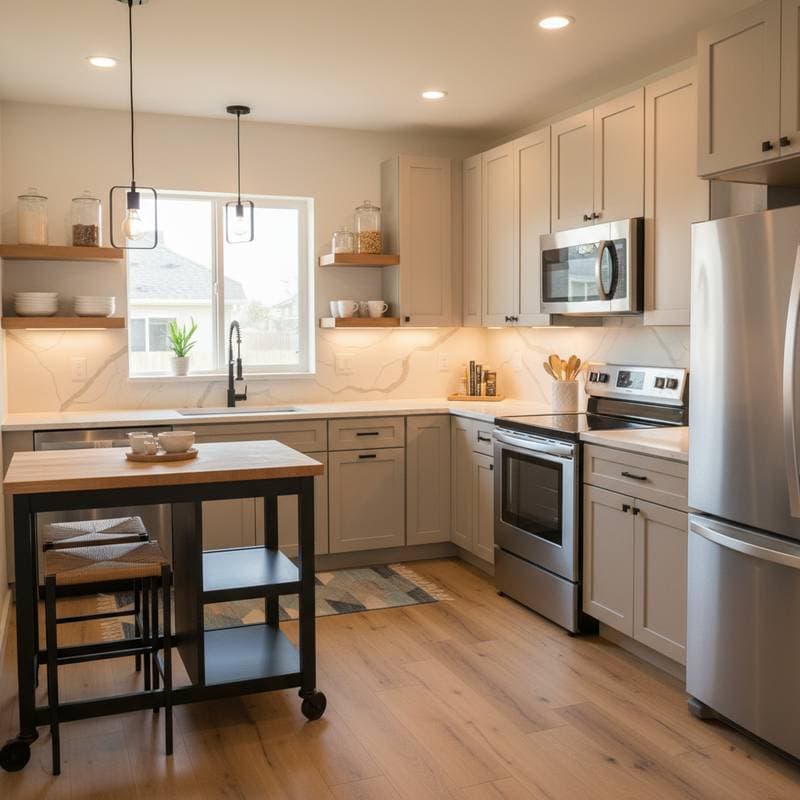
Solution: Limit to two or three hues. Neutral lights like soft white or gray open up the area, with gentle textures providing interest. Pair pale cabinets with wooden accents and understated hardware in matte black for balanced warmth. Extend the wall color to the ceiling to soften edges.
Technical Detail: Employ semi-gloss formulations on walls for easy maintenance. Select satin or matte on cabinets to conceal smudges. Maintain uniform sheen across elements to promote overall balance.
Benefit: A streamlined palette amplifies light, quiets distractions, and lends an air of deliberate design to even the tiniest kitchen.
5. Make Every Inch Count with Smart Details
Problem: Neglected spots accumulate quickly in small areas. Blank walls, inert corners, and subpar fixtures hinder practicality.
Context: Ingenious additions convert challenges into assets, adding utility without significant outlay.
Solution: Integrate open shelves for daily essentials. Attach hooks or magnetic bars for tools. Include a drop-leaf table or mobile island for adaptable surfaces. One renovation featured a slim spice drawer next to the cooktop, delivering quick retrieval without surface intrusion.
Technical Detail: Secure shelving to studs with robust anchors. Design shelves at 8 to 10 inches deep to avoid bulk. Pick hardware suited to moist environments for lasting performance.
Benefit: These refinements tailor the space, boost operations, and transform limitations into bespoke features.
6. Budget with Purpose, Not Panic
Problem: Reactive spending derails projects. Impulse purchases deplete funds before addressing priorities.
Context: Disciplined allocation and grounded goals sustain small-scale efforts. Prioritize essentials that underpin daily use.
Solution: Segment the $8,000 budget: 40 percent for cabinets and storage, 25 percent for surfaces, 15 percent for appliances and lighting, 10 percent for labor, and 10 percent for surprises. Solicit bids from several contractors and aim for quieter installation periods to lower rates. Source materials from sales or digital retailers to extend value.
Technical Detail: Steer clear of relocating pipes or wiring unless critical, as these inflate expenses sharply. Maintain a digital ledger of costs, refreshed regularly throughout the work.
Benefit: Purposeful budgeting completes the vision, yielding a durable upgrade that aligns with lifestyle needs.
Sustaining Your Kitchen's Lasting Appeal
Once complete, the transformed kitchen invites routine maintenance to preserve its vitality. Wipe surfaces daily with mild solutions to protect finishes. Reorganize storage quarterly to adapt to evolving habits. These habits ensure the space remains efficient and inviting, delivering ongoing returns on the investment. The result stands as a testament to strategic design: a compact area that functions seamlessly and inspires daily.