Pantry Remodels: Key Principles for Superior Storage ROI in 2026
Kitchens serve as the heart of the home, yet the pantry often functions as its unsung foundation. Whether transforming a modest cabinet into a functional space or designing a spacious walk-in area, effective pantry remodels rank among the highest-value updates for contemporary residences. Variations in style and configuration abound, but core principles guide projects that yield measurable returns. For those embarking on a remodel, these established guidelines ensure professional-quality storage, enduring resilience, and enhanced property worth.
1. Prioritize Visibility and Accessibility
Challenge: Deep shelving and shadowed areas allow items to linger unnoticed until they expire. Homeowners frequently overload spaces and lose track of inventory.
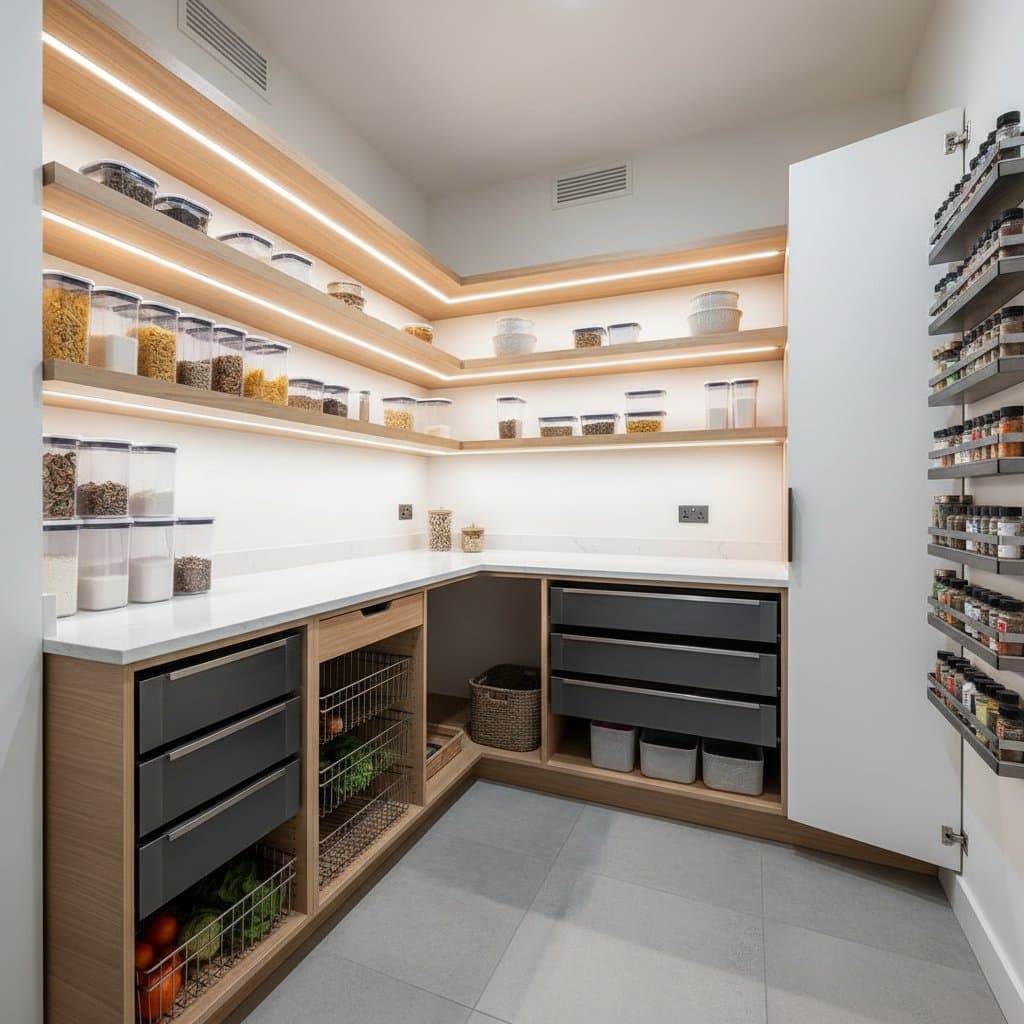
Approach: Incorporate layered lighting to illuminate every corner and arrange contents for easy retrieval. Install under-shelf LED strips or recessed overhead fixtures to distribute light uniformly. Opt for clear glass containers or clearly marked bins to facilitate rapid identification.
Practical Example: During a renovation for a family with demanding schedules, solid shelves gave way to open metal grids. This adjustment permitted light to penetrate all tiers while promoting air circulation that preserved fresh produce for extended periods.
Implementation Notes: Integrate full-extension drawers beneath lower shelves for superior reach compared to static panels. Allocate space for at least one pull-out shelf every four linear feet of shelving to streamline access.
Benefits: Such strategies minimize spoilage, accelerate ingredient location, and sustain order with reduced maintenance.
2. Incorporate Ventilation and Climate Management
Challenge: Inadequate airflow fosters odors and accelerates the degradation of provisions. Numerous pantries operate without any circulation, leading to persistent issues.
Approach: Equip the space with a modest vent or doors featuring louvers to encourage natural exchange. For expansive walk-in configurations, integrate a low-noise exhaust system linked to a humidity monitor.
Practical Example: A client's project addressed long-standing moisture problems through a straightforward ceiling vent paired with a motion-sensor fan, preventing further distortion of wooden elements.
Implementation Notes: Target relative humidity levels under 60 percent to avoid moisture buildup on packaging. Direct vent discharges toward the kitchen's primary exhaust system rather than enclosed overhead spaces.
Benefits: This setup maintains a crisp, hygienic atmosphere that safeguards both the pantry's integrity and its contents.
3. Harmonize Open and Enclosed Storage Options
Challenge: Fully exposed shelving offers initial allure but invites disarray over time. All-enclosed designs, however, can appear oppressive and hinder convenience.
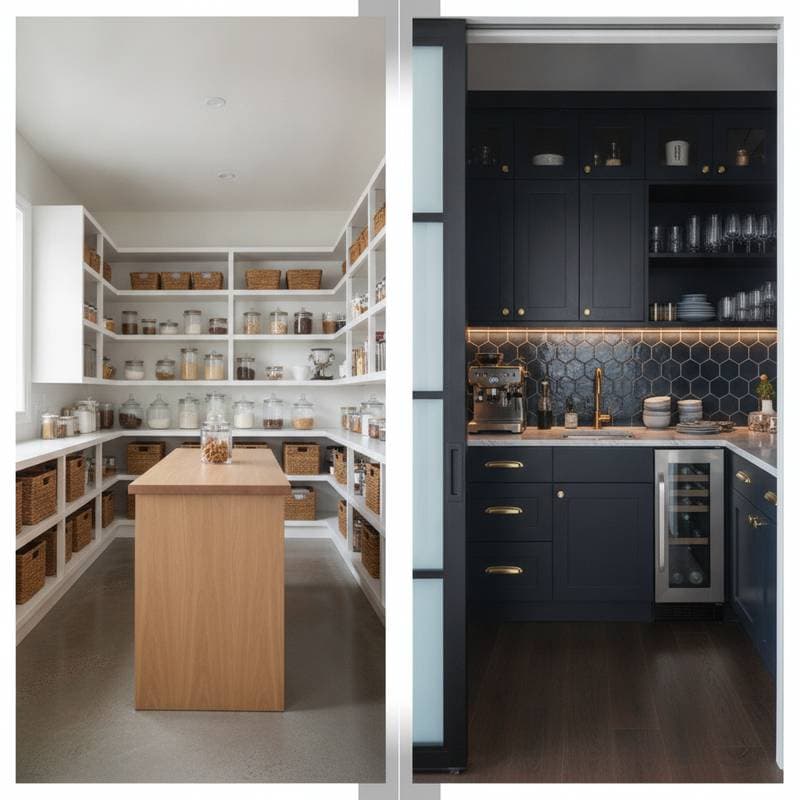
Approach: Blend the two elements strategically. Reserve open shelves for daily essentials and enclose bulkier or less-frequently used items in cabinets or drawers. Employ glass-paneled doors or gliding partitions to bridge the styles seamlessly.
Practical Example: One renovation featured a combined setup with base-level cabinets and upper floating shelves, preserving neatness and elegance amid regular activity.
Implementation Notes: Position enclosed units no higher than shoulder height for effortless handling. Select soft-close mechanisms for doors and glides to ensure silent functionality.
Benefits: This combination delivers aesthetic lightness alongside hidden order, aligning with routine use patterns.
4. Add Dedicated Workspaces and Electrical Outlets
Challenge: Today's pantries frequently serve as auxiliary preparation or appliance stations. Absent countertops or power sources, these areas fall short in accommodating devices without encroaching on main kitchen surfaces.
Approach: Include a compact countertop segment along with a minimum of two electrical receptacles. These additions support the operation of appliances such as stand mixers, food processors, or brewing stations directly within the pantry.
Implementation Notes: Place outlets at countertop height in compliance with regional building regulations. Choose resilient materials like quartz or high-pressure laminate to withstand ongoing wear.
Benefits: The pantry evolves into an effective extension of the kitchen, amplifying overall utility.
5. Select Durable Materials and Adaptive Layouts
Challenge: Standard materials degrade quickly under daily demands, while rigid layouts fail to accommodate evolving family needs.
Approach: Choose robust, low-maintenance finishes such as wire mesh baskets, pull-out organizers, and adjustable shelving tracks. Design modular systems that allow reconfiguration as storage requirements shift.
Practical Example: In a recent project, adjustable pegboard walls replaced fixed shelves, enabling customization for seasonal bulk buys or specialized equipment.
Implementation Notes: Opt for corrosion-resistant metals and sealed woods to combat moisture. Ensure layouts account for vertical space utilization, including over-door racks and corner carousels.
Benefits: These choices extend the pantry's lifespan and adaptability, protecting your investment over years.
6. Optimize Corners and Vertical Space
Challenge: Awkward corners and underutilized heights lead to wasted potential in compact pantries.
Approach: Install lazy Susans or swing-out racks in corners for full access. Maximize verticality with tall, adjustable units and step stools for upper reaches.
Practical Example: A small urban remodel incorporated corner pull-outs that doubled storage capacity without expanding the footprint.
Implementation Notes: Align corner solutions with door swing directions to avoid obstructions. Use slim-profile organizers to fit narrow gaps.
Benefits: Efficient use of every inch boosts capacity and simplifies retrieval.
Sustaining Pantry Efficiency Over Time
After installation, the pantry's effectiveness hinges on consistent habits. Implement straightforward categorization methods and conduct periodic inventories to prevent accumulation. Adjust configurations seasonally to reflect changing inventories or lifestyles. Beyond mere containment, a thoughtfully designed pantry streamlines meal preparation, declutters primary workspaces, and fosters a more harmonious kitchen environment.