
2026 Wet Rooms: Costs and Builds That Transform Baths
Bathrooms come in every possible style, from compact powder rooms to expansive spa-like suites. Yet behind the variety lies a consistent design truth: the most successful spaces are built on solid functional principles. Wet rooms, which combine open layouts with advanced waterproofing, have become a leading choice for homeowners seeking both accessibility and luxury. When designed correctly, they deliver a seamless bathing experience that feels modern and easy to maintain. The following professional rules explain how to design, build, and budget a wet room that works for decades.
2. Design for Drainage from the Start
Problem: Many wet rooms fail when water lingers on the floor. Poor slope planning creates puddles around toilets or vanities.
Context: Homeowners often retrofit standard bathrooms without adjusting the subfloor or waste layout.
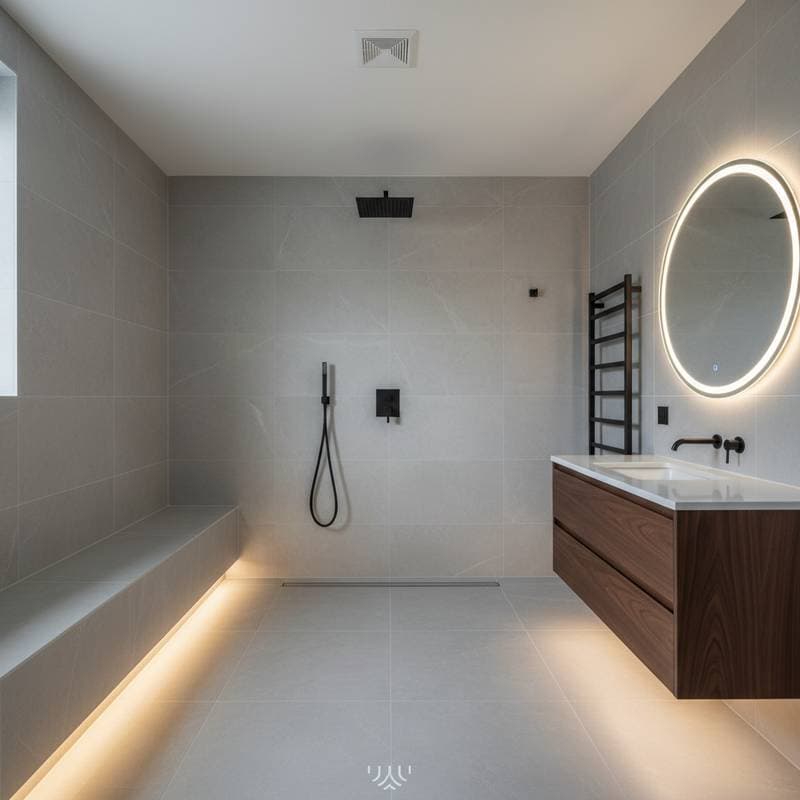
Solution: The floor must slope gently toward a central or linear drain. Aim for a gradient of 1:50 for tiled surfaces. Use pre-formed shower trays or screed slopes to achieve accuracy.
Technical Detail: Linear drains near the wall help maintain large-format tile layouts with fewer cuts. Central drains are cheaper but require more tile slope changes.
Outcome: Controlled drainage keeps floors dry, minimizes slip risk, and maintains hygiene.
4. Integrate Heating for Comfort and Drying
Problem: Wet rooms without proper drying remain damp for hours, leading to slippery conditions and musty odors.
Context: In cooler climates, homeowners often skip underfloor heating to save money, then regret it once condensation builds up.
Solution: Install electric or hydronic underfloor heating beneath the waterproof layer. It warms surfaces evenly and speeds drying.
Technical Detail: Keep heat cables 50 millimeters away from drains and walls. Pair the system with a programmable thermostat to manage energy use.
Outcome: Even warmth enhances comfort, prevents mold, and extends the life of finishes.
6. Select Fixtures Built for Wet Environments
Problem: Standard fixtures can corrode or loosen in full wet exposure.
Context: Many homeowners install wall mirrors, towel rails, or cabinets not rated for high humidity.
Solution: Choose stainless steel, brass, or powder-coated aluminum fittings. Wall-hung toilets and vanities simplify cleaning and reduce water contact.
Technical Detail: All electrical outlets must meet IP44 moisture protection standards. Lighting should be low-voltage and sealed against steam.
Outcome: Fixtures remain durable, safe, and visually consistent with the sleek wet room aesthetic.
8. Ventilation Determines Lifespan
Problem: Even the best waterproofing fails if humidity remains trapped inside the room.
Context: Many wet rooms rely on small exhaust fans that cannot handle the higher moisture output of open showers.
Solution: Upgrade to a high-capacity, continuous extractor fan positioned near the shower area. Include a humidity sensor for automatic regulation.
Technical Detail: Ducting should be as short and straight as possible with a dedicated outlet to the exterior. Combine mechanical ventilation with a window that opens for natural air exchange.
Outcome: Proper ventilation protects finishes, prevents condensation, and maintains indoor air quality.
Living with Your Design
A well-built wet room changes daily routines. The absence of a threshold makes cleaning effortless, and the uncluttered layout encourages relaxation. Maintenance becomes simpler when surfaces are continuous and properly sealed. Over time, homeowners appreciate that the investment delivers both comfort and longevity. When each of these rules is followed, the wet room becomes more than a design statement.