Introduction to Curbless Showers
Curbless showers eliminate traditional barriers, creating a flush transition between the shower area and the rest of the bathroom floor. This design choice promotes accessibility, particularly for individuals with mobility challenges, and contributes to a spacious, contemporary look. As bathroom trends evolve toward 2026, these installations gain popularity for their blend of form and function.
However, the absence of a curb introduces unique waterproofing demands. Water must flow efficiently to drains without seeping into subfloors or walls. Proper planning ensures durability and prevents costly repairs.
Understanding Installation Costs
Budgeting for a curbless shower requires attention to several factors. The design demands precise sloping of the floor to direct water toward the drain, often at a subtle one-quarter-inch drop per foot.
- Floor preparation: Removing existing curbs and ensuring a level base adds to expenses, typically ranging from $500 to $1,500 depending on the bathroom size.
- Waterproofing materials: High-quality membranes, such as liquid-applied or sheet systems, cost between $300 and $800, essential for sealing joints and transitions.
- Drain systems: Linear or point drains designed for curbless setups run $200 to $600, with installation requiring exact placement.
- Tile and finishes: Continuous flooring increases material needs; expect higher costs for larger tiles and meticulous grouting, often $1,000 to $3,000.
- Labor: Skilled professionals account for 50 to 60 percent of the total budget, with full installations averaging $5,000 to $15,000.
These elements highlight why curbless showers command a premium over standard setups. Consulting a contractor early helps identify site-specific adjustments.
Essential Waterproofing Strategies
Waterproofing forms the foundation of a successful curbless shower. The process begins with a robust underlayment that covers the entire floor and extends up walls by at least six inches.
Apply a waterproof membrane in multiple layers, testing for leaks after each application. Common materials include cement board reinforced with fabric mesh or flexible sheets that conform to slopes.
Expert insight:
“Homeowners often underestimate the waterproofing step,” said Sarah Lin, a certified bathroom designer with over 15 years of experience at AquaForm Design Studio. “You cannot fake waterproofing. One small gap behind the tile can lead to mold or subfloor rot within months.”
Incorporate expansion joints to accommodate movement and use silicone sealants at all edges. For added protection, consider a secondary vapor barrier beneath the membrane to block moisture migration.
Integrating Design Trends
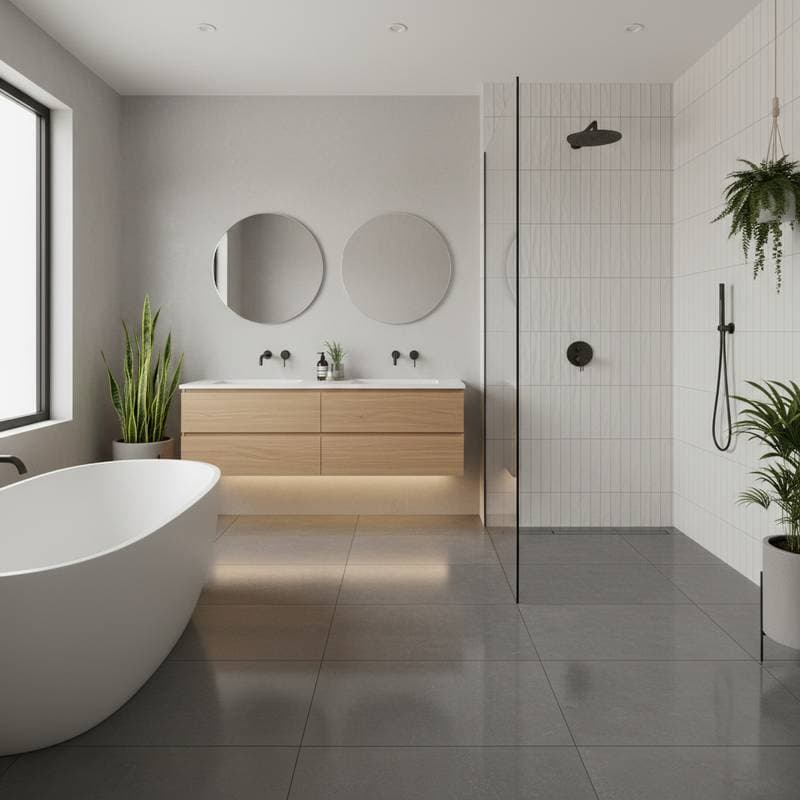
Curbless showers enhance various bathroom aesthetics, from minimalist to opulent. The seamless floor plane expands visual space, making even compact rooms feel airy.
Key design elements:
- Large-format tiles: Opt for porcelain or natural stone slabs exceeding 24 inches; they minimize grout lines for simplified cleaning and a polished appearance.
- Linear drains: Position these along the shower's edge to maintain an unobstructed flow; stainless steel models resist corrosion and complement industrial styles.
- Frameless glass enclosures: These preserve openness while directing water; select tempered glass for safety and pair with chrome fixtures for a cohesive look.
- Non-slip surfaces: Choose textured tiles or mosaics in high-traffic zones to prevent slips, ensuring compliance with safety standards like those from the ADA.
Enhance functionality by integrating radiant floor heating. This system warms tiles via electric mats or hydronic tubing, adding $1,000 to $2,000 to costs but boosting comfort and resale appeal. Install it beneath the waterproofing layer for even heat distribution.
Realizing Long-Term Advantages
Initial investments in curbless showers yield significant returns over time. Improved accessibility supports aging in place, a priority for many homeowners.
Maintenance decreases as seamless designs reduce dirt accumulation in corners. Properly waterproofed installations resist mold, avoiding remediation expenses that can exceed $5,000.
These features attract buyers seeking universal design principles, potentially increasing property value by 5 to 10 percent. Adaptability suits evolving family needs, from young children to seniors.
Practical maintenance practices:
- Reseal grout lines annually using a penetrating sealer to maintain water resistance.
- Clear drains monthly with a drain snake or enzyme cleaner to avoid backups.
- Clean surfaces with pH-neutral products that preserve membrane and tile integrity.
- Inspect caulk around partitions and fixtures quarterly, reapplying as needed to seal gaps.
Optimizing Your Bathroom Investment
A well-executed curbless shower elevates daily routines into moments of relaxation. The barrier-free entry simplifies use, while robust waterproofing instills confidence in the space's longevity.
When embarking on a remodel, prioritize certified installers experienced in curbless systems. Request detailed blueprints outlining slopes, drainage, and sealing methods.
Select materials aligned with your routine, such as durable finishes for high-use homes. This approach ensures the shower not only looks exceptional but performs reliably for years.