Introduction to 2026 Nature Trends for Wellness-Focused Bathrooms
Homeowners increasingly prioritize wellness in bathroom remodels. A recent Houzz Renovation Report indicates that 68 percent of individuals view wellness as a primary concern, with 54 percent favoring natural materials for their calming effects. This preference moves away from glossy surfaces toward organic textures that foster relaxation.
Financial benefits support this choice. Remodeling Magazine’s Cost vs. Value analysis reveals that bathrooms featuring biophilic elements, which draw from nature, increase resale values by an average of 12 percent. For those planning renovations, this approach serves as a smart investment in health, comfort, and property appreciation.
Success demands careful planning, including budgeting, cost forecasting, and contractor evaluation. The following guide outlines key trends shaping wellness bathrooms in 2026, backed by expert advice, transparent pricing, and practical implementation steps.
The Connection Between Nature and Wellness
Scientific evidence underscores the link between natural environments and health. The International WELL Building Institute reports that natural textures and colors can lower cortisol levels by up to 30 percent, turning biophilic design into a tangible wellness tool.
This design philosophy incorporates elements like plants, water features, and earthy tones to mimic outdoor serenity indoors. Architectural designer Maria Chen, LEED AP and founder of EcoForm Studio, notes, “Clients are no longer asking for spa-like bathrooms. They are asking for spaces that help them recover from daily fatigue. Nature-based design delivers that through light, air, and texture.”
Market trends align with this focus. Green Building Advisor data shows eco-certified materials account for 22 percent of renovation sales, with stabilizing supply chains helping to manage price fluctuations.
Key Nature-Inspired Design Trends for 2026
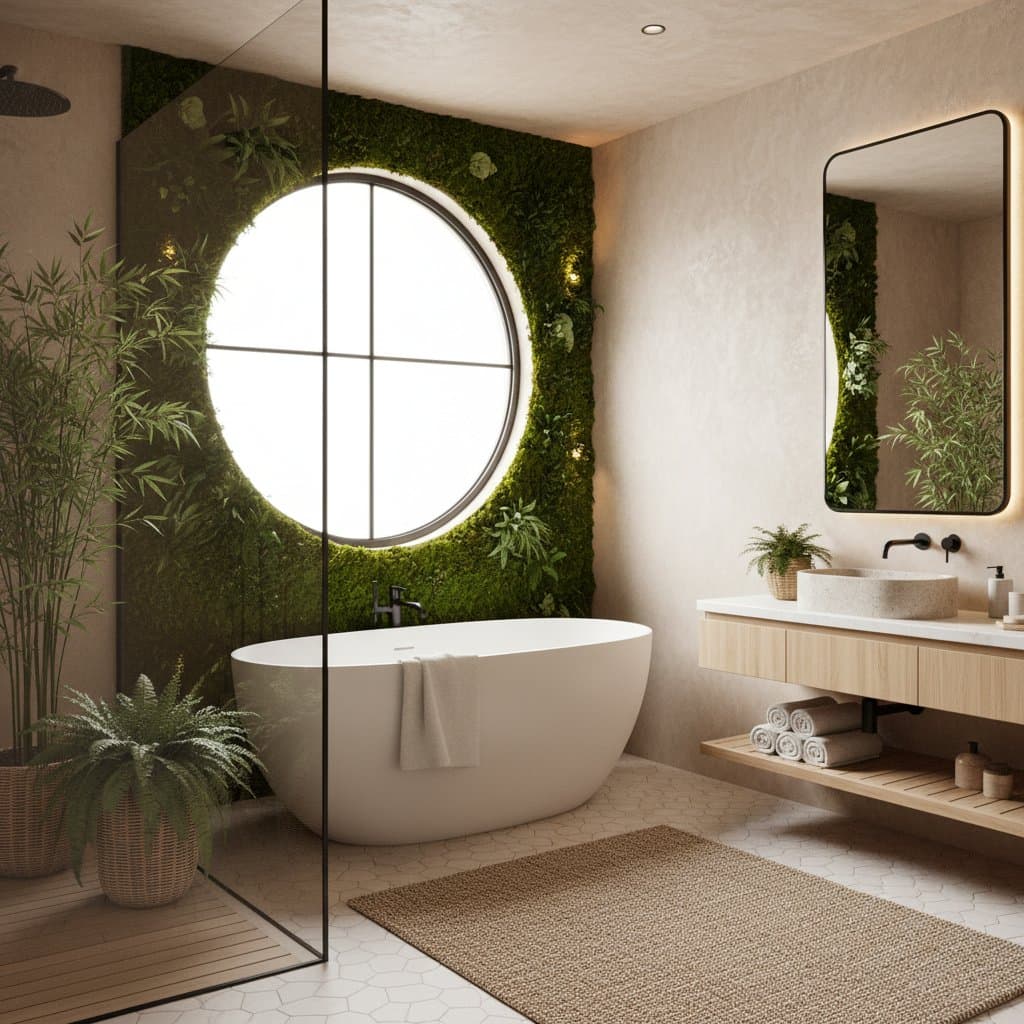
Biophilic design leads the way in 2026, emphasizing elements that connect users to the natural world. Expect widespread use of living walls with low-maintenance plants like ferns and moss, which improve air quality and add visual tranquility.
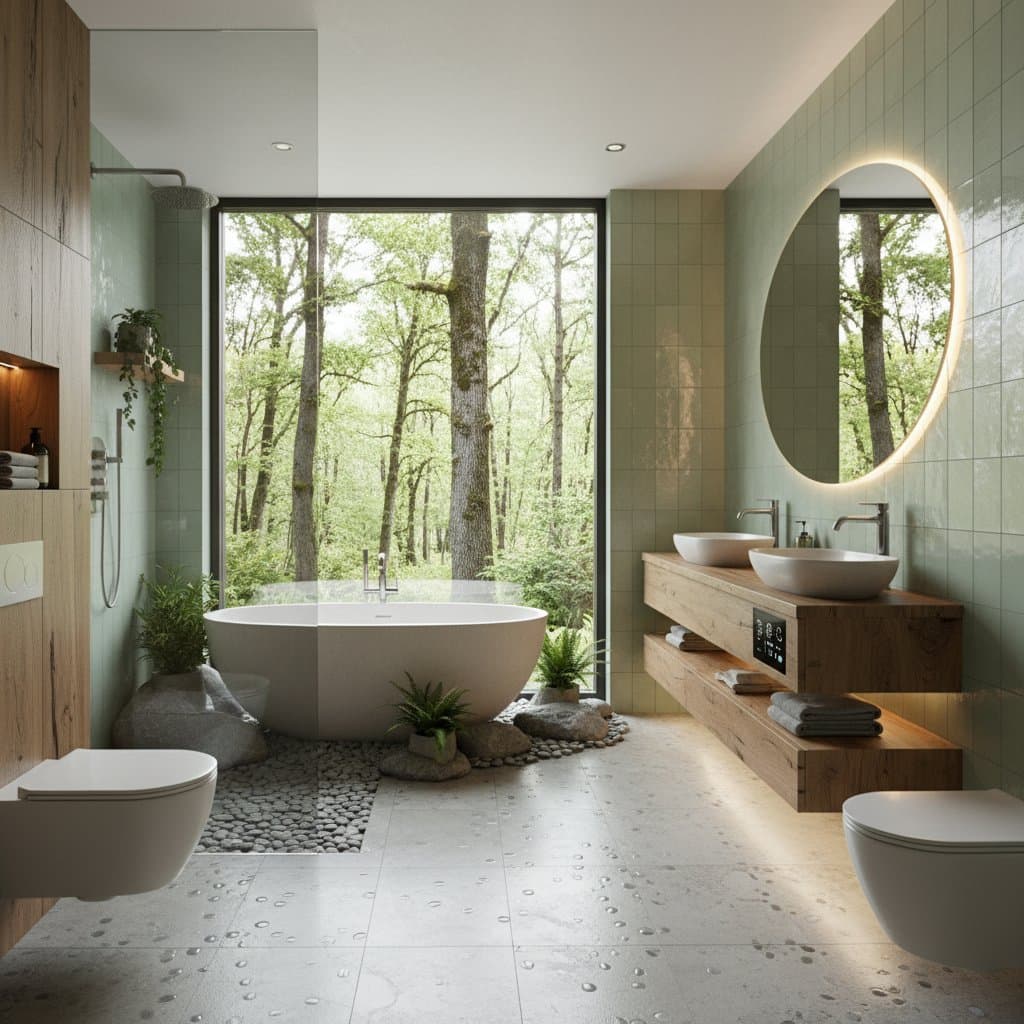
Organic color palettes dominate, featuring soft greens, warm terracottas, and neutral earth tones. Pair these with textured surfaces such as bamboo vanities or pebble shower floors to enhance sensory appeal. Smart integration includes circadian lighting systems that mimic daylight cycles, promoting better sleep and mood regulation.
Water features, like gentle cascade faucets or rainfall showerheads, introduce soothing sounds. To balance aesthetics with functionality, select modular green roofs for skylights that filter natural light while supporting biodiversity. These trends not only elevate design but also contribute to the reported 12 percent resale uplift by appealing to health-conscious buyers.
Cost Considerations and Budgeting Strategies
Balancing nature-inspired features with financial constraints requires strategic value engineering. This process evaluates each choice for cost-effectiveness and performance to avoid unnecessary expenses.
Establish a Realistic Baseline
Begin by setting a total budget and allocating funds across categories:
- Core construction, including plumbing, electrical, and waterproofing: 50 percent.
- Materials and finishes: 35 percent.
- Fixtures, lighting, and accessories: 15 percent.
Adjust based on project scope; for a mid-range remodel, aim for 15,000 to 25,000 dollars overall.
Prioritize Sensory Impact
Direct investments toward high-wellness elements like LED lighting with dimmers or HEPA-filtered ventilation systems. A skylight installation, for instance, costs 2,000 to 4,000 dollars upfront but yields energy savings of 100 to 200 dollars yearly through reduced artificial light use.
Evaluate Ongoing Maintenance
Account for upkeep specific to natural materials. Reclaimed wood demands sealing every two to three years at 200 to 400 dollars, while natural stone floors need annual resealing costing 100 to 200 dollars. Total annual maintenance typically ranges from 300 to 600 dollars, depending on material selections and climate.
Risk Mitigation and Quality Control
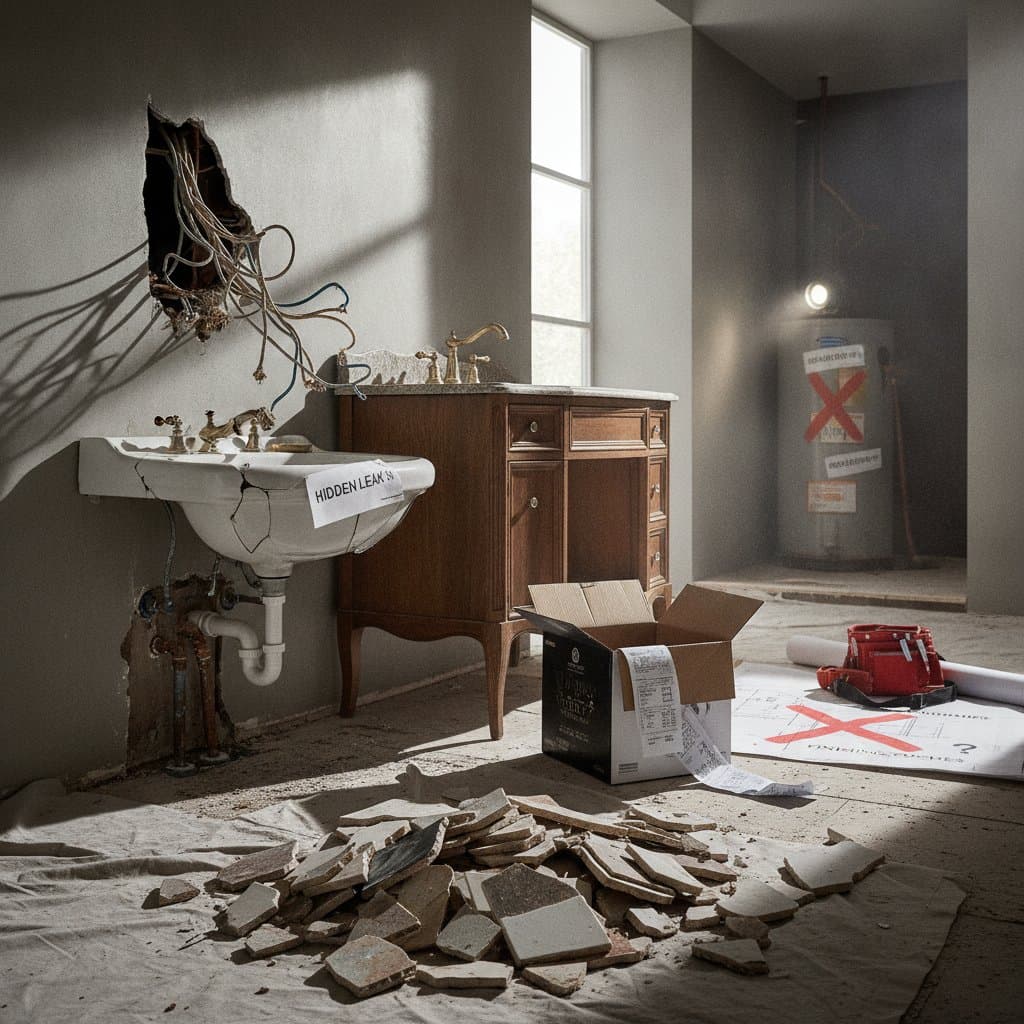
Organic materials introduce unique challenges, especially regarding moisture. Poor management can lead to rapid deterioration, inflating repair costs.
Implement these preventive steps:
- Install vapor barriers behind stone or clay walls to block humidity.
- Add humidity sensors linked to automatic exhaust fans that activate at 60 percent relative humidity.
- Opt for marine-grade sealants on wood elements to resist water damage.
Building inspector Carlos Rivera, CMI with 20 years in residential renovations, advises, “Moisture is the silent budget killer. Once mold sets in behind a wall, repairs can exceed 3,000 dollars easily. Preventing that with proper ventilation is always cheaper.”
Regular inspections during construction ensure compliance with building codes, safeguarding long-term durability.
Navigating Regional Market Dynamics
Costs for natural materials fluctuate by location. Coastal areas often see 15 percent higher prices for treated wood and stone due to enhanced moisture resistance needs.
In arid inland regions, base prices may decrease, though sourcing sustainable options can prove challenging. BuildFax reports a 22 percent rise in bathroom remodel permits over the past year in the Pacific Northwest, fueled by biophilic interest, which elevates contractor demand and rates.
Secure competitive pricing by obtaining at least three detailed bids early. Require line-item breakdowns covering materials, labor, and a 10 to 15 percent contingency for unforeseen issues. This transparency reveals potential overcharges and supports informed decisions.
Achieving Long-Term Benefits and Return on Investment
A thoughtfully designed nature-based bathroom yields enduring rewards. Zillow’s housing analysis indicates homes with green certifications sell for 5 to 10 percent above comparable properties.
Wellness gains include enhanced sleep, reduced stress, and superior indoor air quality, all contributing to daily well-being. With proper sealing and humidity control, maintenance expenses level off, often 20 percent lower over 10 years compared to synthetic material setups.
Additional savings arise from efficient fixtures; low-flow showers and LED lights can cut utility bills by 300 to 500 dollars annually. These factors compound to deliver strong financial returns alongside personal health improvements.
Preserving Your Nature-Focused Bathroom
Sustain the investment through proactive care. Clean surfaces weekly using pH-neutral, non-toxic solutions to protect natural finishes without harsh chemicals.
Schedule annual checks for ventilation efficiency and reseal wood or stone elements as needed. Monitor plant health in living features to maintain air-purifying benefits. These habits ensure the space remains a restorative haven, maximizing both aesthetic appeal and functional longevity.