Understanding Pantry Options for 2025 Kitchen Remodels
Homeowners planning kitchen updates in 2025 often seek efficient storage that enhances daily routines. A dedicated pantry organizes ingredients and appliances, reducing clutter and streamlining meal preparation. The choice between a walk-in pantry and a butler's pantry hinges on specific requirements, with each option delivering distinct benefits in terms of space utilization and aesthetic appeal.
This guide examines the core differences, including installation costs, functional advantages, and design strategies. By evaluating these factors, individuals can align their selection with long-term home goals. The following sections provide detailed comparisons to inform decisions.
Defining the Walk-In Pantry: Practical Storage Solutions
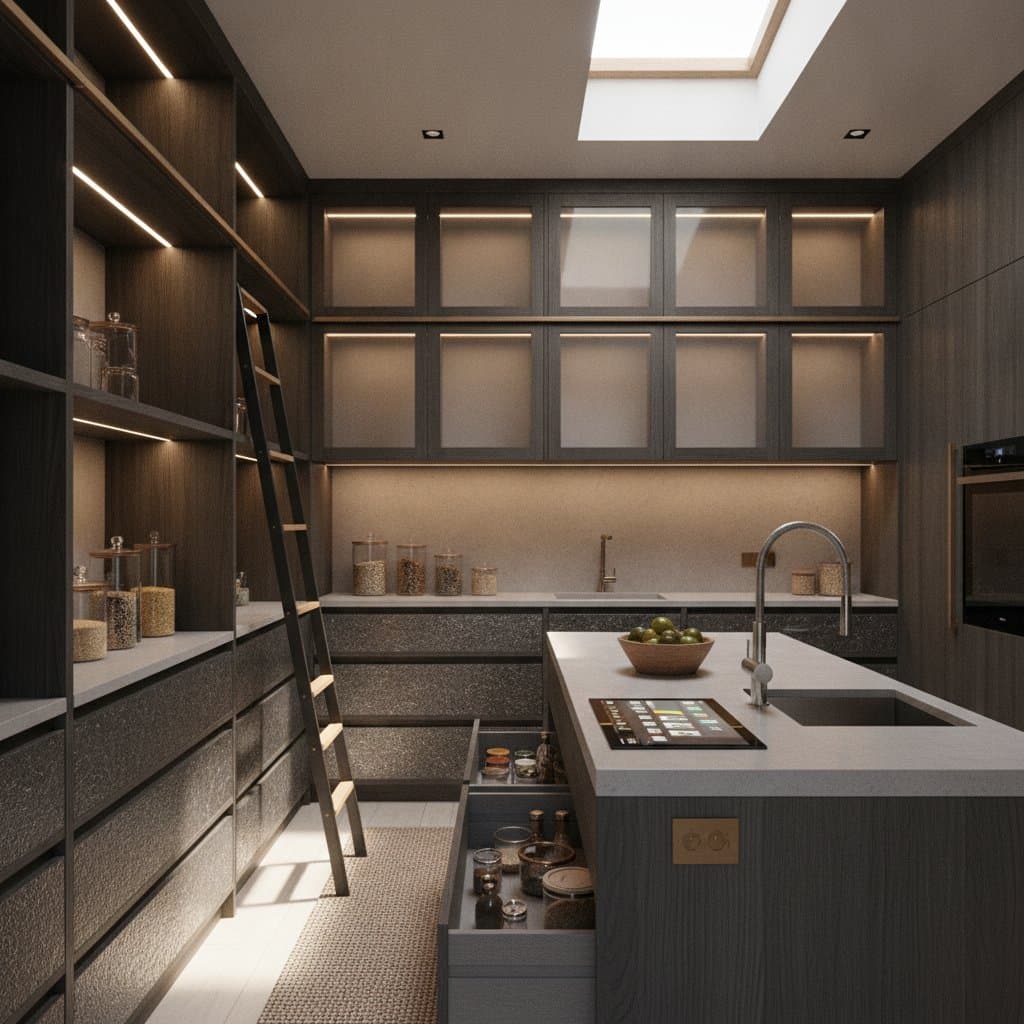
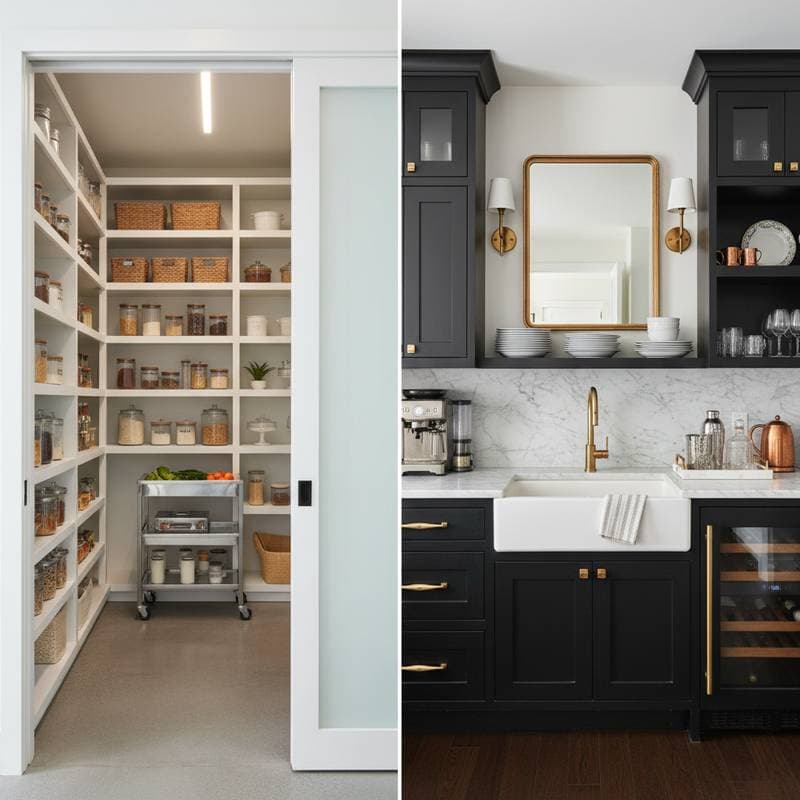
A walk-in pantry functions as a dedicated room adjacent to the kitchen, designed primarily for bulk storage of non-perishables, canned goods, and cooking tools. This setup allows users to step inside and access items without disrupting main workspace areas. Typical features include adjustable shelving units, pull-out drawers for spices, and zones for small appliances like mixers or blenders.
Installation costs for a walk-in pantry range from $3,000 to $15,000, depending on dimensions and materials. Basic conversions of existing closets involve minimal structural changes, such as adding drywall and basic lighting, keeping expenses under $5,000. For larger builds, incorporate reinforced framing and ventilated shelving to prevent moisture buildup, which adds $2,000 to $4,000.
To optimize usability, install adjustable wire or melamine shelving that supports up to 200 pounds per shelf. Position frequently used items at eye level and heavier goods on lower tiers. Proper lighting, such as recessed LEDs or under-shelf strips, ensures visibility and prevents overlooked inventory.
Exploring the Butler's Pantry: Versatile Entertaining Hub
A butler's pantry acts as a transitional space between the kitchen and dining room, supporting food preparation, serving, and beverage storage. It resembles a compact secondary kitchen with elements like countertops for plating dishes, upper cabinets for stemware, and lower drawers for linens. Advanced versions include integrated sinks, wine coolers, or microwaves to facilitate seamless hosting.
Expect costs between $8,000 and $30,000 for a butler's pantry, driven by plumbing, electrical upgrades, and premium finishes. Simple setups with laminate counters and stock cabinets start at $8,000, while custom quartz surfaces and soft-close hardware push prices toward $20,000 or more. Electrical work for outlets and task lighting accounts for 20 percent of the budget in most projects.
Design this area to match the primary kitchen's style, using identical cabinet fronts and hardware for cohesion. Allocate counter space for a dedicated prep zone, measuring at least 36 inches deep. Ventilation fans or open shelving prevent odors from lingering, enhancing the space's role as a discreet service area.
Cost Breakdown and Functional Trade-Offs
Walk-in pantries generally prove more economical due to their focus on storage without utility integrations. Average projects cost $7,500, with savings from reusing existing walls and avoiding plumbing. Butler's pantries demand higher investments because of multifaceted features, averaging $18,000, yet they justify expenses through increased home resale value of up to 5 percent in entertaining-oriented markets.
Functionally, walk-ins excel in organization for everyday cooking, accommodating 200 to 500 cubic feet of storage. They suit families prioritizing meal planning and bulk buying. Butler's pantries, however, streamline social events by hiding mess, offering 100 to 300 square feet for multitasking.
Key decision factors include:
- Daily Habits: Families who prepare multiple meals weekly benefit from a walk-in's accessibility. Hosts who dine with groups prefer a butler's pantry for its workflow efficiency.
- Spatial Constraints: Walk-ins require 4 to 6 feet of depth but fit narrow alcoves. Butler's pantries need 5 to 8 feet of width to connect rooms effectively.
- Financial Allocation: Allocate 10 to 15 percent of the kitchen budget to a walk-in for quick returns. Reserve 20 to 25 percent for a butler's pantry if luxury features align with priorities.
- Future Value: Walk-ins appeal to practical buyers, boosting appeal in family homes. Butler's pantries attract upscale markets, particularly in urban or suburban settings with open layouts.
Material and Feature Selections Impacting Expenses
Choosing durable, low-maintenance materials controls overall spending. For walk-ins, opt for epoxy-coated wire shelving at $10 per linear foot, which resists spills and allows air circulation. Wood veneer options at $20 per foot provide a warmer aesthetic but require sealing against humidity.
In butler's pantries, select countertops strategically: butcher block at $40 per square foot offers affordability and renewability, while granite at $60 per square foot delivers enduring elegance. Avoid unnecessary add-ons like dishwashers unless frequent use justifies the $1,500 plumbing cost.
Enhance both with thoughtful hardware: soft-close hinges at $5 each prevent slamming, and pull-out trays at $50 per unit maximize reach. Task lighting, budgeted at $300 to $800, uses dimmable LEDs to adapt to prep or serving needs.
Integrating Your Pantry into Daily Life
After installation, a walk-in pantry simplifies routines by centralizing supplies, cutting shopping time by 20 percent through better inventory tracking. Label bins and use clear bins to maintain order, turning restocking into a straightforward task.
A butler's pantry elevates gatherings, allowing hosts to prepare trays without kitchen congestion. Stock it with essentials like bar tools and platters for instant readiness. Both choices enhance enjoyment of home cooking and entertaining when tailored to personal rhythms.
Ultimately, invest in a pantry that supports your household's unique dynamics. Consult floor plans early to ensure seamless integration, yielding lasting efficiency and satisfaction.