The True Cost of Two-Tone Cabinets in 2026
The National Kitchen and Bath Association's recent homeowner survey reveals that 42 percent of kitchen remodels incorporate two-tone cabinetry. This trend attracts those seeking a contemporary, multidimensional appearance without overhauling the entire space. However, the aesthetic benefits come with financial intricacies, as many overlook the expenses tied to varied colors, specialized finishes, and heightened installation efforts. A clear grasp of these cost elements enables better budget management and project feasibility at each phase.
Identifying Hidden Cost Drivers
The surge in two-tone cabinet popularity has led to widespread budget excesses. Remodeling Cost Data indicates that 38 percent of kitchen projects with contrasting cabinet colors surpass initial estimates by over 15 percent. These overruns stem from concealed factors, such as distinct finishing processes for each cabinet group, precise color alignment, and unique hardware selections. Variations in paint grade or gloss level can further escalate expenses during manufacturing.
Homeowners frequently presume costs involve merely two hues. In practice, they cover the design efforts needed to harmonize tones, contrasts, and surface qualities. Contractor and estimator Lisa Hardin of Elevate Interiors notes, "Every color split means more prep time, more masking, and more coordination between painters and installers. Those hours add up quickly."
Industry Insights on Two-Tone Projects
Two-tone cabinetry has become standard in mid- to upper-tier kitchen renovations. The Houzz Kitchen Trends Study shows these designs command 12 to 20 percent higher prices than comparable single-tone options. This uplift accounts for the multifaceted production sequence, where fabricators handle segregated runs, ensure hue uniformity, and administer several layers for lasting protection.
Project manager Michael Torres of Redwood Cabinet Works observes, "When clients see a sample door, they assume the cost is linear. But once you multiply that by 30 to 40 doors with different colors and finishes, the complexity changes everything." He further points out that blending factory and field-applied finishes can cause scheduling hiccups, inflating labor charges.
Strategies to Rein in Two-Tone Expenses
Effective control of a two-tone cabinet initiative starts with thorough preparation. Homeowners benefit from obtaining a granular expense outline prior to finalizing finishes. Consider these targeted measures to secure your allocation:
- Secure itemized estimates from cabinet fabricators and finishing specialists. Demand distinct rates for every color and surface variant.
- Opt for factory-applied finishes where feasible. These provide superior uniformity and typically lower costs compared to site-based applications.
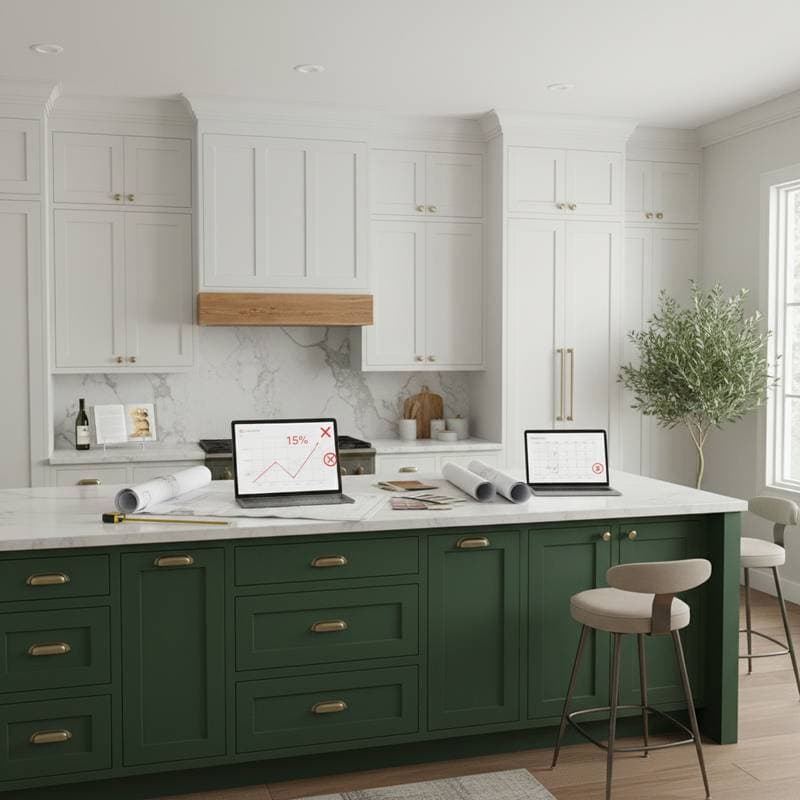
- Apply colors judiciously. Limit the accent tone to base or peninsula units to minimize the surface area needing treatment.
- Steer clear of bespoke color formulations. Such options can inflate finishing expenses by up to 15 percent, per Home Improvement Research Institute findings.
- Allocate for unforeseen elements. Reserve at least 10 percent of the cabinet funds for potential revisions, such as spot repairs or gloss adjustments.
Treating the dual-tone element as a budgeted design choice allows preservation of striking visuals alongside fiscal restraint.
Cost Benchmarks and Optimization Techniques
Standard shaker-style cabinets in one finish generally range from $8,000 to $12,000 for a typical kitchen. Introducing two tones elevates this to $10,000 through $15,000, influenced by raw materials and treatment specifics. Premium bespoke units with elaborate surfaces may surpass $20,000. The added charge arises from rigorous finishing protocols, extra verification stages, and phased drying periods.
Optimization plays a vital role in staying within limits. Focus investments on areas delivering clear returns. For instance, contrasting only the peninsula cabinets creates a sophisticated vibe without proportionally hiking treatment outlays. Employing overlays or synthetics on peripheral units while applying hardwood to prominent zones strikes an equilibrium between caliber and expenditure.
Cabinet specialist Erin Wallace of Studio Fineline advises, "We often advise clients to treat the two-tone look as an accent, not a full commitment. A limited application gives you the visual depth you want while keeping the budget intact." This method aligns with the rising preference among prudent remodelers for measured accents rather than comprehensive dual applications.
Coordinating Timelines and Teams
Two-tone cabinets demand heightened synchronization among finishing crews, assembly experts, and planners. A holdup in hue verification or drying can defer setup by days. The Kitchen Remodel Market Index reports that finishing issues contribute to 25 percent of project delays.
To reduce interruptions, insist on a dedicated finishing calendar within the overall schedule. Obtain documented approvals for all shades and supplies prior to fabrication. Such documentation averts expensive do-overs and offers safeguards during concluding reviews.
Michael Torres stresses, "Color sequencing is as important as material delivery. If one finish arrives late, the entire installation sequence can stall. Clients who request clear scheduling get better results and fewer surprises."
Sourcing Expert Assistance
Selecting qualified professionals ensures resilient, flawlessly executed two-tone cabinets. Prioritize certified contractors experienced in varied-surface endeavors. Seek portfolios of analogous installations and confirm adherence to standards from the Kitchen Cabinet Manufacturers Association.
Preserving and Maximizing Your Two-Tone Investment
Proper upkeep extends the lifespan and allure of two-tone cabinets. Clean routinely with gentle, nonscratch tools and check transition edges yearly for wear. Shun abrasive cleaners that might fade gloss or alter hues at boundaries.
A thoughtfully executed two-tone kitchen boosts property marketability and sophistication. Agents note that such features enhance listing visuals, drawing more interest from prospects. This payoff emerges fully when upfront costs receive meticulous oversight through exact forecasting, selective sourcing, and vigilant team management, yielding the intended style without fiscal overreach.