
2026 Outdoor Kitchen Costs and Trends Revealed
Imagine grilling fresh vegetables beneath a gentle evening sky, with friends assembled around a sleek countertop and soft music in the background. The scent of herbs and wood smoke fills the air, and all necessary tools remain within easy reach. This scene captures the essence of a thoughtfully designed outdoor kitchen, which merges relaxation and utility. As homeowners increasingly extend their living spaces outdoors, these kitchens emerge as central elements in contemporary backyards.
For those preparing to construct or renovate an outdoor cooking area, grasping anticipated costs and emerging design trends proves essential for informed decisions. This guide examines projections for 2026, along with strategies to develop an attractive, effective outdoor kitchen aligned with personal routines.
Outdoor Kitchen Trends Shaping 2026 Designs
Outdoor kitchens progress far beyond basic grill setups. Current designs emphasize comprehensive environments that extend indoor living seamlessly. The following trends command significant focus.
1. Seamless Indoor-Outdoor Flow
Professionals prioritize erasing boundaries between interior and exterior spaces. Select identical countertop materials, cabinet styles, and floor finishes to foster visual continuity. Install sliding or bi-fold glass doors to link the kitchen and patio, facilitating effortless movement for cooking and conversation.
2. Sustainable Materials and Smart Systems
Environmental awareness guides material selections. Opt for recycled stone composites, reclaimed wood elements, and energy-efficient appliances as common choices. Incorporate water-conserving faucets and solar-operated lights to combine aesthetics with ecological mindfulness.
Integration of technology enhances outdoor functionality. Choose smart grills that connect to mobile applications for precise temperature control, voice-activated illumination, and weather-resistant audio setups. These features deliver refined convenience during meal preparation.
3. Year-Round Functionality
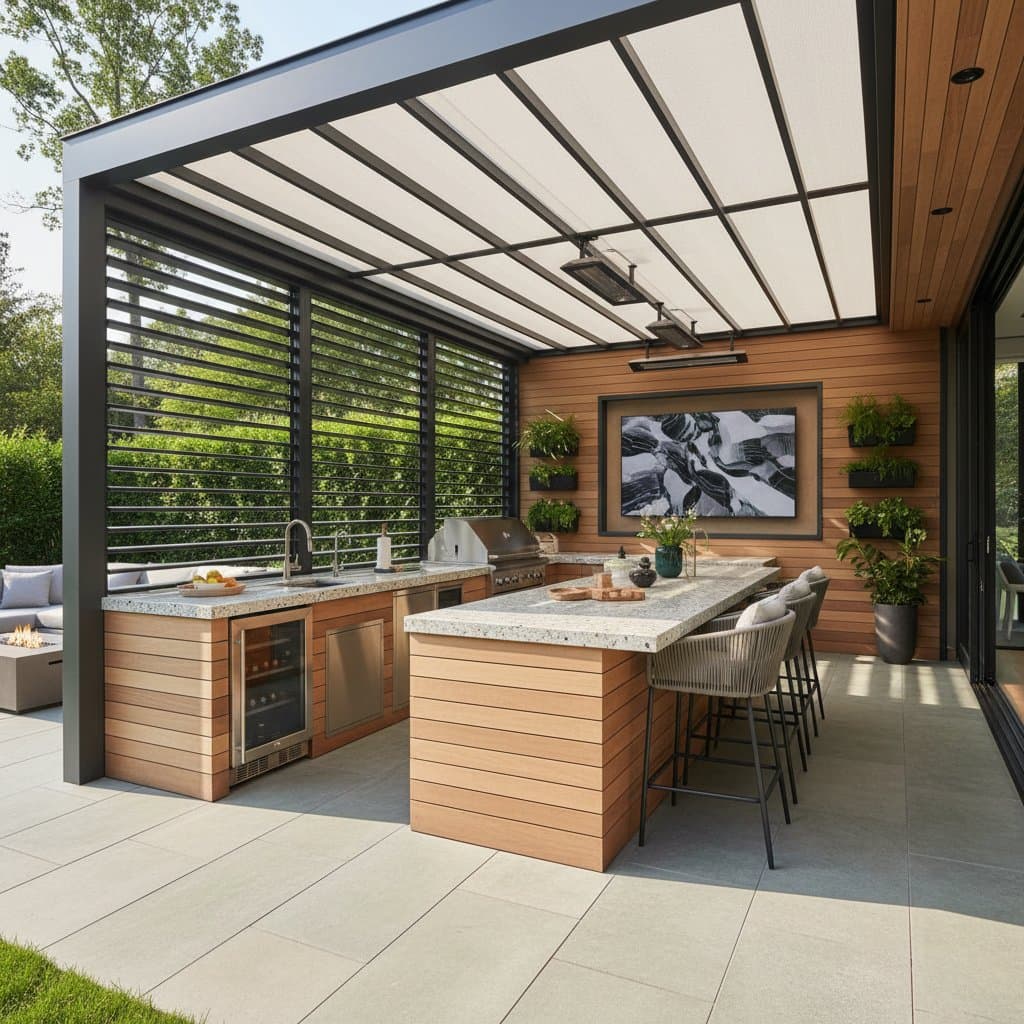
Homeowners seek versatility across seasons. Designs increasingly feature embedded heating systems, retractable insect screens, and adaptable shading options. Integrate linear gas fireplaces or portable fire tables to provide warmth and atmospheric appeal during cooler months.
4. Natural and Textured Finishes
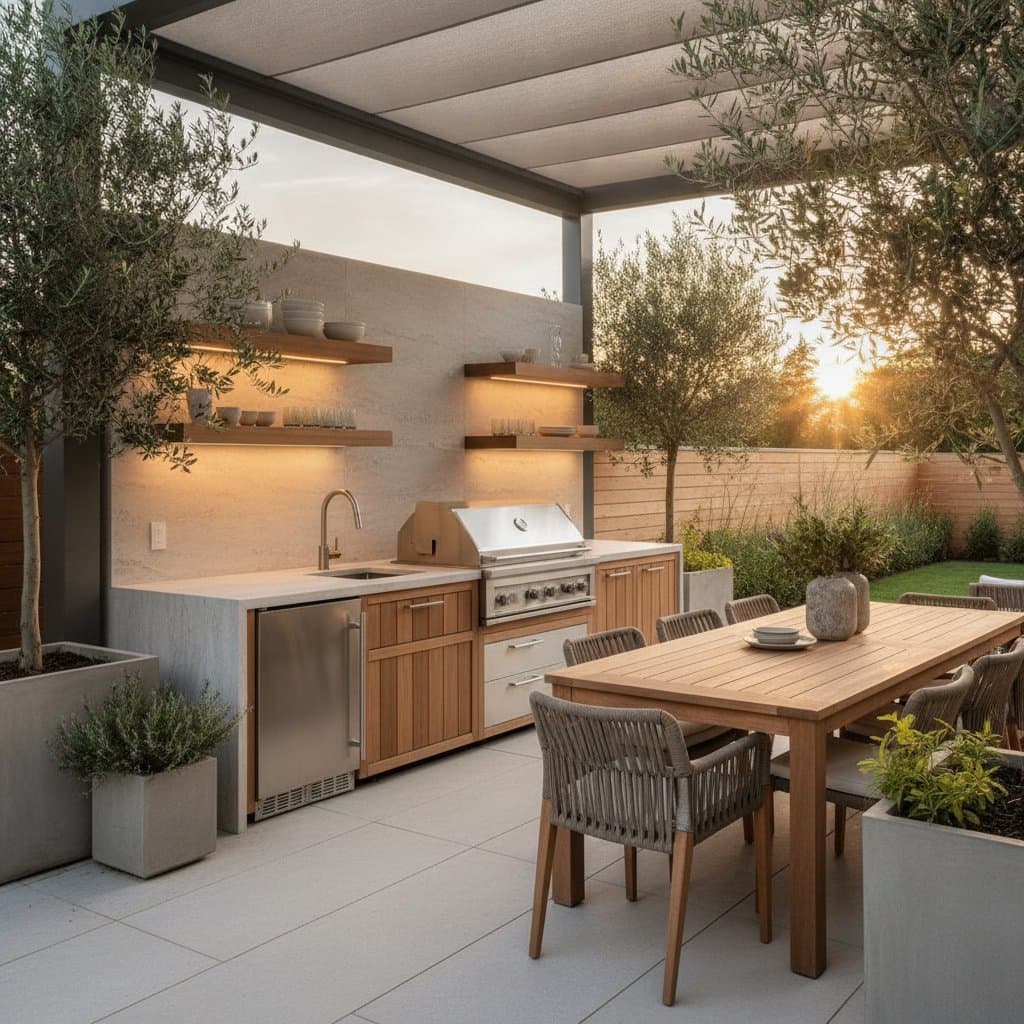
Preferences lean toward organic rather than glossy surfaces. Install matte stone countertops, hand-hewn timber accents, and artisanal ceramic tiles. Such elements infuse warmth and genuineness, rendering the area more welcoming and personal.
5. Flexible Zones for Entertaining
Divide spaces into distinct areas for preparation, meals, and relaxation instead of relying on a single expansive surface. Employ modular islands, adjustable seating, and tiered counters to accommodate varying group sizes. This approach suits households that host both intimate family meals and larger social events.
2026 Cost Breakdown for Outdoor Kitchens
Budgeting requires attention to multiple factors, including materials, labor, and features. Average costs in 2026 range from $15,000 for basic setups to $50,000 or more for elaborate installations. Breakdowns include:
-
Basic Grill Station: $15,000 to $25,000, covering a simple countertop, grill, and storage cabinets using standard materials like concrete and stainless steel.
-
Mid-Range Kitchen: $25,000 to $40,000, adding sinks, refrigeration, and weather-resistant cabinetry with mid-tier finishes such as granite counters and gas lines.
-
Luxury Build: $40,000 to $75,000+, incorporating smart tech, custom stonework, heating elements, and professional landscaping integration.
Labor accounts for 30 to 50 percent of total expenses, varying by region and complexity. Factor in permits, utility extensions, and site preparation, which can add $5,000 to $10,000. To manage costs, prioritize essential zones first and phase in upgrades over time.
Practical Planning Tips
Constructing an outdoor kitchen demands strategic foresight to guarantee usability, security, and performance.
1. Location and Layout
Site the kitchen near the indoor counterpart for practicality, yet distant enough to prevent smoke infiltration. Adopt an L- or U-shaped configuration to maximize preparation surfaces and guest circulation. Evaluate prevailing winds, sunlight patterns, and utility access prior to committing to a plan.
2. Utility Connections
Most designs require gas, water, and power supplies. Collaborate with certified contractors to execute secure, code-compliant setups. In regions with fluctuating climates, incorporate insulated conduits and protective housings for pipes and cables.
3. Weather Protection
Shield the area with a solid roof, open pergola, or oversized canopy. Utilize fitted covers for equipment during idle periods. In temperate zones, install infrared heaters or enclosed fire pits to prolong usability into fall and spring.
4. Lighting and Ambiance
Develop a multi-tiered illumination scheme to adapt from daylight to dusk. Position focused lights over work zones and diffused glows around seating areas. Embed low-voltage LED fixtures beneath edges or along walkways for enhanced visibility and elegance.
Maintaining and Maximizing Your Outdoor Kitchen
After installation, consistent care sustains the space's appeal and reliability. Wipe stainless surfaces with mild cleaners, apply sealant to stone yearly, and inspect fuel lines regularly. In severe winter areas, store compact items indoors to avert damage.
Beyond upkeep, integrate the kitchen into daily life. Prepare weekday suppers for family, savor morning meals on weekends, or conclude evenings with stargazing treats. This setup transcends mere utility, fostering bonds through shared meals and outdoor enjoyment.
Through deliberate site selection, durable selections, and stylistic harmony, craft an outdoor kitchen that mirrors individual preferences and elevates living patterns. In 2026, innovation in eco-friendly practices and integrated tech promises enduring value for backyard enthusiasts.