
Clever Hidden Kitchen Storage: 2026 Hacks and Prices
Every time one watches a home makeover show, the sleek kitchens capture attention. Not a single utensil, appliance, or packet of biscuits appears in view. Everything resides behind pristine cabinet doors. In contrast, many real kitchens feature tangled toaster cords and leaning spice racks.
Hidden kitchen storage extends beyond aesthetics. It enhances functionality in spaces where cooking, eating, and searching for items occur simultaneously. The following sections outline effective methods to conceal clutter, including realistic cost estimates.
The Secret Life of Drawers
Modern cabinetry conceals items effectively through innovative drawers.
1. The False Front Drawer
The panel beneath the sink often serves as mere decoration. Transform it into a pull-out tray for sponges, scrubbers, or dishwasher tablets. Hardware costs approximately $30 to $60. Professional installation adds $100 to $200.
2. The Toe-Kick Drawer
The narrow space at the base of cabinets offers untapped potential. Install a toe-kick drawer to store baking trays, chopping boards, or art supplies. DIY kits range from $50 to $150, while custom builds cost $200 to $400.
3. The Deep Pull-Out Wonder
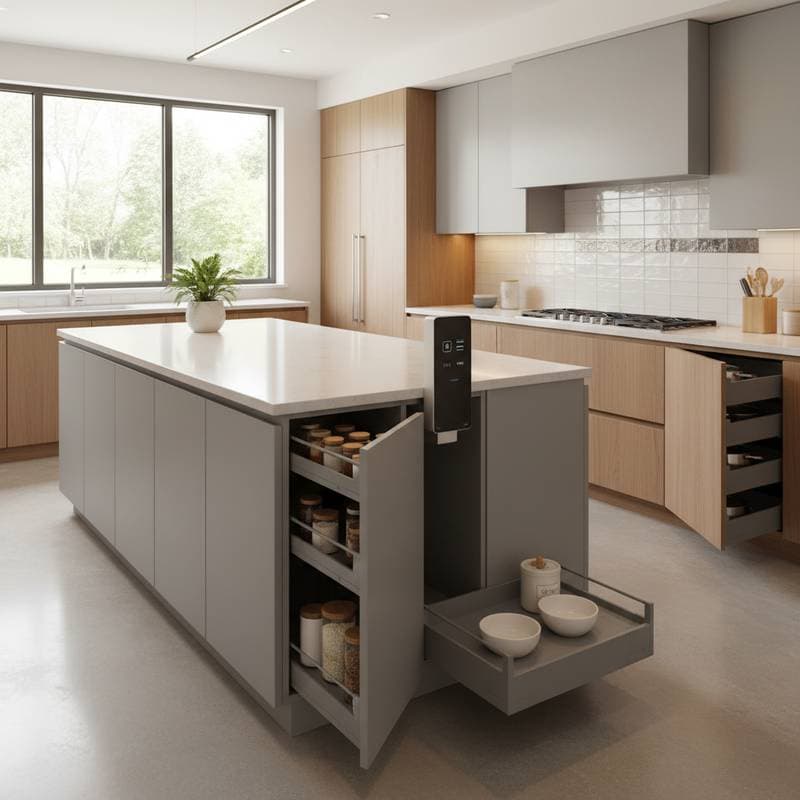
Deep cupboards often hide items at the back. Equip them with pull-out drawers and dividers for easy access to cookware. Basic models start at $100, with premium options reaching $300 or more.
Cabinets with a Secret
Cabinet interiors provide opportunities for concealed organization.
4. The Pull-Out Pantry
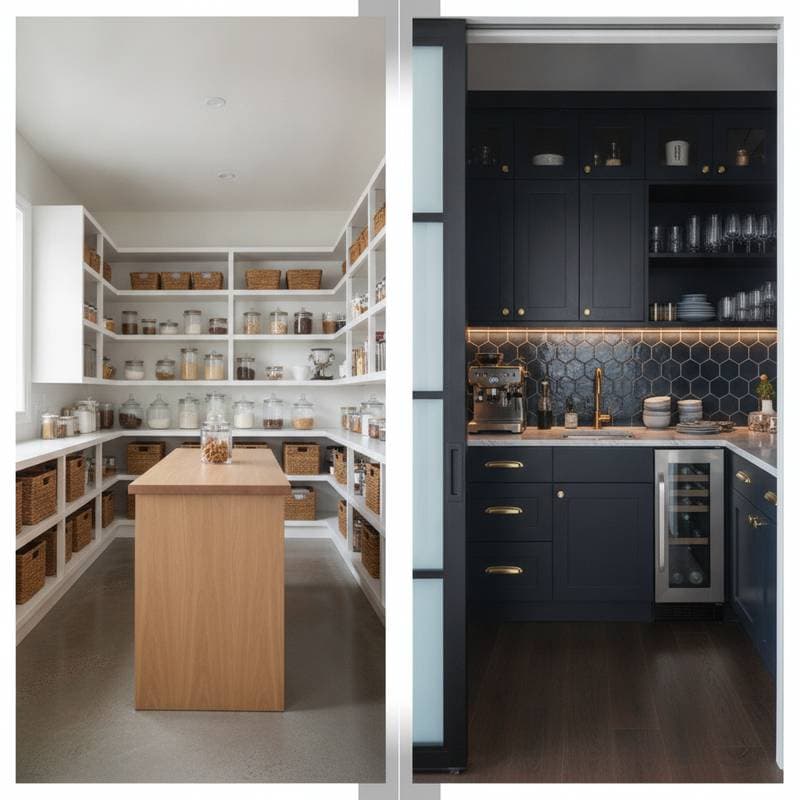
Install a narrow pull-out pantry in tight spaces. Adjustable shelves accommodate tins, jars, and snacks. Flat-pack units cost $150 to $250; custom versions range from $300 to $500.
5. The Corner Carousel
Corner cupboards frequently trap items out of reach. A rotating carousel or pull-out shelves resolves this issue. Hardware prices begin at $80, escalating to $250 for durable materials.
6. The Appliance Garage
Conceal small appliances in a dedicated cabinet with a roll-up door. This setup maintains clear counters and manages cords. Basic garages cost $200 to $350; upscale models exceed $500.
Clever Nooks and Disguised Surfaces
Integrate storage into unexpected areas for seamless functionality.
7. The Hidden Charging Drawer
Address device clutter with a drawer featuring USB ports. It conceals cords and elevates phones during meal preparation. Retrofit options range from $100 to $250; advanced versions with wireless charging cost $300 to $450.
8. The Slide-Out Chopping Board
Embed a chopping board that slides out above the bin. Some include containers for scraps. Manual versions start at $75; premium stainless-steel models reach $200.
9. The Secret Wine Drawer
Incorporate a pull-out rack into a kitchen island for bottle storage. It maintains temperature control and discretion. Kits cost $150 to $300; custom joinery ranges from $400 to $600.
The Island of Hidden Possibilities
Kitchen islands support multiple functions through integrated storage.
10. The Pop-Up Power Tower
A retractable socket column integrates into the island surface. It provides outlets without visible clutter. Units cost $100 to $250, depending on outlet count and finish.
11. The Pull-Out Pet Station
For pet owners, a slide-out drawer with bowls streamlines feeding. It tucks away post-meal. Ready-made bases range from $80 to $150; custom installations cost $200 to $350.
12. The Hidden Drawer Within a Drawer
Add an inner compartment behind the main drawer for utensils or napkins. This design maximizes space efficiently. It increases cabinetry costs by $50 to $150.
Prices That Make Sense
Costs for hidden storage vary by type and installation. Drawer kits and organizers range from $30 to $300. Custom cabinetry and hardware often exceed $500 per feature.
During a full renovation, allocate 5 to 10 percent of the budget to these elements. They enhance usability and boost resale value. On a limited budget, opt for modular inserts or adhesive organizers starting at $10 to $50.
Living with Your Clever Kitchen
After installation, maintaining organization requires consistent effort. Initial perfect setups often evolve into familiar routines. Hidden storage promotes habits that simplify tidying.
Counters remain clear, and daily tasks feel efficient. Start with one or two features to observe improvements. These additions create a functional space tailored to specific needs.