
Understanding 2026 Backsplash Costs: Tile vs. Slab
Recent trends in kitchen renovations highlight backsplashes as key elements for style and function. Homeowners frequently search for comparisons between tiled installations and solid slab surfaces, drawn from popular posts on design platforms. These options differ significantly in pricing, maintenance, and aesthetic appeal, influencing decisions for projects planned in 2026.
Backsplashes now serve as focal points, transforming plain walls into expressive features. Whether selecting patterned tiles or sleek stone slabs, a clear grasp of costs ensures informed choices. The following sections examine materials, installation, and practical benefits to guide your selection process.
Tile Backsplashes: Versatile and Expressive Options
Cost Overview
Tile backsplashes vary widely in price, from affordable ceramic options starting at $5 per square foot to premium handmade varieties reaching $20 or more. For a typical 30-square-foot kitchen area, total costs range from $300 to $1,200 for materials alone. Labor adds $10 to $15 per square foot, depending on pattern complexity and location.
Materials and Finishes
Interior designers such as Clare Whitby of Studio Whitby Interiors recommend materials like matte subway tiles for subtle elegance or glossy Moroccan zellige for intricate patterns. Porcelain mosaics offer durability with a textured surface, while glass tiles provide a modern shimmer. These choices allow customization to match cabinetry and countertops seamlessly.
Design Approaches
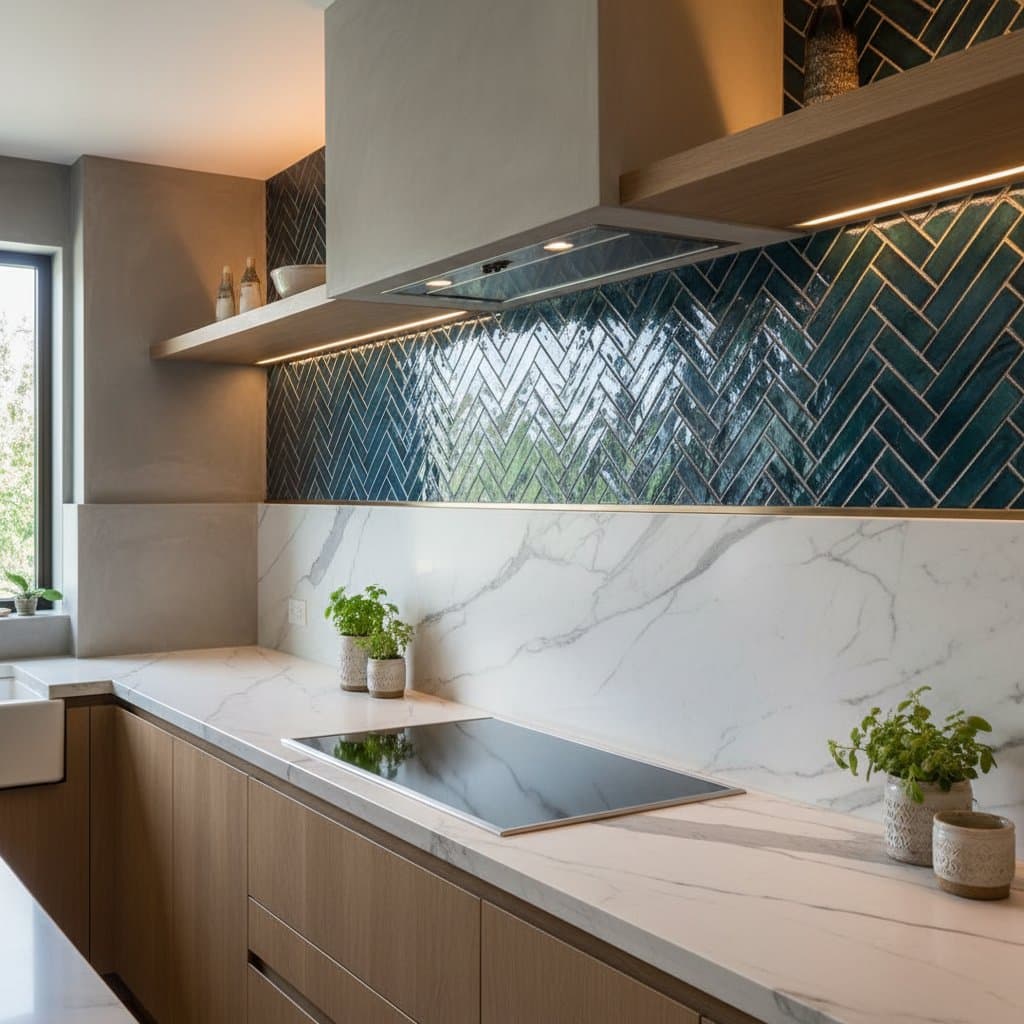
The modular design of tiles supports innovative layouts, such as herringbone patterns behind the stove for visual interest. Vertical stacks beside open shelves create height and flow in smaller spaces. Current trends favor small-format tiles, which add a crafted, artisanal touch that enhances light play across surfaces.
Installation Process
Professional installation requires careful surface preparation, precise layout planning, and grout application. Workers align tiles to avoid uneven lines, a step that extends time for intricate designs like chevrons. Expect the process to take one to two days for standard areas, with costs rising for custom cuts around outlets or corners.
Practical Performance
Tiles resist moisture and heat effectively, making them suitable for high-use zones. If a single tile chips, replacement involves minimal disruption compared to larger surfaces. Regular grout sealing every one to two years prevents stains, particularly in areas exposed to spills or steam.
Aesthetic Effects
Tiles deliver layered depth through texture and color variations, evoking a handmade charm. This tactile quality suits both classic farmhouse styles and contemporary minimalism. The result invites closer inspection, adding personality to the kitchen environment.
Slab Backsplashes: Seamless and Luxurious Appeal
Cost Overview
Slab backsplashes command higher prices due to their solid nature, with quartz starting at $40 per square foot and natural marble exceeding $60. For a 30-square-foot installation, materials cost $1,200 to $2,500, plus $15 to $25 per square foot for labor. These investments reflect the premium materials and specialized handling involved.
Materials and Finishes
Popular selections include quartz for its engineered uniformity or granite for natural veining. Marble slabs offer elegant subtlety, while soapstone provides a matte, durable finish resistant to scratches. Thickness typically ranges from 1.25 to 2 inches, influencing both weight and visual impact.
Design Approaches
Slabs create uninterrupted expanses that elongate walls and unify the space. A full-height installation behind counters emphasizes clean lines in modern designs. Edge treatments, such as eased or bullnosed profiles, add refinement without overwhelming the layout.
Installation Process
Fabrication begins off-site, where slabs are measured, cut, and polished to fit precisely. On-site work involves securing the heavy material to reinforced walls, often requiring additional supports. The process demands skilled fabricators to ensure level placement and seamless seams, typically completing in one day for straightforward setups.
Practical Performance
Slabs excel in durability, with non-porous options like quartz needing little maintenance beyond wiping. They withstand daily wear without grout lines to trap residues. Natural stones require annual sealing to protect against etching from acidic foods.
Aesthetic Effects
The smooth, continuous surface of slabs conveys sophistication and calm. Reflections from polished finishes amplify light, making kitchens feel brighter and more spacious. This streamlined look integrates well with minimalist or high-contrast cabinetry.
Comparing Costs: Tile and Slab in Real Projects
Total expenses encompass materials, cutting or fabrication, labor, and finishing touches. Tile projects often total $800 to $2,000 for standard kitchens, offering lower entry points. Slab installations range from $2,000 to $4,500, justified by longevity and reduced cleaning time.
Key factors for tile include material grade, pattern intricacy, and grout selections that affect longevity. For slabs, stone quality, transport distances, and edge detailing drive up figures. Many renovation experts recommend hybrids, such as a prominent slab focal point paired with tile accents, to optimize budget and drama.
In practice, urban apartments favor compact tile setups for affordability, while spacious homes opt for slabs to highlight luxury. Evaluate your space size and usage to weigh these elements accurately.
Selecting the Best Option for Your Kitchen
Choices between tile and slab extend beyond finances to lifestyle needs. Active cooks benefit from tile's easy repairs, while those prioritizing low maintenance lean toward slabs. Assess daily habits, such as frequent entertaining or quick cleanups, to align with your priorities.
Tile accommodates evolving tastes through simple updates like recoloring grout. Slabs deliver enduring elegance, ideal for long-term homes. Consider blending approaches: terracotta tiles on perimeter walls with a quartz slab at the cooktop for balanced functionality and style.
Maintaining Your Backsplash for Lasting Appeal
Routine care preserves both options effectively. Clean tiles with mild soap solutions, focusing on grout lines to avoid buildup. For slabs, use pH-neutral cleaners to maintain surfaces without dulling the finish.
Schedule resealing for natural materials annually, applying products designed for stone or grout. Integrate lighting thoughtfully: LED strips accentuate tile details, while ambient fixtures enhance slab reflections. These steps ensure your backsplash remains a vibrant, practical asset for years.