IKEA vs Custom: Kitchen Cabinet Cost Secrets Every Homeowner Should Know
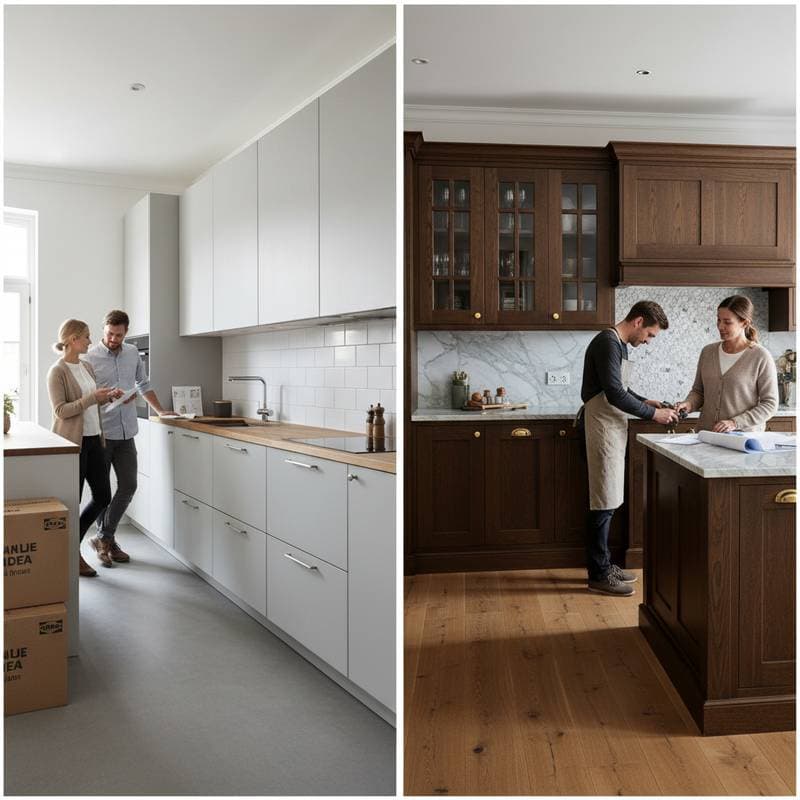
Homeowners encounter a wide array of kitchen cabinet designs in home improvement stores and online renovation galleries. Some favor the accessibility of IKEA modular systems, while others prefer the tailored accuracy of custom millwork. Beneath this diversity, established professional standards dictate genuine value. The guidelines below dissect kitchen cabinet expenses and direct informed decisions that harmonize function, quality, and budget.
1. Grasp the True Spectrum of Kitchen Cabinet Pricing
Kitchen cabinet costs vary widely based on materials, construction methods, and customization levels. Stock cabinets from retailers like IKEA start at around $100 per linear foot, while semi-custom options range from $150 to $300 per linear foot. Fully custom millwork often exceeds $400 per linear foot, reflecting premium woods, intricate joinery, and bespoke dimensions.
Consider the base materials: IKEA uses particleboard cores with laminate or veneer finishes, which keeps prices low but may compromise durability in high-moisture areas. Custom cabinets frequently employ solid hardwoods like maple or cherry, treated with protective finishes for longevity. Factor in these elements early to align expectations with your renovation goals.
Evaluate your kitchen's demands, such as daily use intensity or aesthetic priorities. A basic setup suits casual cooks, whereas a chef's kitchen benefits from robust, specialized storage. This foundational understanding sets the stage for cost-effective selections.
2. Understand the Hidden Costs of Affordable Cabinets
Homeowners often assume IKEA cabinets deliver substantial savings over custom alternatives, expecting those benefits to persist post-installation. Reality proves otherwise in most scenarios.
A family budgeting for IKEA units might overlook delivery charges, assembly hours, filler panels, lighting accommodations, and countertop alignments. Such add-ons frequently inflate the original projection by up to twofold.
Compute the complete installed price, encompassing hardware, trim, labor, and any bespoke alterations. This comprehensive approach reveals the full financial picture.
IKEA frameless designs depend on adjustable legs and rail mechanisms that necessitate exact wall alignment. If walls or floors deviate from square, professional labor costs escalate considerably.
By accounting for total expenses, individuals avoid surprises and assess whether custom cabinetry's initial premium yields superior enduring worth.
3. Evaluate Material Quality and Its Impact on Longevity
Material selection influences not only upfront costs but also maintenance and replacement needs over time. Lower-cost options like medium-density fiberboard (MDF) in IKEA lines resist swelling better than untreated particleboard but fall short of solid wood's resilience.
In humid kitchens, subpar materials warp or delaminate, leading to repairs that erode savings. Custom builders source kiln-dried hardwoods, ensuring stability and resistance to environmental stresses.
Request samples and inquire about finish types, such as UV-cured lacquers for custom pieces, which outperform basic laminates in scratch resistance. Prioritize materials matching your lifestyle to minimize future interventions.
Superior materials enhance daily functionality and preserve the kitchen's appeal, justifying higher investments through reduced upkeep.
4. Factor in Custom Fit vs Modular Efficiency
Standard cabinet sizes seldom align flawlessly with unique kitchen layouts. Modular systems introduce gaps, necessitate filler panels, or create disjointed transitions.
In a compact galley space, precise widths optimize storage without squandering space, yet IKEA offerings adhere to fixed intervals.
For irregular measurements or architectural oddities, custom fabrication utilizes every available inch. Expert millworkers adjust to uneven surfaces and craft to specific specifications.
Custom facilities achieve sizing in increments as fine as one-eighth inch, contrasting IKEA's three-inch intervals that demand filler solutions.
A seamless integration elevates visual harmony and operational efficiency, eliminating dust-prone crevices and appliance misalignments.
5. Assess Storage Functionality and Accessibility Features
Beyond aesthetics, cabinets must support practical storage needs. IKEA provides versatile inserts like pull-out trays, but custom designs integrate specialized solutions such as appliance garages or corner optimizers.
Irregular kitchen flows benefit from tailored drawer depths or soft-close mechanisms calibrated to contents. Modular limitations may force compromises in accessibility for taller users or those with mobility considerations.
Consult with designers to map traffic patterns and utensil placements. Invest in ergonomic hardware that streamlines routines, reducing frustration in daily tasks.
Effective storage transforms the kitchen into an efficient hub, amplifying usability and satisfaction over years of service.
6. Recognize Installation as a Craft
The expertise needed for proper cabinet installation exceeds common expectations. Even superior products underperform if placement falters.
Amateur efforts frequently result in base units shifting on irregular floors or wall units veering from plumb, disrupting visual balance.
Engage specialists familiar with your selected system. IKEA's rails require meticulous leveling and intervals, while custom work involves site-specific tweaks, cuts, or fillers executed by seasoned carpenters.
Experts deploy laser levels and shims to achieve alignments within one-sixteenth inch over extended spans.
Precise execution guarantees aligned doors, fluid drawer operation, and flawless countertop seating, safeguarding the project's integrity.
7. Consider Maintenance and Repair Practicalities
Ongoing care affects both appearance and structural integrity. IKEA components simplify part replacements through standardized catalogs, but custom pieces demand skilled refinishing to match originals.
Examine warranty coverage: IKEA offers one-year terms, whereas custom providers extend five to ten years with service options. Plan for periodic deep cleaning to prevent finish degradation.
Select finishes and hardware resistant to wear, such as matte oils over glossy paints for fingerprints. This foresight eases upkeep and prolongs vibrancy.
Streamlined maintenance preserves the investment, ensuring the kitchen remains functional and attractive with minimal effort.
8. Think About Resale and Adaptability
Excessive personalization risks curbing marketability or inflating update expenses for subsequent owners.
A distinctive palette or configuration might delight current residents yet alienate prospects seeking neutrality.
Maintain foundational neutrality, infusing character via interchangeable elements like pulls, paints, or accessories. IKEA facilitates front panel swaps, and custom bases support resurfacing or panel exchanges.
Modular frameworks accommodate aftermarket upgrades, while bespoke units endure refinishing without full overhauls.
Adaptable configurations sustain equity and evolve with design trends or household shifts.
Aligning Choices with Everyday Kitchen Life
Selecting IKEA or custom kitchen cabinets extends beyond monetary considerations. It involves aligning with daily habits and stewardship of the environment. Modular approaches offer rapid deployment and fiscal restraint, ideal for straightforward needs. Custom solutions cater to those valuing exactitude, artistry, and sustained robustness. Professionals advise viewing the kitchen as a practical workspace rather than a display. Optimal outcomes emerge when designs accommodate cooking, tidying, and socializing routines consistently.