Timeless Principles for Multigenerational Kitchens
Kitchens serve as the heart of family life, especially in homes shared by multiple generations. Each space reflects unique needs, from young children exploring to elders seeking comfort. Successful designs balance aesthetics with practicality, ensuring safety and accessibility for all users without compromising on appeal.
With years of experience designing kitchens for diverse families, the focus remains on enduring principles rather than fleeting trends. These ten rules provide a blueprint for creating a kitchen that adapts to changing needs, promotes interaction, and withstands daily demands. They emphasize clear flow, inclusive features, and forward-thinking flexibility.
1. Establish Clear Circulation Paths
Problem: Narrow walkways lead to congestion, increasing the risk of bumps, spills, and frustration in busy multigenerational households.
Real-world context: In a recent project, a family of four generations navigated a cramped kitchen, resulting in frequent collisions during meal preparation.
Solution: Design pathways at least 42 inches wide between key areas like the sink, stove, and refrigerator. Position islands and cabinets to avoid bottlenecks, allowing multiple people to move freely.
Technical detail: Comply with universal design standards by ensuring 36-inch minimum clearances around appliances and 48 inches in high-traffic zones. Opt for flush-mounted handles or pull-out features to prevent snags.
Outcome benefit: Spacious paths enhance safety and encourage collaborative cooking, turning the kitchen into a welcoming hub for family gatherings.
2. Vary Counter Heights for Inclusive Use
Problem: Uniform counter heights exclude shorter individuals, seated users, or those with mobility challenges from active participation.
Real-world context: A grandmother in one redesign project enjoyed baking but struggled with standard heights, limiting her involvement in family traditions.
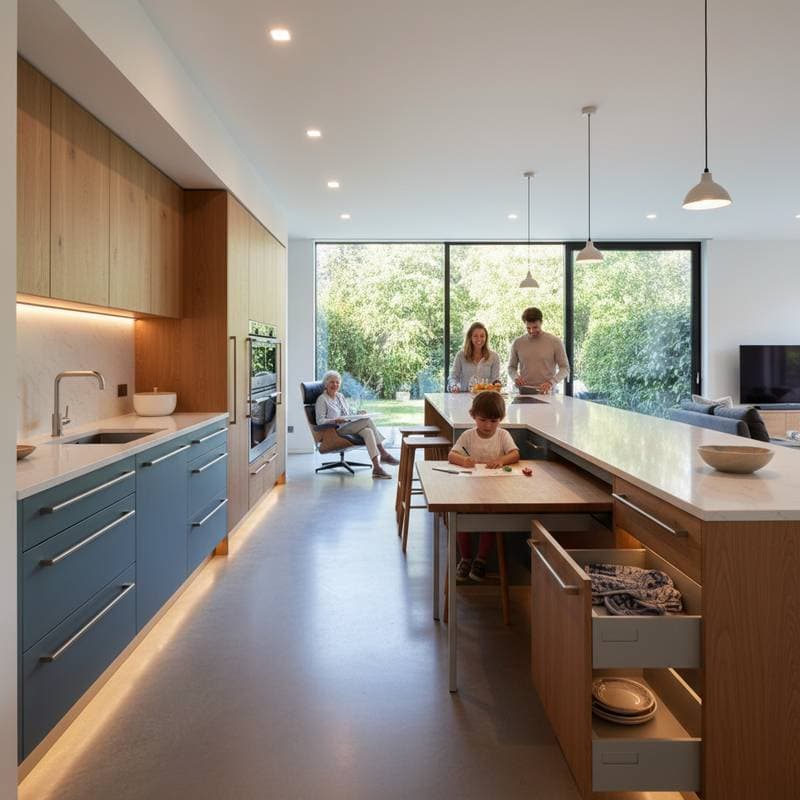
Solution: Integrate counters at multiple levels: 36 inches for general tasks, 30 inches for seated work, and 42 inches for casual dining or standing.
Technical detail: Provide knee space of 27 inches high, 30 inches wide, and 19 inches deep under lower sections. Select resilient surfaces such as quartz that resist stains and support heavy use.
Outcome benefit: Varied heights empower every family member to contribute, strengthening bonds through shared activities.
3. Select Ergonomic Hardware and Fixtures
Problem: Stiff or poorly placed handles and faucets strain joints and hinder access for children and seniors alike.
Real-world context: Clients often reported hand fatigue from cabinet pulls that required excessive force, particularly during extended prep sessions.
Solution: Install lever-style handles, soft-close mechanisms, and touchless faucets. Place frequently used items within easy reach, avoiding high or low extremes.
Technical detail: Choose hardware with rounded edges and ADA-compliant grips that require less than 5 pounds of force to operate. Integrate pull-out sprayers and adjustable sink heights where possible.
Outcome benefit: Ergonomic choices reduce physical effort, making the kitchen more comfortable and less intimidating for all ages.
4. Light the Space in Layers
Problem: Single-source lighting creates shadows in critical areas, heightening accident risks and causing visual strain.
Real-world context: A multigenerational remodel revealed how inadequate illumination led to spills and discomfort during evening routines.
Solution: Layer ambient overhead lights with task-focused under-cabinet strips and accent pendants over islands or seating areas.
Technical detail: Target 50 foot-candles on work surfaces and 30 in surrounding spaces. Incorporate dimmable LEDs with warm color temperatures around 2700K for a soothing effect.
Outcome benefit: Strategic lighting boosts precision and safety while creating an inviting atmosphere that suits varying daily rhythms.
5. Optimize Storage for Accessibility
Problem: Fixed shelving and deep cabinets make items hard to retrieve, frustrating users of different heights and abilities.
Real-world context: In a family home, young children and grandparents alike struggled to access pantry essentials without assistance.
Solution: Use pull-out drawers, lazy Susans, and adjustable shelves. Design lower cabinets for everyday items and upper ones for less frequent use.
Technical detail: Install glide-out trays in base cabinets with full-extension slides rated for 100 pounds. Ensure 15-inch clear depth for safe reach without overextension.
Outcome benefit: Accessible storage streamlines routines, reduces clutter, and allows independent use across generations.
6. Design Safe, Zoned Cooking Areas
Problem: Overlapping activity zones invite accidents when multiple cooks share space with hot elements and traffic.
Real-world context: A teenage cook and nearby vegetable prep by an elder led to avoidable burns in one busy household.
Solution: Divide the kitchen into distinct zones for cooking, preparation, and cleanup using islands or peninsulas as buffers.
Technical detail: Allocate 12 inches of landing space beside cooktops and 18 inches near refrigerators. Favor induction surfaces that heat only cookware, minimizing burn risks.
Outcome benefit: Zoned layouts promote efficient teamwork and minimize hazards, fostering a harmonious cooking experience.
7. Choose Durable, Low-Maintenance Materials
Problem: Delicate finishes wear quickly under heavy family use, leading to costly repairs and hygiene concerns.
Real-world context: Families with young children reported constant cleaning battles with porous countertops that harbored bacteria.
Solution: Select non-porous surfaces like granite sealants or stainless steel accents paired with easy-wipe flooring.
Technical detail: Opt for materials with high abrasion resistance, such as vinyl plank flooring rated for commercial traffic. Avoid textured surfaces that trap crumbs or spills.
Outcome benefit: Resilient materials maintain a clean, stylish look with minimal effort, supporting long-term family living.
8. Install Smart, Safe Appliances
Problem: Complicated controls alienate less tech-savvy users, while unsafe features pose risks in shared spaces.
Real-world context: An advanced oven's interface went unused by elders who preferred simpler operations.
Solution: Prioritize appliances with intuitive dials, large displays, and auto-safety shutoffs. Integrate smart features sparingly for added convenience.
Technical detail: Mount wall ovens at mid-height to avoid bending, and use drawer microwaves for easy access. Protect outlets with GFCI near sinks.
Outcome benefit: Reliable appliances build user confidence, enhancing safety and enjoyment for every generation.
9. Incorporate Universal Design Elements
Problem: Rigid layouts fail to accommodate evolving mobility needs, isolating family members over time.
Real-world context: A once-ideal kitchen became challenging as family members aged, requiring major overhauls.
Solution: Build in features like lever faucets, wide door swings, and contrasting edge strips on counters for visibility.
Technical detail: Ensure 32-inch door clearances and rounded counter edges to prevent injuries. Use color-contrasted hardware for better navigation.
Outcome benefit: Universal elements promote independence and inclusivity, adapting seamlessly to life's changes.
10. Plan for Adaptability Over Time
Problem: Static designs overlook future shifts in family dynamics, leading to impractical spaces.
Real-world context: A revisited project showed how fixed elements hindered care for aging relatives.
Solution: Incorporate modular components, such as removable panels for wheelchair paths and reconfigurable islands.
Technical detail: Design one counter section for height adjustment and use track-mounted shelving for easy reconfiguration.
Outcome benefit: Flexible planning extends the kitchen's lifespan, minimizing future costs and disruptions.
Embracing Family-Centered Functionality
A well-designed multigenerational kitchen thrives on empathy and foresight. Consider each user's perspective during planning to ensure the space supports daily joys and necessities. These principles transform challenges into opportunities for connection, creating enduring value for the home.