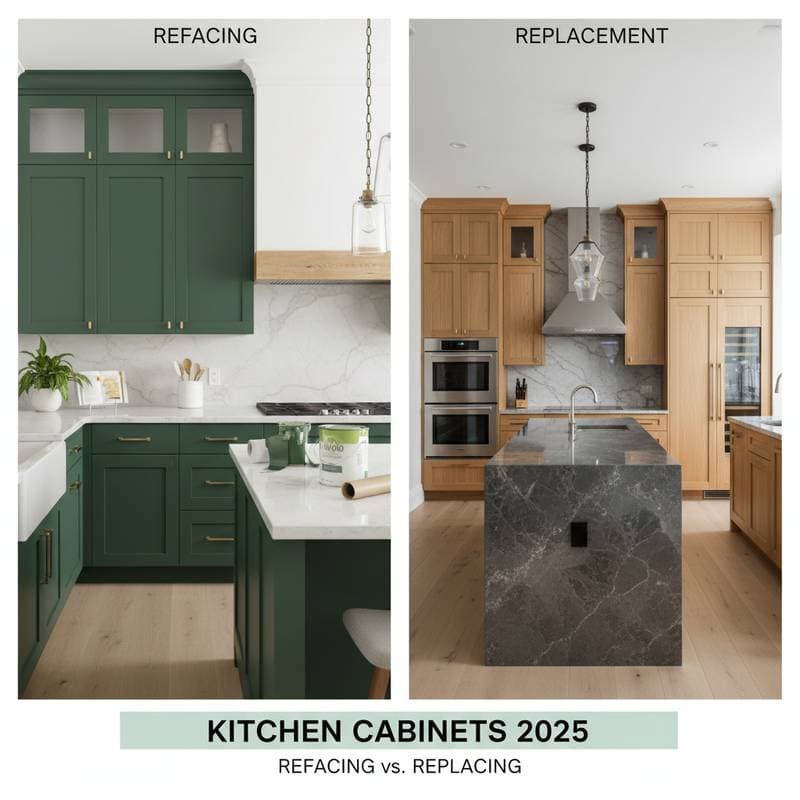
Understanding Kitchen Cabinet Options in 2025
Kitchen renovations remain a top priority for homeowners seeking enhanced functionality and appeal. Cabinets often dominate both the visual and budgetary aspects of these projects. In 2025, two primary approaches emerge: refacing existing cabinets or replacing them entirely. Each method addresses different needs, from minor refreshes to comprehensive overhauls.
Refacing involves updating the surface and hardware of current cabinets without altering the underlying structure. This technique suits kitchens with solid frames but outdated appearances. Replacement, on the other hand, entails removing old units and installing new ones, offering opportunities for layout changes and modern features.
Selecting the right option requires assessing your space, timeline, and financial resources. Factors such as material trends and labor costs influence decisions in the current market.
What Is Cabinet Refacing?
Refacing transforms the exterior of cabinets while preserving the original boxes. Professionals apply new veneer, laminate, or wood skins to doors and drawer fronts. They also replace hinges, pulls, and sometimes add interior shelving for improved organization.
This process typically takes one to two weeks, minimizing disruption to daily routines. It appeals to those who value sustainability, as it reduces waste by reusing existing structures. In 2025, popular materials include thermofoil for durability and shaker-style doors for timeless elegance.
Homeowners benefit from a cohesive look without the need for demolition. However, refacing works best on cabinets in good structural condition, free from water damage or misalignment.
What Does Cabinet Replacement Entail?
Replacement means a full demolition and installation of new cabinetry. This approach allows for custom sizing, innovative storage solutions, and integration with appliances. Designers can incorporate trends like handleless designs or pull-out pantries.
The project spans three to six weeks, depending on complexity and custom orders. It provides flexibility to reconfigure the kitchen layout, such as expanding islands or optimizing workflows. Materials range from stock options in particleboard to premium hardwoods like maple or quartz composites.
While more invasive, replacement ensures long-term reliability, especially in older homes with outdated or damaged cabinets. It aligns with major remodels that include flooring or countertop updates.
Cost Breakdown for 2025
Budgeting accurately proves essential for any kitchen project. Costs vary by location, cabinet size, and material quality. National averages offer a starting point for planning.
Refacing Costs
Refacing an average kitchen of 10 by 10 feet ranges from $7,000 to $12,000 in 2025. This includes materials like veneers at $200 to $500 per cabinet and labor at $50 to $100 per hour. Additional expenses cover hardware upgrades and minor adjustments, adding $1,000 to $2,000.
Factors influencing price include the number of cabinets and finish choices. For instance, real wood veneers cost more than laminates. Savings arise from avoiding structural work, making this option 40 to 60 percent less expensive than full replacement.
Replacement Costs
Replacing cabinets in a similar-sized kitchen starts at $12,000 and can exceed $30,000. Stock cabinets cost $100 to $300 per linear foot, semi-custom $300 to $500, and fully custom $500 to $1,200. Installation adds $100 to $200 per linear foot.
High-end selections, such as soft-close mechanisms or integrated lighting, increase totals. Regional labor rates and supply chain stability affect 2025 pricing, with potential rises in imported materials. Overall, replacement demands a larger upfront investment but enhances resale value.
Pros and Cons of Each Approach
Weighing advantages and drawbacks helps clarify the best fit for your situation.
Refacing Advantages and Disadvantages
- Pros: Faster completion reduces inconvenience; lower cost preserves budget for other updates; eco-friendly by minimizing landfill contributions; maintains layout familiarity.
- Cons: Limited to surface changes, so structural issues persist; lifespan extends 10 to 15 years, shorter than new units; customization options remain basic.
Replacement Advantages and Disadvantages
- Pros: Total redesign improves efficiency and aesthetics; superior durability lasts 20 to 30 years; accommodates modern features like smart storage; boosts home equity significantly.
- Cons: Higher expense strains finances; extended timeline disrupts routines; generates more waste, impacting environmental footprint; requires skilled contractors for quality results.
When to Choose Refacing Over Replacement
Refacing suits scenarios where cabinets function well but appear dated. Consider this if your kitchen layout serves current needs and you plan to stay in the home for under a decade. It proves ideal for quick flips or budget-conscious families.
Evaluate the cabinets' age and condition first. If frames remain square and doors operate smoothly, refacing maximizes value. Pair it with paint updates or hardware swaps for a fresh vibe without excess spending.
When Replacement Makes Sense
Opt for replacement when cabinets show wear, such as sagging shelves or poor organization. This choice fits expanding households or those desiring open-concept designs. It also benefits rentals transitioning to sales, where premium features attract buyers.
Assess long-term plans; if residing long-term, invest in quality that endures. Consult professionals to measure space and discuss trends like matte finishes or integrated appliances.
Steps to Plan Your Cabinet Project
A structured approach ensures smooth execution. Follow these steps to prepare effectively.
-
Assess Current Setup: Inspect cabinets for damage and measure the kitchen precisely. Note pain points like insufficient storage.
-
Set Budget and Timeline: Determine funds available and desired completion date. Factor in permits if structural changes occur.
-
Research Materials and Styles: Review 2025 trends, such as neutral tones and minimalist lines. Gather samples from suppliers.
-
Hire Professionals: Obtain quotes from three licensed contractors. Verify references and warranties.
-
Finalize Design: Create a layout sketch and select finishes. Confirm all details before starting.
-
Oversee Installation: Monitor progress and address issues promptly. Plan temporary kitchen solutions during work.
Maximizing Value in Your Kitchen Update
Both refacing and replacement elevate daily living and property appeal. Refacing delivers efficient savings for targeted improvements, while replacement unlocks transformative potential. Align your choice with lifestyle demands to achieve enduring satisfaction.
Focus on quality materials and expert installation to ensure results withstand time. This investment not only refreshes your space but also enhances functionality for years ahead.