
Kitchen Layouts for Multi-Generational Homes in 2026
Picture a kitchen where grandparents exchange recipes with teenagers preparing snacks, and young children assist in setting the table. The aroma of fresh herbs fills the air, and each area promotes interaction. For multigenerational families, this environment represents the essence of shared living. However, crafting a kitchen that accommodates all ages requires intentional design, versatile arrangements, and inclusive elements that balance ease and autonomy.
Contemporary kitchen layouts adapt to real family dynamics. They integrate open spaces with distinct zones to facilitate cooking, eating, and gathering. Whether undertaking a complete renovation or updating an current setup, these strategies enable the creation of a cohesive, functional kitchen that strengthens family bonds.
1. Open Layouts with Clear Functional Zones
In households spanning multiple generations, open layouts promote dialogue and seamless movement while linking cooking, dining, and relaxation spaces. Complete openness may lead to disorder, so establishing boundaries proves essential.
Define zones using understated visual elements. Introduce variations in flooring materials, ceiling elevations, or cabinet hues to separate the primary cooking area from the dining section or casual seating. For instance, install smooth oak flooring in the cooking zone and add decorative tiles around the breakfast bar to impart unique character without disrupting continuity.
Incorporate adaptable furnishings for versatility. Position a spacious island with seating on one side to function as a morning preparation surface and an afternoon study area. Utilize rolling carts or narrow tables that shift easily to provide additional workspace during large meals.
2. Universal Design Integrated Seamlessly
Accessibility must integrate smoothly without appearing institutional. Effective multigenerational kitchens embed universal design principles so all users gain advantages effortlessly.
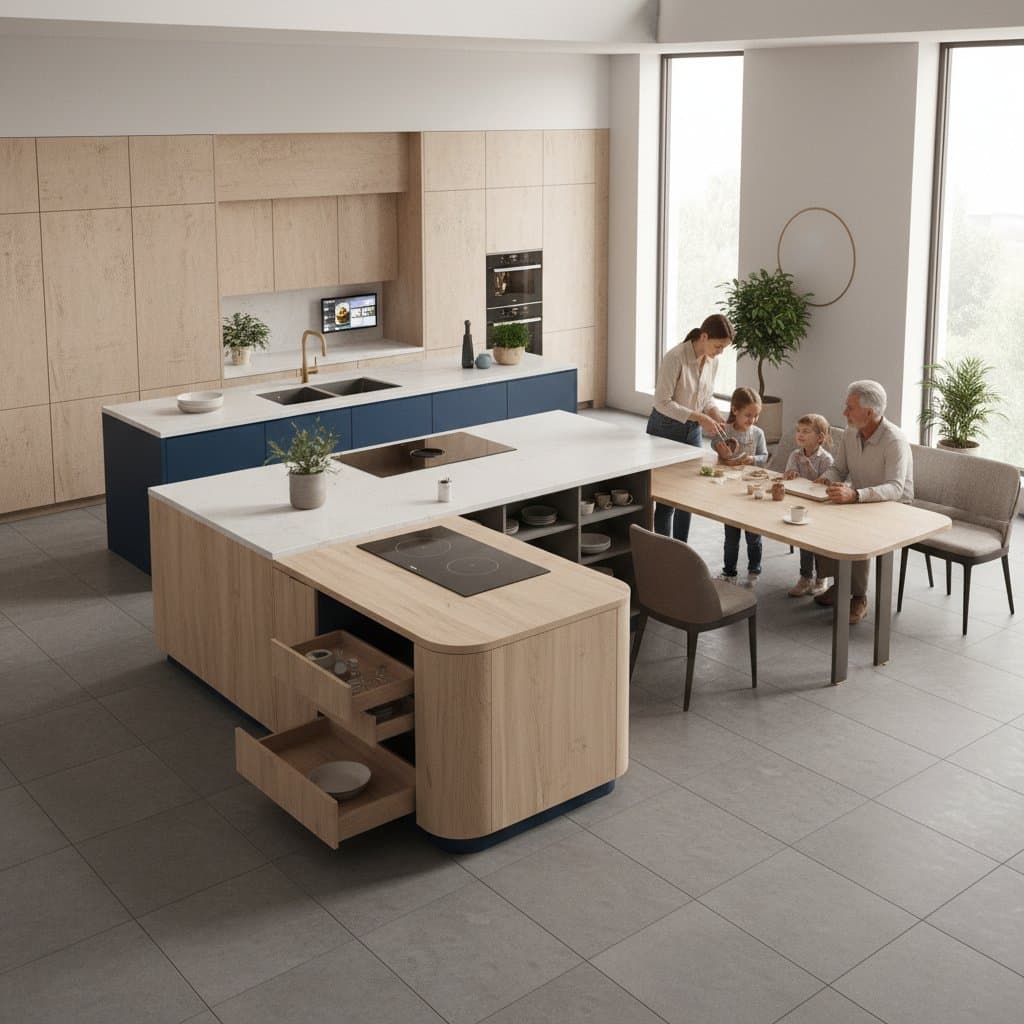
Evaluate counter elevations thoughtfully. Install a dual-height island, featuring one standard level and a lower section, to enable children or seated individuals to join activities with ease. Opt for adjustable pull-down shelves in overhead cabinets and spacious pull-out drawers under counters to minimize stretching and stooping for all.
Layer lighting to foster self-reliance. Combine under-cabinet LED strips, overhead pendants, and focused task lights to illuminate workspaces effectively. Select warm, indirect bulbs that generate an inviting atmosphere and reduce harsh reflections.
For mobility considerations, maintain a minimum five-foot clearance for turning in key areas. Choose slip-resistant yet comfortable flooring options, such as matte porcelain tiles or cushioned vinyl, to support safe navigation.
3. Dual Work Zones to Avoid Congestion
Multigenerational living often involves simultaneous kitchen use by multiple cooks. Parents might prepare main courses while grandparents handle baking, or siblings divide preparation tasks, so dual zones eliminate interference.
Position appliances with intention. Place two sinks at opposite ends to allow parallel washing and chopping. Add a refrigerator drawer adjacent to the dining space for quick access to beverages and appetizers, easing congestion near the primary unit.
In larger kitchens, implement a double-island configuration. Dedicate one island to cooking tasks with an integrated cooktop and rinsing sink, while the other acts as a communal serving station. This setup permits varied participation without overlap.
Compact spaces can still benefit. Extend a peninsula with a preparation ledge on one side and integrated seating on the other to delineate activities while preserving visual links.
4. Efficient Storage Solutions for Collective Use
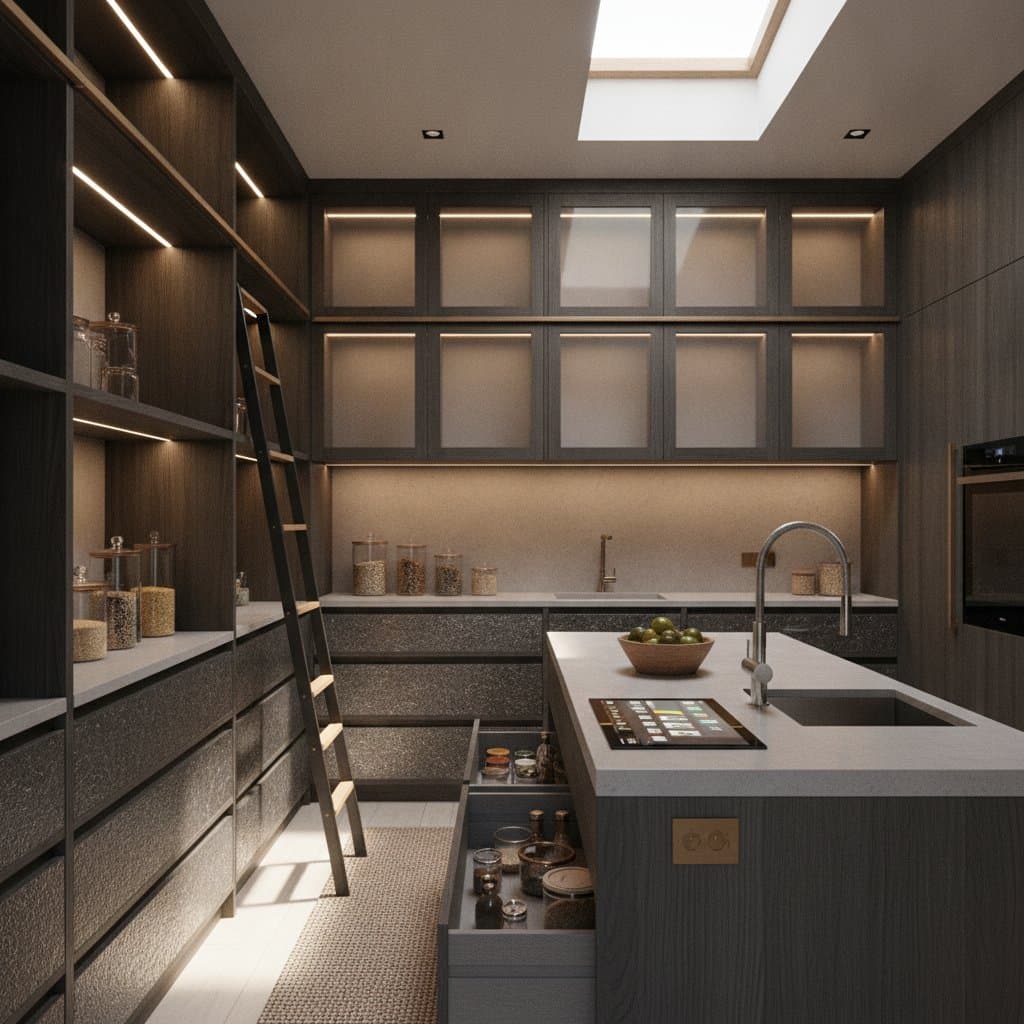
Shared living amplifies storage demands across generations. Develop systems that promote accessibility and order for every user.
Assign dedicated compartments for personal items, such as drawers for individual lunch gear or shelves for preferred beverages. Apply clear labels to encourage consistent organization. Install gliding pantry inserts to position everyday goods at reachable heights for shorter or senior family members.
Balance open and concealed storage judiciously. Reserve open shelves for daily essentials like cups and cereal bowls to enhance quick retrieval and display personal touches. Employ enclosed cabinets for bulkier items to sustain a neat aesthetic.
Integrate practical tech accommodations. Design charging compartments within drawers or subtle outlets to conceal devices during recharges. Such enhancements render the kitchen contemporary and streamlined for all ages.
5. Adaptable Dining Arrangements
Inclusive dining in multigenerational kitchens demands versatility to suit varied needs and occasions. Formal setups do not suit every meal, nor do fixed configurations fit all events.
Vary seating options to match age and ability. Install a cushioned banquette against a wall for supportive lounging, complemented by elevated stools at counters for relaxed chats. In ample areas, select a circular table with lightweight, adjustable chairs for simple entry and exit.
Choose expandable tables with user-friendly extension mechanisms operable by a single person. Store supplementary seating, such as foldable chairs or stackable ottomans, in nearby alcoves to accommodate guests without permanent clutter.
Position dining near exterior access points like sliding glass doors. This arrangement invites al fresco dining and blurs boundaries between indoor and outdoor living.
6. Technology Enhancements for Everyday Convenience
Kitchens should remain inviting and people-focused, yet intelligent tools can subtly improve routines. Current appliances emphasize security, productivity, and customization.
Select hands-free controls like voice-operated faucets or lights, ideal for limited dexterity or occupied hands. Induction ranges heat only cookware to lower scald risks and maintain cool surfaces around children. Equip refrigerators with modular shelves and transparent bins for straightforward access regardless of stature.
Leverage connected devices to streamline interactions. Mount a countertop smart screen to display cooking instructions, play audio, or sync schedules. Prioritize selections that bolster ease and collaboration over excessive automation.
7. Durable Materials with Aesthetic Appeal
High-traffic multigenerational kitchens require resilient surfaces that withstand spills and impacts. Resilience pairs well with visual elegance.
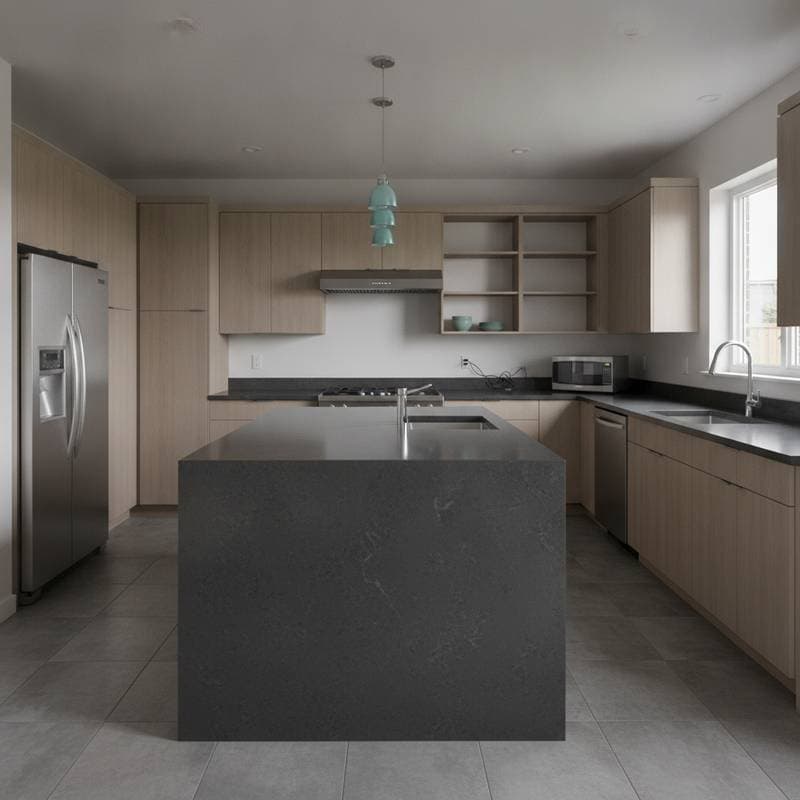
Quartz surfaces excel due to simple upkeep and diverse shades. Advanced composites replicate stone textures with superior toughness against stains. Select engineered hardwood or premium vinyl flooring for cozy footing that resists water and scuffs.
Choose cabinetry in low-sheen finishes to conceal smudges effectively. Build a enduring scheme with gentle neutrals accented by earthy tones like sage or taupe, which soothe across demographics.
Prioritize ergonomic details. Round counter edges and opt for hardware with ergonomic grips to enhance safety and comfort during interactions.
8. Spaces That Foster Family Interaction
Beyond meal preparation, kitchens in multigenerational homes serve as social hubs for studying, conversing, and blending traditions. Intentional elements elevate this role.
Create cozy vignettes like a window-adjacent bench or reading corner to invite extended stays. These spots keep participants engaged with ongoing activities.
Incorporate communal features such as a chalkboard wall for notes or a gallery of family images to highlight heritage.
Address acoustics thoughtfully. Add upholstered seats, placed rugs in lounge zones, and subtle sound-absorbing panels to dampen noise, facilitating clear communication in active settings.
Adapting Your Kitchen Over Time
As the kitchen takes shape, its true value emerges in ongoing adaptability. Flexible designs accommodate evolving family stages seamlessly.
A child-proof storage spot may later store adolescent essentials. An accessible workstation could transform into a shared crafting area.
Monitor usage regularly. Implement minor tweaks, such as installing additional utensil hooks or upgrading to adjustable lighting, to sustain functionality without extensive changes.
Dynamic kitchens respond to life phases while nurturing unity. They support both routine interactions and special occasions, ensuring enduring relevance through accessibility, adaptability, and warmth.