

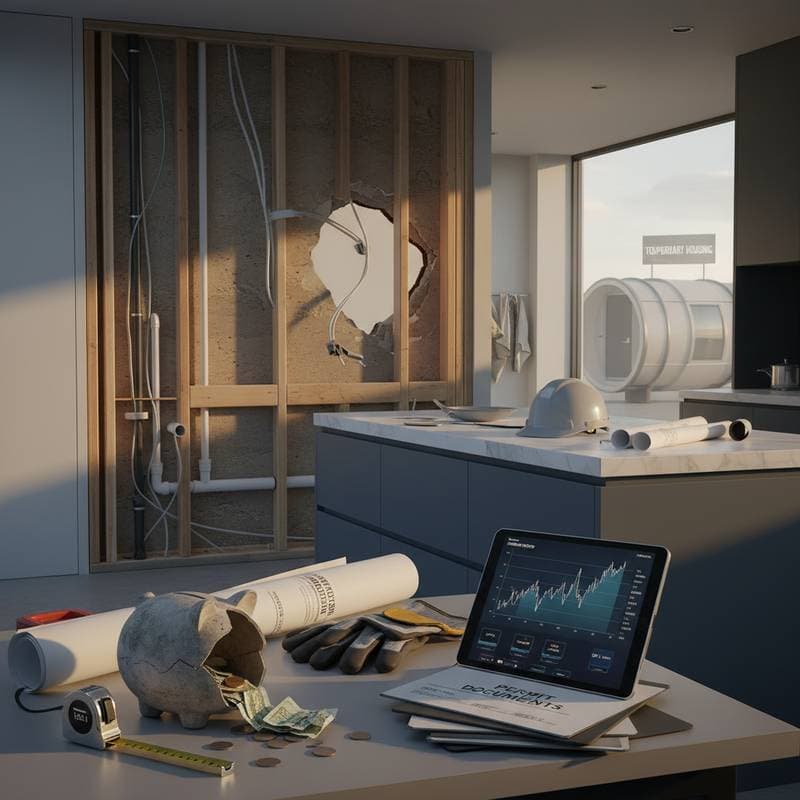
Understanding Hidden Costs in 2026 Home Remodeling
Data from the National Association of Home Builders indicates that 42 percent of homeowners exceed their renovation budgets due to unexpected expenses. A HomeAdvisor survey reveals that the average project cost estimate falls short by at least 20 percent. These statistics highlight a disconnect between initial plans and actual outlays, often stemming from overlooked elements that emerge during construction.
Renovations involve significant emotional and financial commitments. Homeowners must account for concealed charges before committing to contracts or purchasing supplies to safeguard their 2026 budgets effectively.
1. Structural Surprises During Demolition
Opening walls or floors frequently uncovers issues like outdated wiring, water damage, or weakened foundations that demand immediate attention. These discoveries can increase costs by 15 to 30 percent, according to industry estimates. Delaying repairs risks safety hazards and further complications.
Professional context:
Many homes built decades ago contain materials or designs that no longer meet modern standards. Contractors often encounter rot, mold, or pest infestations hidden behind finishes.
Expert insight:
"Structural surprises catch even seasoned professionals off guard, but a thorough pre-demolition inspection minimizes shocks," notes Sarah Kline, lead architect at RenewHome Designs with 15 years in residential renovations. "Allocate 10 to 20 percent of your budget as a contingency for these findings."
Budget strategy:
Schedule a professional structural assessment before starting work. Review the report for potential issues and incorporate repair estimates into your total budget. Build in a contingency fund equivalent to 15 percent of projected costs to cover unforeseen structural work.
2. Permit Fees and Regulatory Hurdles
Building permits, zoning evaluations, and inspection charges can significantly elevate renovation expenses. In urban areas, these fees often represent 1 to 3 percent of the total project cost for major remodels. Additional permits for electrical, plumbing, or HVAC systems compound the total.
Professional context:
Authorities have increased scrutiny on renovations to enforce energy efficiency and safety protocols. Overlooking these requirements leads to project delays and escalated timelines.
Expert insight:
"Permit costs differ greatly across regions, and many homeowners neglect them in initial budgeting," explains Tom Herrera, project manager at CivicBuild Contractors with more than 20 years in the field. "Clients benefit from obtaining detailed quotes from local building offices upfront."
Budget strategy:
Reach out to your local building department at the outset. Secure a documented fee schedule and confirm needs for environmental or energy audits. Factor in the permit expenses plus a reserve for possible re-inspections.
3. Material Price Fluctuations and Supply Delays
Volatile markets for lumber, fixtures, and appliances can drive up costs unexpectedly. Supply chain disruptions, as seen in recent years, may add 10 to 25 percent to material budgets. Delays in delivery also extend project durations, incurring extra labor fees.
Professional context:
Global events and seasonal demands influence pricing. Homeowners who lock in quotes early avoid mid-project hikes but must monitor contracts for adjustment clauses.
Expert insight:
"Material costs swing unpredictably, so I recommend sourcing samples and prices during planning," advises Maria Lopez, interior designer at BuildSmart Solutions. "Fixed-price contracts with suppliers provide stability against inflation."
Budget strategy:
Research current market rates and secure quotes from multiple vendors. Include a 15 percent buffer in your material allocation. Opt for contracts that cap price increases and prioritize local suppliers to reduce shipping delays.
4. Utility Upgrades for Code Compliance
Renovations commonly necessitate updates to aging electrical, plumbing, or HVAC systems to satisfy current codes. Rewiring, pipe replacements, or ventilation enhancements can add thousands to the bill. Fixr reports that such upgrades account for 12 percent of budget overruns on average.
Professional context:
Building codes advance regularly, rendering older installations non-compliant upon inspection. Requirements might include new grounding, GFCI outlets, or expanded venting systems.
Expert insight:
"Pre-renovation code checks prevent last-minute scrambles," says James Patel, certified electrician at CodeSafe Installs. "A detailed survey identifies upgrades early, saving time and money."
Budget strategy:
Engage qualified electricians and plumbers for an initial compliance evaluation. Demand comprehensive reports on necessary modifications. Integrate these projections into your budget prior to contract approval.
5. Temporary Housing and Living Disruptions
Major remodels often displace residents, requiring alternative accommodations for weeks or months. Hotel stays, rentals, or storage for belongings can total 5 to 10 percent of the budget. Underestimating this expense leads to rushed decisions and added stress.
Professional context:
Kitchen or bathroom overhauls typically force relocations. Dust, noise, and access limitations make on-site living impractical during peak construction.
Expert insight:
"Plan for displacement from day one to avoid hasty, expensive choices," recommends Lisa Chen, relocation coordinator at HomeTransition Services. "Short-term leases in familiar areas maintain routine and reduce overall disruption."
Budget strategy:
Assess project scope to estimate relocation duration. Research affordable housing options and factor in moving costs. Allocate funds for utilities, meals, and storage to cover all relocation needs.
6. Waste Disposal and Site Cleanup
Removing debris, renting dumpsters, and final cleaning represent accumulating expenses that surprise many. Contractors frequently omit these from initial bids, resulting in substantial add-ons. For mid-sized projects, totals can reach several thousand dollars.
Professional context:
Regulations mandate proper waste handling for materials like drywall, paint, and insulation. Violations incur fines or additional disposal fees.
Expert insight:
"Transparency on waste management upfront clarifies true costs," states Robert Kim, operations director at CleanSite Removals. "Break down dumpster needs and recycling options in bids for accurate forecasting."
Budget strategy:
Inquire if contractors include waste services in proposals. Verify anticipated dumpster usage and cleanup responsibilities. Reserve $500 to $1,500 based on project scale if services fall outside the base bid.
7. Landscaping and Exterior Repairs
Construction activities damage lawns, driveways, and exteriors, necessitating restoration afterward. Regrading, replanting, or resurfacing often claims 2 to 5 percent of the budget. Neglecting these leads to incomplete projects and diminished property value.
**Professional context:**nHeavy machinery compacts soil and erodes surfaces. Rain or foot traffic exacerbates issues during the build phase.
**Expert insight:**n"Exterior impacts are predictable, so budget for them proactively," suggests Elena Vargas, landscape architect at GreenRestore Landscapes. "Protective measures like temporary fencing reduce repair needs."
**Budget strategy:**nDocument site conditions pre-construction with photos. Include restoration estimates from landscapers in your plan. Set aside funds for soil amendment, seeding, and hardscape fixes.
Securing Your Remodeling Budget for Long-Term Success
Anticipating hidden costs transforms renovations from risky endeavors into controlled investments. By integrating expert strategies and buffers into planning, homeowners achieve projects that enhance homes without financial strain. Review budgets regularly with professionals to adapt to changes, ensuring 2026 remodels deliver lasting value and satisfaction.