

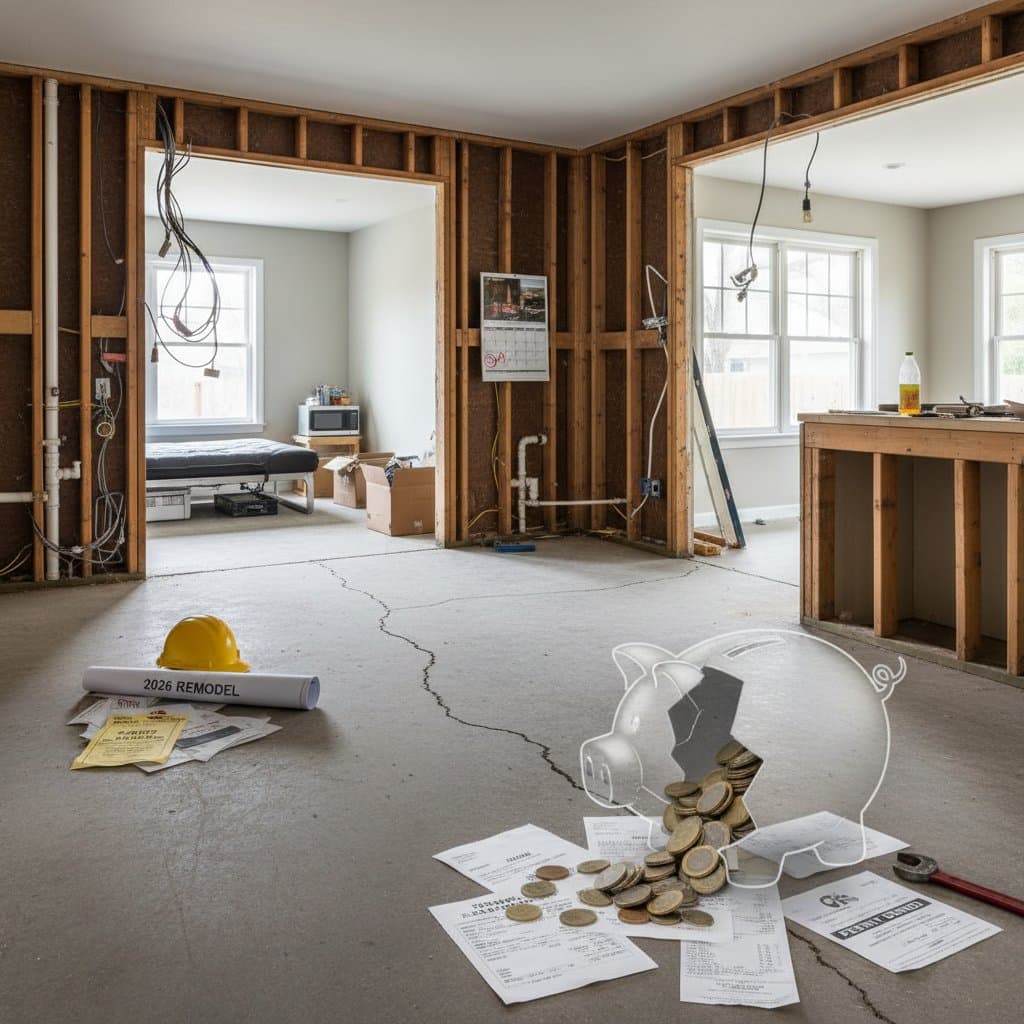
Hidden Costs That Derail Home Remodel Budgets
Imagine the anticipation of launching your ideal home remodel. You have assembled inspiration images, solicited contractor bids, and established what seems a solid budget. As work commences with the initial teardown, unanticipated bills start to accumulate: a minor pipe problem in one area, a permit revision in another. These developments erode financial control rapidly. Homeowners encounter this scenario frequently, but informed preparation makes it preventable.
Remodel planning tends to emphasize apparent enhancements, such as cabinet installations, floor coverings, and surface treatments. The concealed expenses that accumulate unobtrusively often surprise participants. Identifying potential sources of these costs enables more precise budgeting and sustains project momentum.
1. Structural Issues Revealed During Demolition
Demolishing walls frequently exposes non-compliant wiring, weakened support beams, or moisture damage. Remediation becomes mandatory prior to installing fresh components. A limited area of deteriorated beams or obsolete wiring circuits may necessitate thousands of dollars in labor and supplies.
Preparation strategies:
Require your contractor to incorporate a contingency allocation in the project estimate, generally 10 to 15 percent of the overall budget. This reserve accommodates unforeseen challenges. For residences of advanced age, schedule a pre-demolition assessment to pinpoint vulnerabilities early.
2. Permit Applications and Inspection Charges
Permit requirements receive underestimation or complete oversight in many cases. Project scope and jurisdiction dictate the need for authorizations covering structural modifications, water systems, electrical setups, or aesthetic alterations. Fees apply per permit, with potential multiple evaluations during execution.
Preparation strategies:
Consult your contractor at the outset regarding necessary permits and associated expenses. If overseeing the project independently, reach out to the municipal building authority for a detailed fee schedule. Allocate funds for original applications plus any follow-up inspections arising from initial failures.
3. Interim Relocation and Storage Expenses
Renovations impacting essential spaces, such as cooking areas or primary restrooms, may render the home uninhabitable for phases of the work. Leasing alternative accommodations, securing possessions, or increasing meal expenditures outside the home accumulate swiftly.
Preparation strategies:
Determine your living arrangements prior to commencement. Establishing a provisional cooking setup or residing with relatives reduces outlays considerably. For extensive undertakings, integrate costs for brief rentals or storage units into the preliminary budget to eliminate later shocks.
4. Mid-Project Design Modifications
Detailed blueprints notwithstanding, owners commonly revise preferences upon observing advancements. A selected tile arrangement may appear dissimilar in reality, or an appliance might dominate the area excessively. Essential tweaks occur, yet they provoke fresh procurements, return penalties, and extra workforce efforts.
Preparation strategies:
Dedicate additional effort in the planning stage to confirm selections for surfaces and configurations. Request three-dimensional visualizations or prototypes from your designer to preview outcomes. Should modifications prove necessary during execution, obtain revised cost projections prior to authorization for complete transparency.
5. Supply Chain Disruptions and Alternative Materials
Inventory shortages and logistical hurdles extend timelines, impacting financial plans. Unavailability of critical elements forces selection of pricier substitutes or adaptations in assembly techniques.
Preparation strategies:
Procure supplies well in advance and verify shipping timelines before groundbreaking. Maintain a curated roster of viable alternatives should primary choices vanish from availability. Adaptability minimizes expensive pauses while preserving aesthetic goals.
6. Essential Utility Enhancements and Integrations
Aged properties commonly require bolstered electrical distribution, refreshed piping networks, or augmented airflow systems to accommodate contemporary devices and installations. These modifications lack visual appeal, yet they ensure compliance and durability.
Preparation strategies:
Engage certified electricians and plumbers for system reviews before initiation. Inquire if existing infrastructure supports increased demands or mandates reinforcements. Early disclosure prevents discoveries midway that, for instance, necessitate panel expansions for innovative illumination schemes.
7. Accumulating Costs of Final Details
Overlooking expenditures on elements like fittings, moldings, or corrective coatings proves common. These concluding aspects appear insignificant individually, but aggregate substantially, particularly with bespoke or high-end specifications.
Preparation strategies:
Compile an exhaustive inventory of required items at the start and solicit segmented pricing. Incorporate completion supplies within the core estimate rather than as secondary considerations. This diligence curtails impulsive terminal purchases.
8. Debris Management and Disposal Fees
Waste handling charges evade budget inclusion often. Container leases, transport operations, and specialized handling for substances like coatings or legacy insulation contribute hundreds to the ledger.
Preparation strategies:
Verify with your contractor if refuse clearance forms part of the proposal. If excluded, obtain estimates from regional disposal providers pre-start. For modest scopes, a solitary container lease or consolidated collection suffices to control expenditures.
9. Site Restoration and Outdoor Adjustments
Construction activities influence surrounding landscapes unexpectedly. Machinery operations, stockpile placements, and personnel movement harm turf, pavements, or access routes. Extensions or facade alterations may demand re-leveling or water flow corrections.
**Preparation strategies:**nPlan elementary yard restorations post-completion. Shield vegetation and surfaces using protective barriers or barriers. A modest allocation for landscaping within the budget guarantees a polished exterior upon project closure.
Strategies to Secure Your Remodel Investment
Surprises arise even in meticulously orchestrated renovations, yet they need not compromise fiscal stability. Awareness combined with foresight forms the foundation. Establish a dedicated reserve fund, foster transparent dialogue with your contractor, and monitor outlays progressively.
A successful remodel delivers both thrill and value. Addressing these concealed expenses upfront safeguards your resources and fosters tranquility from initial disruption to ultimate unveiling.