

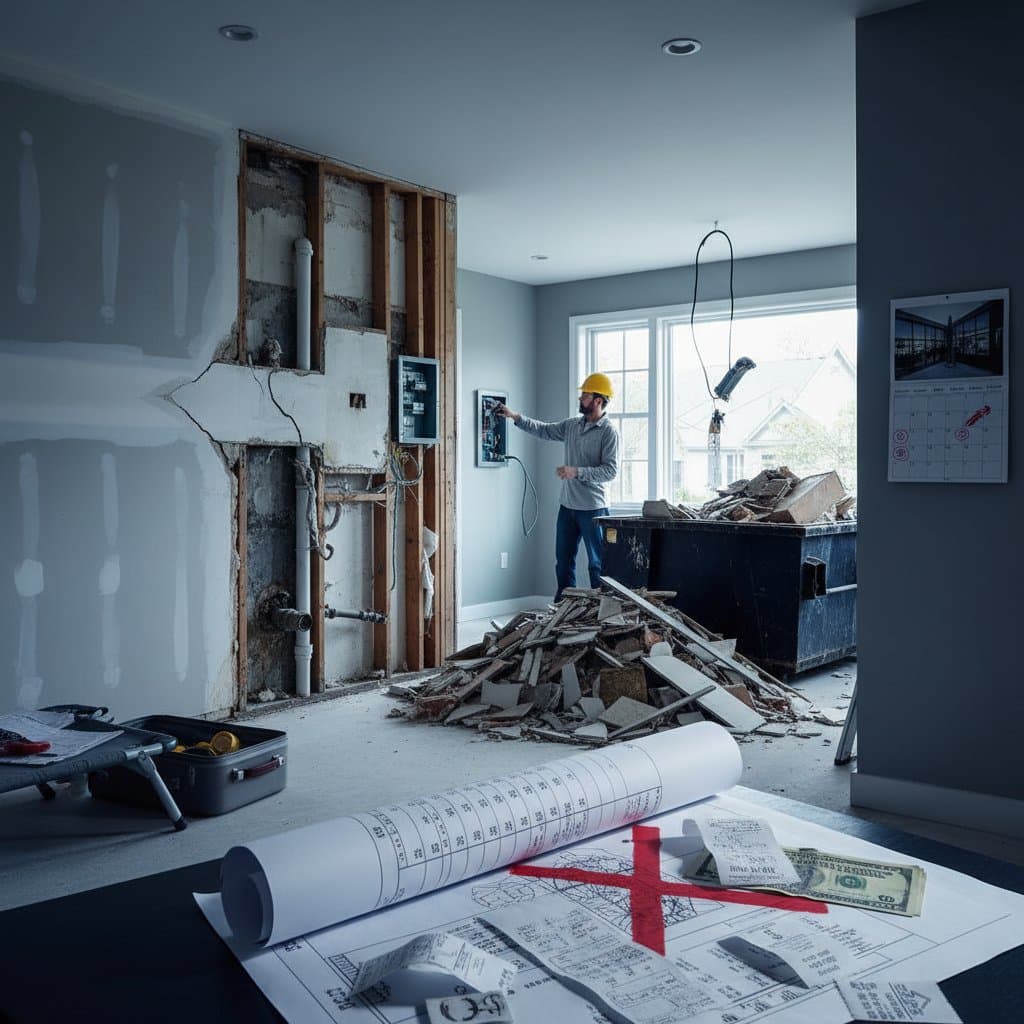
15 Unexpected Remodel Expenses That Shock Homeowners
According to the National Association of Home Builders Remodeling Impact Report, nearly 60 percent of homeowners exceed their initial renovation budgets. The primary cause involves hidden expenses that emerge during the project, rather than overdesigning or selecting luxury finishes. These costs, which include code compliance and disposal fees, can increase a remodel budget by 10 to 20 percent without early anticipation.
As a financial-first renovation planner, I have observed these overruns disrupt even the most disciplined budgets. Homeowners gain protection for their bottom line by identifying where surprise costs arise.
1. Structural Surprises Behind Walls
Demolition frequently reveals concealed issues such as rotted framing, termite damage, or compromised load-bearing beams. These discoveries can add thousands of dollars to the project total. Structural engineer Maria Lopez of BuildSafe Consulting notes, “Roughly one in four remodels we evaluate uncovers structural correction needs that were invisible during inspection.” Repairs typically range from $2,000 to $8,000, depending on the scope.
To address this, schedule a thorough pre-demolition inspection by a qualified engineer. Document any visible signs of damage, like soft spots in wood or uneven settling, during the initial walkthrough.
2. Electrical System Upgrades
Homes built before the 1980s often fail to meet current electrical codes. Installing new lighting, outlets, or appliances exposes outdated wiring or undersized service panels. HomeAdvisor market data indicates that full electrical upgrades average $3,000 to $10,000.
Prioritize safety by consulting a licensed electrician early. Request a load calculation to determine if the panel requires expansion, and integrate these upgrades into the initial bid to avoid mid-project disruptions.
3. Plumbing Replacements
Galvanized or corroded pipes commonly fail when new fixtures demand higher pressure. Master plumber Jason Finley of BlueLine Mechanical explains, “Many remodel budgets underestimate plumbing because it is hidden behind walls. Once you open a wall, you are committed to replacing lines if they fail inspection.” Allocate at least $1,500 to $4,000 for partial plumbing updates.
Mitigate risks by including a plumbing scope review in your pre-construction phase. Test water pressure and inspect visible pipes for rust or leaks before walls come down.
4. Permit and Inspection Fees
Local municipalities charge permits ranging from a few hundred to several thousand dollars, based on square footage and project complexity. Homeowners who neglect to research these fees face delays or fines for unpermitted work.
Protect your timeline by contacting the building department at the planning stage. Obtain an itemized fee schedule and factor it into your budget, ensuring all required inspections align with contractor availability.
5. Asbestos and Lead Remediation
Properties constructed before 1980 may harbor hazardous materials like asbestos or lead. Testing costs several hundred dollars, while full remediation can escalate to five figures. Environmental contractor Dana McCarthy from GreenSafe Abatement states, “Lead and asbestos removal are not optional once identified. Federal law mandates professional removal.”
Build in a contingency for environmental testing from the outset. Select contractors experienced in abatement to handle identification and compliance seamlessly.
6. Foundation or Subfloor Repairs
Uneven floors or cracked slabs often emerge during renovation. Foundation repairs average $4,000 to $12,000, per regional contractor databases, while subfloor replacement for rot or water damage adds $1,000 to $3,000.
If your home exhibits settling or moisture history, hire a foundation specialist for an assessment. Reinforce the budget with provisions for leveling or reinforcement to maintain structural integrity.
7. Drywall and Insulation Replacement
Opening walls exposes inadequate insulation or moisture damage. Upgrading to modern materials enhances energy efficiency but raises material and labor expenses. Expect $1 to $2 per square foot for a complete replacement.
Calculate potential costs by measuring wall areas in advance. Opt for high-R-value insulation to offset upfront expenses through reduced utility bills over time.
8. Waste Disposal and Dumpster Fees
Debris removal and landfill charges often escape initial estimates. Renting a 20-yard dumpster costs $400 to $800, varying by location, with extra fees possible for materials like drywall or treated wood.
Clarify disposal inclusions in contractor bids. Coordinate with local waste services to secure permits for dumpsters and minimize fees through efficient debris sorting.
9. Temporary Living Expenses
Major remodels of kitchens or bathrooms render homes unlivable for periods. Costs for alternative housing or meals add up rapidly. Financial planner Renee Carter of HomeBudget Advisors observes, “Clients often forget to factor in hotel stays or eating out during construction. That can add $2,000 or more over several weeks.”
Plan phased construction to limit disruptions. Reserve funds for short-term rentals or storage, and explore options like staying with family to control expenses.
10. Design Revisions and Change Orders
Minor adjustments to plans generate change orders, complete with markups for administrative efforts. These deviations from the original scope inflate costs unexpectedly.
Finalize all layouts, finishes, and selections prior to starting work. Reserve 5 percent of the budget for flexibility, and require written approval for any changes to track impacts.
11. Landscaping and Exterior Restoration
Construction equipment damages lawns, driveways, and irrigation systems. Restoring these elements post-project averages $1,000 to $5,000.
Prevent issues by using protective mats, fencing, and pathways during the build. Inspect and document site conditions before work begins to hold contractors accountable.
12. Code Compliance Upgrades
Building codes update regularly, potentially requiring updates beyond the remodel focus, such as smoke detectors, GFCI outlets, or egress windows. These additions cost hundreds to thousands of dollars.
Consult your general contractor on local code triggers early. Incorporate a compliance checklist into the project plan to address requirements proactively.
13. Delivery, Shipping, and Storage Fees
Shipping for cabinets, flooring, or custom items now accounts for 5 to 10 percent of material costs due to logistics challenges. Limited on-site storage may necessitate container rentals at $150 to $200 monthly.
Source materials locally when possible to cut freight charges. Plan delivery schedules to align with installation phases and secure off-site storage if needed.
14. Contractor Overhead and Insurance Adjustments
Bids cover profit and overhead but may exclude insurance hikes for scope expansions like added square footage. Such changes can raise labor costs by 2 to 5 percent.
Demand a detailed cost breakdown before contracting. Verify insurance coverage adjustments in writing to ensure transparency throughout the project.
15. Post-Project Cleaning and Touch-Up Costs
Achieving a polished finish demands professional cleaning at $300 to $800, plus extras like paint touch-ups or vent cleaning.
Schedule cleaning services as the final step. Allocate a small buffer for unforeseen touch-ups to ensure the space meets move-in standards.
Strategies to Control Remodel Costs
Proactive planning forms the foundation for managing these expenses. Develop an initial cost estimate with a 15 percent contingency fund. Scrutinize bids for omissions such as disposal or permits, and maintain a weekly spreadsheet comparing actual against projected spending.
Engage a certified construction accountant for robust tracking. Sarah Patel, CPA at Remodel Ledger Group, advises, “Homeowners who treat a remodel like a business project control costs better. Tracking expenses by category gives real-time visibility, helping you make informed trade-offs.”
Steps to Prevent Budget Overruns
-
Arrange a Comprehensive Pre-Remodel Inspection. Engage a structural engineer, electrician, and plumber to uncover issues before demolition begins.
-
Secure Detailed Contractor Bids. Require specifications on inclusions, exclusions, and hourly rates for change orders.
-
Confirm Permit Needs in Advance. Reach out to the local building department for a complete fee schedule.
-
Account for Living Arrangements. Sequence projects in stages and budget for temporary housing.
-
Establish a Financial Buffer. Retain accessible funds to handle surprises without halting progress.
Safeguarding Your Renovation Investment
Hidden costs challenge remodels, yet they often fund essential upgrades that enhance property value. View these expenses as investments in durability and efficiency.
Each project builds expertise in managing risks and resources. Future renovations benefit from refined budgets, realistic expectations, and maximized returns.