
2026's Game-Changing Mold-Resistant Remodel Materials
This article examines the most popular remodeling materials highlighted on leading design platforms during the recent season. Homeowners and professionals increasingly select mold-resistant options that deliver enhanced durability, improved indoor air quality, and extended service life for finishes. Rising awareness of moisture's role in interior degradation, particularly in areas like basements and bathrooms, drives this trend. The following selections demonstrate how innovative materials integrate scientific properties with aesthetic appeal to safeguard spaces while preserving visual elegance.
Restoring older homes while managing family life has taught me that moisture poses a persistent threat to any renovation project. These materials function not merely as barriers but as integral elements that sustain freshness and utility over extended periods.
1. Smart Cement Board
Smart cement board features a dense composition reinforced with glass fibers, which effectively repels water and inhibits mold development. In a Seattle townhouse bathroom project led by Maya Ortiz Studio, installers used this board as the substrate for glossy white Moroccan zellige tiles and matte black fixtures. This setup eliminates mildew risks behind walls, especially in high-humidity environments. The board's rigidity accommodates heavy tile loads, forming a robust, moisture-resistant enclosure that also dampens sound transmission. Homeowners gain a tranquil, enduring space that maintains both performance and appearance.
2. Polymer Drywall
Polymer drywall incorporates antimicrobial agents that prevent mold spore proliferation from the outset. Dale Benton Interiors applied this material in a Chicago River North loft renovation, substituting it for standard gypsum board. Coated with satin gray low-VOC paint, the panels resist humidity uptake and endure routine use. Designers complemented the setup with reclaimed oak shelving and a concrete-style countertop, achieving an urban sophistication that minimizes upkeep. This option suits high-moisture zones such as kitchens, laundry areas, and basements, providing a refined, professional surface.
3. Engineered Bamboo Flooring
Engineered bamboo flooring offers sustainability and strength, making it ideal for damp locations like entryways and mudrooms. Parker & Wynn Design Co. fitted strand-woven bamboo planks with a waterproof sealant in a Portland Craftsman-style residence. The caramel hues resist warping and mold, outperforming conventional hardwoods. Its layered design permits natural expansion without fractures, crucial in variable humidity conditions. The inherent grain pattern introduces warmth and tactile interest, appealing to households seeking resilient yet attractive solutions.
4. Recycled Glass Countertops
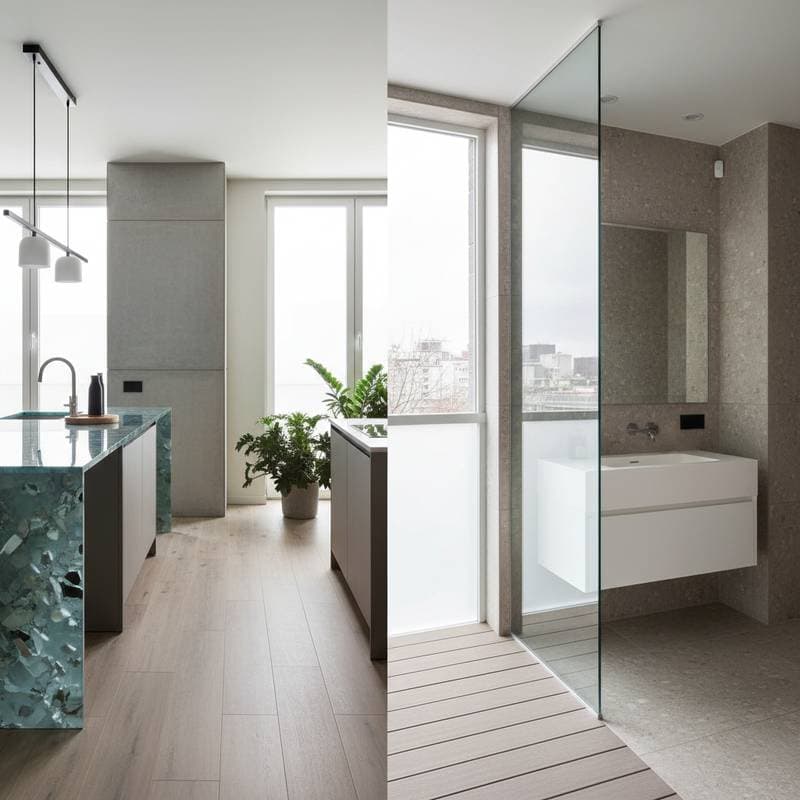
Recycled glass countertops combine crushed glass with resin binders, emerging as a preferred eco-friendly selection for renovations. Taryn Ellis Interiors incorporated pale blue versions in a coastal kitchen, where they reflect light alongside brushed nickel hardware and white oak cabinets. The nonporous nature blocks moisture penetration, denying mold the necessary environment to form. These surfaces also withstand stains from acidic foods or beverages, limiting reliance on abrasive cleaning agents. The result presents a luminous, contemporary finish with enduring versatility.
5. Mold-Inhibiting Paint
High-humidity areas like bathrooms and laundry rooms challenge wall finishes, where paint can either shield or succumb to moisture. The Clearwater Design Group applied mold-inhibiting paint in a San Francisco condo, selecting a soft dove gray shade. The formulation embeds micro-encapsulated biocides to sustain surface cleanliness. Layered over a moisture-resistant primer, it establishes a vapor-permeable shield that vents steam while repelling spores. This approach enhances light reflection, expanding the perception of space and underscoring how advanced coatings balance protection with sophistication.
6. PVC Trim Boards
Window and floor trim frequently encounters moisture, resulting in decay and fading. PVC trim boards address these vulnerabilities while replicating the precision of painted wood profiles. Harrison Built Homes integrated them in a Charleston renovation, positioning pieces around windows and baseboards. Impervious to water, the boards preserve clean lines and even textures in humid settings. Paired with navy cabinetry and brass hardware, they contribute to a resilient coastal aesthetic requiring little maintenance.
7. Waterproofing Membranes
Waterproofing membranes provide essential underlayment for tiled surfaces in wet areas. Studio Lowe Interiors installed a bright turquoise variant beneath porcelain flooring in a Brooklyn brownstone bathroom. The system secures joints and edges to halt water infiltration. Flexible enough to accommodate subfloor shifts, it averts cracks and seepage over time. Integrated with light gray grout and matte charcoal walls, the membrane fosters a contemporary spa ambiance, ensuring durability supports aesthetic goals.
8. Mold-Resistant Insulation
Insulation concealed within walls can foster mold if exposed to infiltrating moisture. Haven Build Collective employed closed-cell spray foam in a Denver project to occupy wall voids. This dense application repels water and closes potential condensation pathways. Paired with white oak paneling and black steel details, the interior conveys rustic refinement. Beyond mold prevention, the insulation improves thermal performance, moderating indoor temperatures seasonally for greater comfort and efficiency.
9. Composite Decking
Exterior areas endure relentless rain and humidity, where traditional wood decays rapidly. Composite decking, composed of recycled plastic and wood fibers, resists mold and color loss effectively. Riley & Co. Design Works extended deep espresso boards from a lakeside cabin's living area to the dock, unifying indoor-outdoor flow. Grooves on the surface shed water and enhance traction, while the fade-resistant coating maintains vibrancy. This material emulates wood's appeal without the associated deterioration or upkeep demands.
10. Porcelain Slab Walls
Large-format porcelain slabs revolutionize wet-zone applications in bathrooms and kitchens. Loma Studio mounted creamy panels with delicate veining behind a freestanding tub in an Austin minimalist home. The seamless, groutless installation conceals potential mold harbors, and the polished face cleans effortlessly. These slabs amplify spatial openness with their sculptural presence. Complemented by brushed brass fixtures and linen curtains, they elevate functional walls to luxurious, easy-care focal points.
11. Mold-Blocking Grout Additives
Tile installations risk failure through grout breakdown, which invites moisture and mold. Keene Tile & Design in Miami enhanced standard grout with a mold-blocking additive for a busy kitchen backsplash. Applied with subway tiles and matte black lines, the mixture yields a sharp, patterned effect. By sealing microscopic voids, the additive curtails water ingress and prolongs joint integrity, simplifying long-term care.
Selecting Materials for Enduring Renovations
Maintaining a record of tested materials in my home has prevented numerous issues across seasons. Homeowners can adopt a similar approach by evaluating options based on their balance of aesthetics and performance. Focus on selections that align with specific environmental challenges to achieve renovations that remain vibrant and secure for years.