Climate-Proof Kitchens for 2026 Flood Risks
Kitchens serve as the heart of the home, yet rising floodwaters threaten to damage cabinets, flooring, and appliances. Many assume contemporary designs guarantee strength, but climate change requires intentional resilience. A well-crafted kitchen can blend elegance with protection, ensuring it withstands water intrusion while supporting daily routines.
Professional guidelines draw from architecture, engineering, and real-world applications. These nine rules offer practical steps to fortify kitchens against floods. Implement them during renovations or new builds to safeguard investments and minimize disruptions.
Rule 1: Elevate Fixtures Six Inches Above Floor Level
Problem: Standard countertops, sinks, and cabinets rest at floor height, inviting immediate water damage during floods.
Context: In low-lying areas, even shallow flooding submerges lower elements, leading to widespread deterioration.
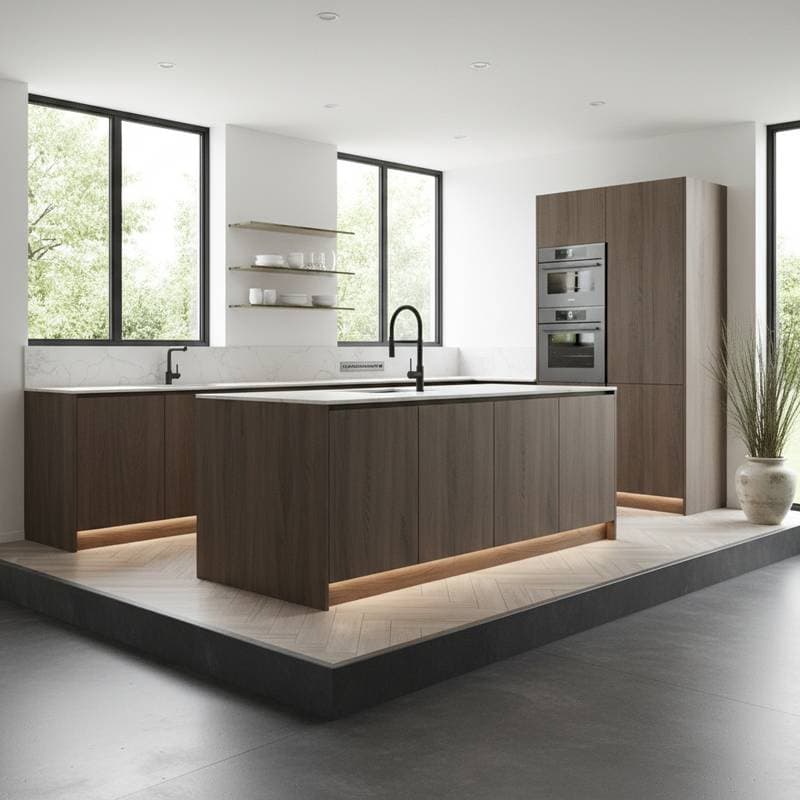
Solution: Raise base cabinets, sinks, and counter supports on pedestals or adjustable legs to achieve a six-inch clearance. Integrate this elevation into the overall layout for seamless access.
Technical Detail: Use corrosion-resistant supports like powder-coated steel frames that comply with building codes for seismic and flood zones.
Benefit: This elevation keeps critical components dry, simplifying cleanup and preserving structural integrity after water events.
Rule 2: Choose Non-Absorbent Materials
Problem: Particleboard and medium-density fiberboard expand and disintegrate upon water contact.
Context: Homeowners frequently find that apparent solid wood cabinets consist of engineered products with thin veneers.
Solution: Opt for marine-grade plywood, stainless steel, aluminum, or PVC for cabinet construction. Select quartz or sealed concrete for countertops over porous natural stones.
Technical Detail: Marine plywood endures temporary submersion without separating layers, while stainless steel in a brushed finish conceals scratches and fights rust.
Benefit: These materials repel moisture, dry rapidly, and maintain stability, which cuts down on post-flood replacements.
Rule 3: Improve Drainage Around the Kitchen Perimeter
Problem: Poor grading or clogged drains allow water to pool near entry points and under doors.
Context: Floods often start with external overflow that seeps indoors through thresholds or expansion joints.
Solution: Install sloped flooring toward central drains, add perimeter channels, and ensure exterior downspouts direct water away from the foundation.
Technical Detail: Use PVC or cast iron drains with debris guards, positioned to handle at least two inches of water per hour, in line with plumbing standards.
Benefit: Effective drainage routes water away quickly, preventing accumulation and reducing interior saturation risks.
Rule 4: Secure Appliances and Utilities Above the Threat Zone
Problem: Floor-level dishwashers, ovens, and refrigerators become inoperable when motors or wiring contact water.
Context: Submerged units require full replacement, escalating repair costs significantly.
Solution: Elevate compact appliances on sturdy platforms or brackets, and select models featuring sealed, waterproof casings. Route plumbing and electrical lines via overhead conduits or elevated wall mounts.
Technical Detail: Employ flexible stainless-steel hoses paired with ground-fault circuit interrupter outlets at chest height to satisfy electrical safety regulations.
Benefit: Protection enables rapid reactivation post-flood, limiting downtime and avoiding hazardous electrical issues.
Rule 5: Apply Waterproof Seals and Barriers
Problem: Gaps in flooring, walls, and joints permit water to infiltrate hidden areas, fostering mold growth.
Context: Even minor leaks during floods can spread damage if unsealed transitions exist between rooms.
Solution: Seal expansion joints with silicone caulk, install flood skirts around lower cabinets, and use epoxy coatings on concrete subfloors.
Technical Detail: Choose elastomeric sealants rated for submersion up to 24 hours, ensuring they bond to diverse surfaces like tile and wood.
Benefit: Barriers contain water exposure, easing inspection and remediation while inhibiting long-term moisture damage.
Rule 6: Design for Easy Disassembly and Repair
Problem: Fixed cabinetry and integrated panels complicate drying and repair efforts after flooding.
Context: Modular systems in past projects facilitated disassembly, drying, and reassembly in mere days, preserving resources.
Solution: Incorporate modular base cabinets, clip-on panels, and detachable toe spaces. Favor mechanical fasteners over permanent glues.
Technical Detail: Galvanized or stainless steel screws and clips withstand corrosion, allowing tool-free removal without hardware damage.
Benefit: Simplified access accelerates recovery, shortens disruptions, and lowers associated expenses.
Rule 7: Incorporate External Flood Defenses
Problem: Interior protections falter without addressing yard and foundation vulnerabilities to water ingress.
Context: Unmanaged landscaping or poor site grading channels runoff directly toward the home.
Solution: Add French drains, berms, or permeable paving around the perimeter. Elevate entry doors with sills or flood vents in garage-adjacent spaces.
Technical Detail: Install geotextile-lined gravel trenches that divert at least 10 gallons per minute, integrated with sump pumps for backup.
Benefit: External measures reduce indoor flooding probability, complementing internal designs for comprehensive defense.
Rule 8: Select Finishes for Durability, Not Just Appearance
Problem: Ornamental paints and plasters retain water, promoting stains and microbial growth.
Context: Kitchens face inherent humidity; floods amplify moisture retention in vulnerable surfaces.
Solution: Apply glossy, scrub-resistant paints or full-height waterproof panels. Steer clear of absorbent wallpapers or raw wood accents.
Technical Detail: Acrylic formulations exceeding Class III moisture resistance provide superior adhesion and vapor permeability in humid environments.
Benefit: Resilient finishes wipe clean effortlessly and deter mold, ensuring health and hygiene following water incidents.
Rule 9: Establish a Maintenance and Monitoring Routine
Problem: Neglected systems degrade over time, diminishing flood readiness.
Context: Regular checks reveal issues like seal cracks or drain clogs before they contribute to major damage.
Solution: Schedule annual inspections of seals, drains, and elevations. Integrate water sensors linked to alerts for early detection.
Technical Detail: Battery-operated sensors with app connectivity monitor humidity and flow, triggering notifications for proactive interventions.
Benefit: Ongoing vigilance sustains resilience, averting small problems from escalating during flood events.
Applying These Strategies to Your Kitchen
Flood-proofing demands proactive planning rather than reaction. These rules safeguard assets, streamline recovery, and prolong usability across all elements. Assess your space against each guideline to identify upgrades that deliver enduring security without altering everyday enjoyment.