
Open Shelving vs Cabinets: The 2026 Kitchen Cost Analysis
The National Kitchen and Bath Association Home Remodeling Outlook report highlights that kitchen renovations represent the largest home improvement expense, consuming over 25 percent of total budgets. Cabinetry alone comprises 30 to 35 percent of project costs, often tipping the scales toward budget overruns. Homeowners increasingly compare open shelving to traditional cabinets, making a clear grasp of financial implications vital for sound planning.
Core Challenge: Balancing Budgets and Storage Demands
Homeowners frequently prioritize visual appeal, envisioning airy shelves or streamlined cabinets. Quotes soon reveal the financial reality. Mid-range cabinetry spans from 8,000 dollars to more than 25,000 dollars, whereas open shelving seems to halve that amount at first. Hidden expenses, such as installation, structural reinforcements, and premium materials, quickly alter this perception.
Financial consultant Mark Ellison of HomeValue Strategies notes, “Many clients view open shelving as an immediate budget relief, but structural support, custom finishes, and robust brackets soon elevate costs to match basic cabinet setups.” Evaluate initial savings alongside durability, cleaning needs, and market perceptions for resale.
Industry Perspective: Relevance in 2026
Open shelving gains traction through minimalist designs and online inspirations. The Houzz Kitchen Trends Index indicates that 45 percent of homeowners consider incorporating open storage elements. Contractors observe, however, that only 20 percent of complete remodels adopt full open shelving; most opt for hybrids blending exposure with concealment.
General contractor Dana Ruiz of Pacific Build Group states, “Buyers link comprehensive cabinetry to superior quality. Kitchens with solid cabinets yield 10 to 15 percent better resale returns than those with entirely open configurations.” This dynamic requires weighing shelving economies against potential value loss upon selling.
Detailed Comparison: Step-by-Step Breakdown
Initial Pricing Overview
- Open Shelving: Simple floating shelves in pine or medium-density fiberboard begin at 50 dollars per linear foot, rising to 200 dollars for hardwood or metal designs.
- Traditional Cabinets: Ready-made units start at 150 dollars per linear foot; semi-custom or bespoke options surpass 500 dollars per linear foot.
Shelving appears advantageous initially, but replacing full cabinet capacity often requires twice the anticipated shelf count, as design reviews confirm.
Installation and Structural Factors
Secure open shelving demands anchored brackets and bolstered wall studs, especially for weighty items like dishes or pots. Labor rates range from 50 to 100 dollars hourly, mirroring cabinet work, with preparatory wall modifications adding hundreds more.
Cabinet setup for an average kitchen costs 2,000 to 5,000 dollars. Assembled or modular kits lower this, yet expert installation guarantees alignment and endurance.
Upkeep and Durability Assessment
Exposed shelves leave dishes, glasses, and tools vulnerable to kitchen grime and particles. Weekly cleaning becomes routine in busy spaces. Cabinets shield contents and exteriors, minimizing effort and extending surface life.
Maintenance expert Laura Greene, experienced in over 300 Midwest projects, observes, “Clients overlook the time investment. Open shelving cuts initial costs by thousands, yet monthly cleaning accumulates into substantial hidden expenses.”
Design and Practical Utility
Cabinets excel in organization and safeguarding, incorporating features like pull-out trays, rotating shelves, and gentle-closing mechanisms for enhanced usability. Shelving promotes an open feel ideal for compact areas but demands vigilant clutter management over concealed options.
Full Cost Breakdown: Lifecycle View
True comparisons demand examining the entire ownership period, beyond mere materials.
| Cost Element | Open Shelving | Cabinets |
|---|---|---|
| Materials | 1,000–3,000 dollars | 6,000–15,000 dollars |
| Labor | 1,500–3,000 dollars | 2,500–5,000 dollars |
| Finishes and Coatings | 400–800 dollars | 600–1,200 dollars |
| Five-Year Maintenance | 600–1,000 dollars | 300–600 dollars |
| Resale Value Impact | Moderate | High |
Data from Zonda Media Remodeling Cost reports show shelving trims upfront outlays by 30 to 40 percent, but long-term advantages diminish when including upkeep and market effects.
Optimization Tactics: Value Engineering
Value engineering in construction optimizes expense, utility, and style. For kitchens, integrate shelving and cabinets thoughtfully.
Effective Hybrid Tactics:
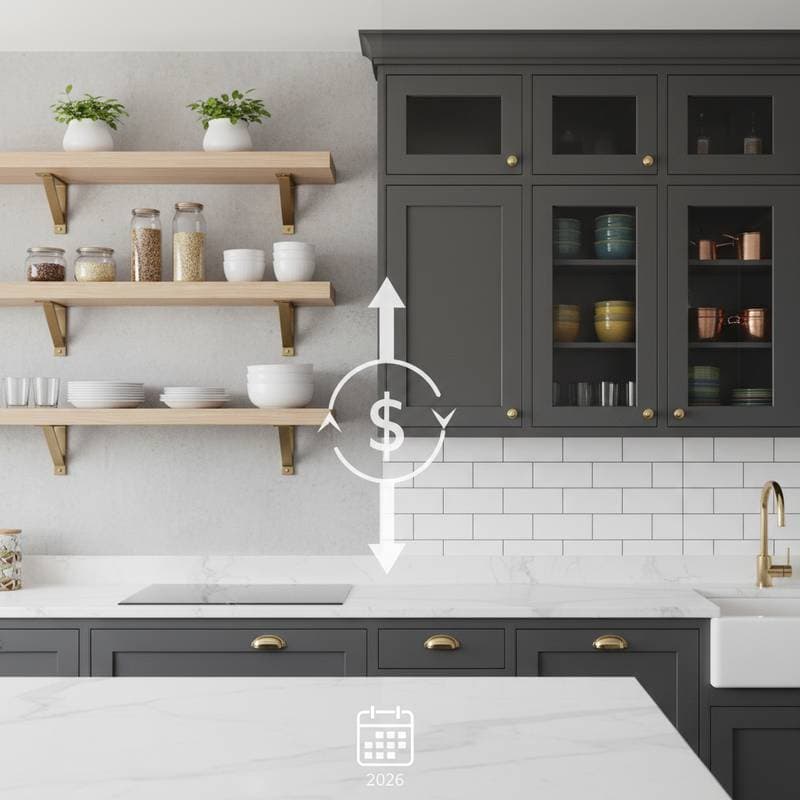
- Upper Shelves Paired with Base Cabinets: Preserves openness above while securing essentials below.
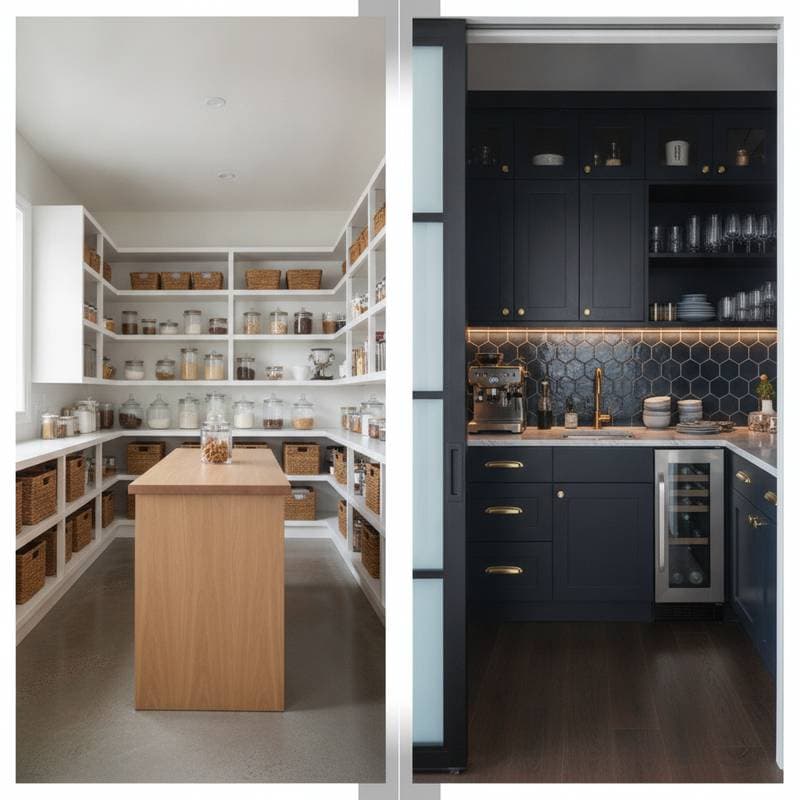
- Supplemental Pantry Units: Liberates walls for shelves without forfeiting concealed space.
- Accent Floating Shelves: Introduces flair selectively, avoiding comprehensive redesigns.
These blends cut cabinet expenses by 15 to 20 percent while upholding protective storage benefits.
Avoiding Errors: Key Risks and Solutions
Risk 1: Overlooking Wall Integrity
Aged structures with irregular surfaces or frail supports may require up to 1,000 dollars in reinforcements.
Risk 2: Exceeding Load Capacities
Shelves beyond 20 to 25 pounds per foot invite collapse. Verify bracket strengths and material weights prior to setup.
Risk 3: Subpar Material Selection
Composite boards warp in moist environments. Opt for dense hardwoods or coated metals for longevity under humidity.
Risk 4: Bypassing Expert Guidance
Amateur installations yield inconsistencies. Hire a certified designer for under 1,000 dollars to refine plans and avert revisions.
Essential Experts: Planning Resources
Involve qualified specialists from the outset. Key allies include:
- Certified Kitchen Designers (CKBD): For precise layouts and capacity assessments.
- Licensed Contractors: To deliver reliable cost projections.
- Property Appraisers: To forecast sales impacts pre-project.
Appraiser Brian Matthews of Urban Equity Valuations comments, “Appraisals favor cabinet-equipped kitchens for higher worth in family suburbs. Urban apartments may value polished open shelving for contemporary appeal, provided high-end execution.”
Practical Budgeting: Reality Assessment
Allocate 10 to 15 percent contingency for surprises like delays or fixes. Side-by-side pricing with uniform measurements clarifies choices.
Essential Budget Review:
- Inspect walls pre-demolition.
- Quote equivalent layouts for both systems.
- Factor hardware, treatments, and sealants.
- Reserve funds for routine care.
- Secure three professional bids.
Track expenditures meticulously to sidestep impulsive spending during execution.
Informed Choices: Long-Term Framework
Decisions hinge on habits, upkeep willingness, and future sales objectives, not just looks.
Ideal Scenarios for Open Shelving:
- Frequent cooking requires quick item retrieval.
- Strong airflow limits residue accumulation.
- Modern, ventilated style with curated displays appeals.
Cases Favoring Cabinets:
- Imminent home sale demands proven value.
- Extensive hidden storage and low-maintenance suit needs.
- Emphasis on resilience and returns exceeds temporary economies.
Sustaining Your Kitchen Choice
Post-installation, diligent care maximizes returns. For shelves, regularly secure fasteners, refresh wood protections, and use mild cleaners to prolong service. Cabinets benefit from hinge checks and front renewals to sustain performance and appearance over years.