
The Real Value in Open-Concept Kitchen Remodels
Walk into ten remodeled homes, and you will likely see ten different versions of an open kitchen. Some feature sleek and minimal designs, while others embrace warm and rustic elements, yet they all share one goal: connection. Behind the variety of finishes and layouts lies a consistent set of principles that determine whether an open-concept kitchen truly functions well. Homeowners often pursue aesthetics without recognizing that the real value emerges from thoughtful planning, functional flow, and structural foresight.
As an architect who has redesigned dozens of kitchens, I have witnessed both the rewards and the regrets. These golden rules separate a successful open-concept remodel from a costly disappointment. They begin with foundational structure and progress to details that enhance daily living.
1. Engineer Structural Integrity First
Problem: Removing load-bearing walls without adequate support risks sagging ceilings, cracked floors, or even structural failure over time.
Context: Many homeowners underestimate the engineering required, leading to rushed installations that compromise safety and longevity.
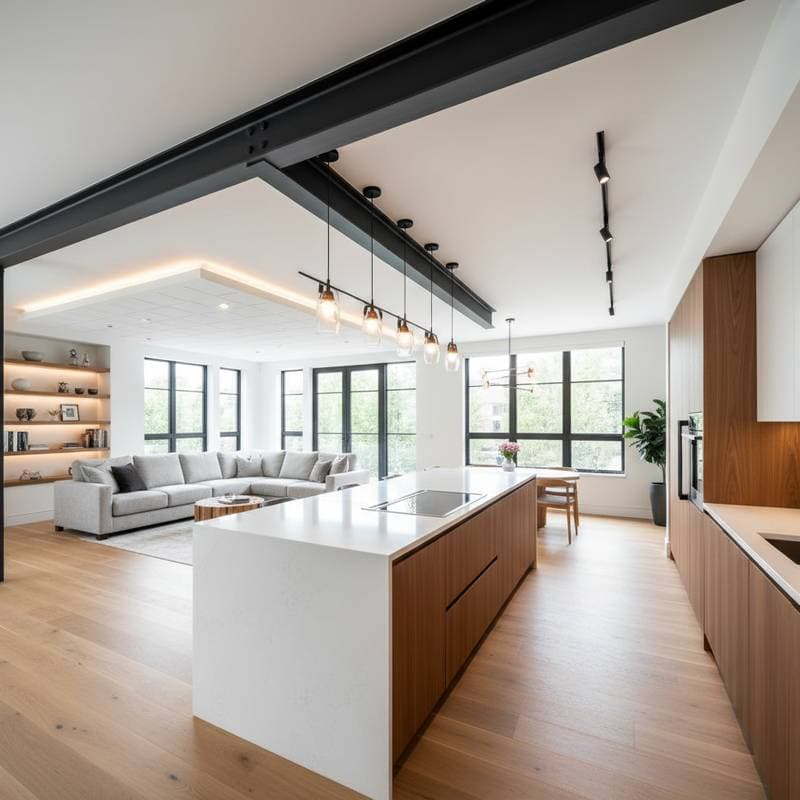
Solution: Consult a structural engineer early to assess load paths and design appropriate support systems. Replace removed walls with steel or laminated veneer lumber (LVL) beams hidden within the ceiling or as design features.
Technical detail: Beams must be sized based on span length, load capacity, and local building codes; for a typical 12-foot span, a 9.25-inch LVL beam with 11.875-inch depth often suffices. Ensure proper footings and connections with steel plates to distribute weight evenly.
Benefit: A solid foundation ensures safety, prevents future repairs, and allows the open layout to remain stable for decades.
2. Define Zones to Prevent Chaos
Problem: Removing walls blurs functions, causing appliances, seating, and circulation paths to compete for space.
Context: Homeowners frequently create beautiful yet confusing layouts where traffic interrupts cooking areas and guests obstruct access to the refrigerator.
Solution: Establish invisible boundaries through ceiling height variations, distinct flooring materials, or strategic furniture placement. For instance, position the kitchen island parallel to the cooking wall to direct traffic around the work triangle instead of through it.
Technical detail: Provide at least 42 inches of clearance between counters and islands for single-cook setups, or 48 inches for households with two cooks. Employ pendant lighting fixtures or a subtle soffit to delineate the cooking zone from dining areas visually.
Benefit: The space stays open while maintaining organization, which supports cooking efficiency alongside social interaction.
3. Address Acoustics to Avoid Echoes
Problem: Open layouts amplify noise from cooking, conversations, and appliances, creating an overwhelming auditory environment.
Context: Families often discover that clattering pots or lively dinner discussions reverberate uncomfortably throughout the connected living areas.
Solution: Incorporate sound-absorbing materials such as area rugs, upholstered seating, and acoustic panels disguised as artwork or backsplashes. Select appliances with quieter operation ratings and position noisy elements away from gathering spots.
Technical detail: Aim for surfaces with a noise reduction coefficient (NRC) of 0.5 or higher; for example, fabric-wrapped panels or cork flooring can achieve this without altering aesthetics. Layer soft furnishings to reduce echo by 20 to 30 percent in large volumes.
Benefit: A balanced soundscape fosters comfortable conversations and focused tasks, making the open kitchen a harmonious hub.
4. Prioritize Ventilation as Much as Design
Problem: Inadequate ventilation allows cooking odors and grease to permeate open spaces rapidly.
Context: A stylish yet weak recirculating hood appears suitable in a showroom but proves ineffective during actual heavy cooking sessions.
Solution: Select a vented hood that exhausts directly to the exterior. Align the hood's cubic feet per minute (CFM) rating with your cooktop's width and heat output, opting to slightly oversize for open layouts to account for air currents.
Technical detail: A 36-inch gas cooktop generally requires a 600 CFM hood with at least 6-inch diameter ducting. Comply with local codes by installing makeup air systems to maintain balanced indoor pressure.
Benefit: Cleaner air circulation minimizes residue on surfaces and preserves a fresh atmosphere that enhances everyday usability.
5. Design Lighting for Function and Ambiance
Problem: Open layouts welcome abundant daylight but often introduce glare on reflective surfaces or electronic screens.
Context: Installing large windows near the kitchen might result in morning sunlight that blinds users during breakfast preparations.
Solution: Layer natural and artificial lighting while incorporating glare controls. Opt for matte finishes on countertops and cabinetry, paired with adjustable blinds or solar shades. Explore light shelves or high transom windows to distribute illumination evenly.
Technical detail: Choose glazing with a solar heat gain coefficient (SHGC) of 0.25 to 0.35 to mitigate heat and glare while retaining brightness. Matte quartz countertops reflect less than 10 percent of light, unlike polished stone alternatives.
Benefit: Thoughtful lighting delivers a comfortable, serene setting that remains welcoming across varying times of day.
6. Rethink Storage Before Removing Walls
Problem: Open kitchens sacrifice upper cabinets when walls disappear, potentially leading to insufficient storage or cluttered counters.
Context: One client demolished two full walls only to later discover limited space for pantry items, resulting in expensive and awkward retrofits.
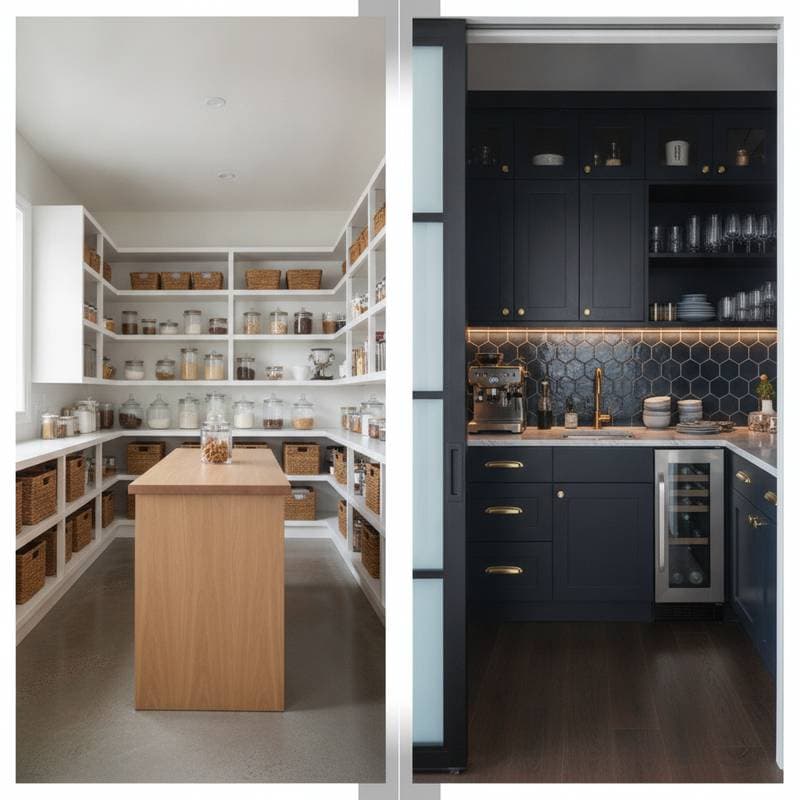
Solution: Incorporate deep drawers, tall pantry units, or a concealed storage wall adjacent to the primary kitchen area. If feasible, add a walk-in pantry or butler's alcove for specialized needs.
Technical detail: Design base drawers to extend at least 21 inches deep to accommodate pots and pans. Pantry shelves spaced 12 to 16 inches deep offer optimal capacity and reach. Integrate pull-out trays for improved ergonomics.
Benefit: Generous, systematic storage maintains the open aesthetic as clean and practical without compromising accessibility.
7. Plan for Flexibility Over Time
Problem: Life circumstances evolve, yet open kitchens built too rigidly fail to adapt to changing family dynamics.
Context: A couple might initially appreciate a large island for entertaining but later desire additional storage or a dedicated workstation with the arrival of children.
Solution: Build in adaptable features such as modular islands, repositionable furniture, or adjustable lighting tracks to reconfigure focal points. Include provisions like hidden conduits or capped plumbing lines for future modifications.
Technical detail: Employ removable island panels to hide potential wiring paths. Install adjustable shelving with 32-millimeter hole spacing for straightforward rearrangements.
Benefit: The kitchen remains pertinent and efficient through the years, safeguarding both investment and household comfort.
Sustaining Functionality in Your Open Kitchen
Applying these rules during the planning phase ensures your open-concept kitchen transcends trends to deliver enduring performance. Structural soundness forms the base, while details like zoning, acoustics, and adaptability create a space that evolves with your lifestyle. The result is a home where form supports function, fostering connections that enrich daily life without ongoing frustrations.