Mastering Two-Tone Cabinets on a Budget in 2026
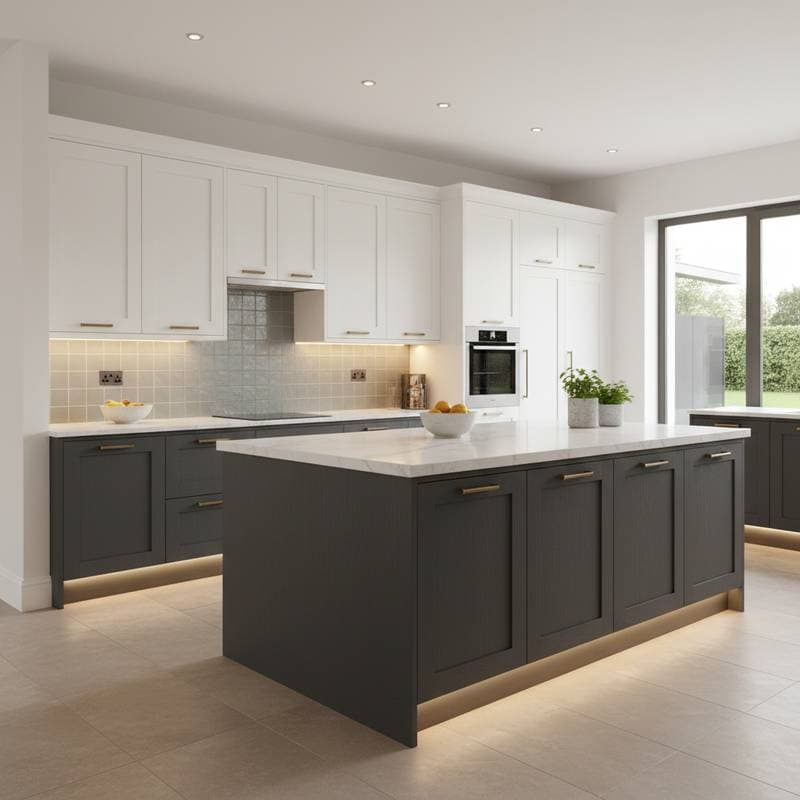
Kitchen design trends evolve rapidly, but two-tone cabinets maintain enduring appeal. This approach pairs contrasting finishes, such as deep lower cabinets with airy upper ones, to add depth and interest without dominating the space. Homeowners often admire the sophistication yet worry about expenses. Thoughtful budgeting reveals opportunities to allocate funds efficiently, ensuring quality remains intact.
Professional guidance highlights precise cost drivers, from materials to labor. The following eight rules provide a framework for designing and installing two-tone cabinets confidently. Each rule addresses a potential pitfall and offers practical solutions to optimize spending.
1. Assess Your Kitchen Layout First
Problem: Overlooking the room's dimensions leads to mismatched cabinet proportions and inflated costs.
Solution: Measure the space thoroughly and sketch a layout before selecting colors or materials.
Technical detail: Account for traffic flow, appliance placement, and wall angles to determine cabinet depths and heights accurately.
Benefit: A tailored plan prevents costly adjustments during installation and ensures harmonious proportions.
2. Plan the Split Line Early
Problem: Deciding the color break after installation often results in awkward transitions.
Solution: Define the division point during the initial design phase.
Technical detail: Position the split at natural breakpoints, like countertop level or pantry edges, for seamless integration.
Benefit: The design appears deliberate, enhancing overall cohesion.
3. Choose Complementary Colors Wisely
Problem: Selecting mismatched tones disrupts visual balance and may require repainting.
Solution: Pair hues that harmonize, such as navy bases with white uppers or walnut lowers with gray uppers.
Technical detail: Consult color wheels to ensure adjacent shades provide contrast without clashing; test samples in the actual lighting.
Benefit: Complementary choices amplify the room's appeal and avoid future modifications.
4. Balance Cost With Material Type
Problem: Uniform high-end materials across all cabinets strain the budget unnecessarily.
Solution: Apply premium options to focal areas and budget-friendly alternatives to less prominent sections.
Technical detail: Opt for solid hardwood or quality veneer on visible surfaces like islands, while using painted MDF or thermofoil for hidden panels.
Benefit: This strategy delivers a luxurious appearance at a controlled per-linear-foot price.
5. Optimize Cabinet Dimensions for Efficiency
Problem: Standard sizes may not fit uniquely shaped kitchens, leading to custom fees.
Solution: Customize dimensions modestly to match the space, focusing on modular components.
Technical detail: Use adjustable shelving and stackable units to minimize waste; aim for widths between 12 and 36 inches where possible.
Benefit: Efficient sizing reduces material use and labor time, keeping total costs down.
6. Factor in Professional Painting
Problem: Amateur painting frequently yields inconsistent results that compromise durability.
Solution: Hire skilled professionals for application to guarantee even coverage.
Technical detail: Professional spraying in a dust-free setting ensures uniform thickness and precise color matching across tones.
Benefit: Superior finishes withstand daily wear, preserving the kitchen's polished look over time.
7. Negotiate Installation and Hardware Costs
Problem: Fixed pricing for labor and accessories overlooks opportunities for savings.
Solution: Compare quotes from multiple contractors and bundle services for discounts.
Technical detail: Select soft-close hinges and pulls in bulk; schedule installation during off-peak seasons to lower rates.
Benefit: Strategic negotiations trim expenses without affecting quality or functionality.
8. Add Lighting to Connect the Tones
Problem: Inadequate illumination diminishes the contrast and texture of dual finishes.
Solution: Incorporate targeted lighting to accentuate the two-tone elements.
Technical detail: Install under-cabinet LEDs at 3000K for warm wood accents or 4000K for cool painted surfaces; layer with overhead recessed lights.
Benefit: Effective lighting unifies the palette, improves usability, and creates an inviting atmosphere.
Achieving Lasting Value in Your Kitchen
Two-tone cabinets thrive through integrated planning that prioritizes durability and aesthetics. Allocate resources to critical elements like robust materials and expert installation, while economizing on peripheral details. This balanced approach yields a kitchen that combines practicality with visual intrigue, offering long-term satisfaction and efficiency.