
Understanding Biophilic Design in Modern Kitchens
Picture entering a kitchen where tension eases immediately. Soft light filters through, a subtle herbal scent lingers, and countertops evoke the texture of ancient wood. This experience defines biophilic kitchen design, which incorporates organic materials, fluid forms, and verdant elements into a practical, rejuvenating environment.
A recent survey of interior trends reveals that over 50 percent of homeowners emphasize connections to nature in kitchen renovations. This approach favors textured surfaces over artificial ones and prioritizes serenity. Although biophilic elements increase initial costs, substantial justification exists in their enduring advantages.
The following sections examine methods to infuse natural influences into kitchens while managing expenses effectively.
Motivations Behind the Shift to Natural Kitchens
The global health crisis highlighted deficiencies in home designs for emotional health. Kitchens, central to daily life, hosted a spectrum of activities and feelings. Homeowners now seek environments that promote peace.
Ben Foster, a sustainability consultant with 15 years sourcing eco-friendly materials, observes that the change stems from both sentiment and utility. "People recognize that natural materials age gracefully. A stone countertop gains patina. A wooden island narrates history. Design extends beyond appearance to endurance."
Research on interior settings demonstrates that exposure to natural light and organic substances lowers stress levels and boosts focus. Preparing coffee in such a space aligns with natural cycles, enhancing the ritual's restorative quality.
Strategies for Cost-Effective Implementation
Achieving a biophilic kitchen requires no extreme financial measures. Prioritize elements that maximize impact with minimal outlay.
Select High-Impact Additions on a Budget
Strategic choices amplify the natural feel without overwhelming costs.
- Opt for open shelving from reclaimed timber instead of bespoke cabinets to display pottery and herbs.
- Select laminate surfaces mimicking stone textures if authentic marble exceeds the budget.
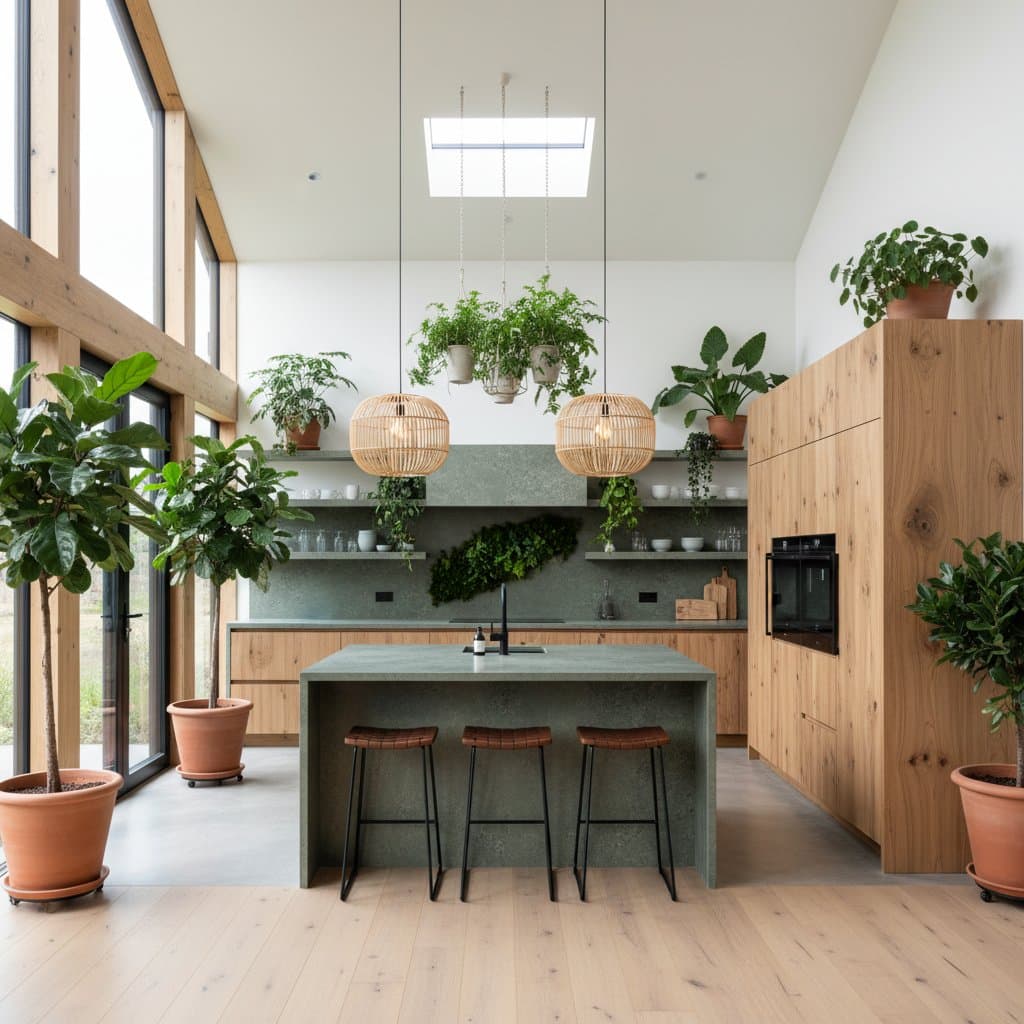
- Introduce one focal plant, like a fiddle-leaf fig, to animate unused areas with vitality.
Blend Authentic and Simulated Materials
Pair real elements with durable replicas to extend funds. Quartz slabs featuring veined patterns replicate granite's allure while offering superior resistance to spills at a reduced price point.
Tackle Simple Tasks Independently
For those skilled in basic projects, self-managed elements cut labor expenses significantly. Mount shelves, apply low-VOC paints to cabinets, or assemble wall-mounted planters to personalize the space.
Account for Upkeep Requirements
Natural components demand regular attention. Seal wooden features periodically, clean stone gently, and ensure plants receive adequate illumination. Allocate funds for these routines to safeguard long-term performance.
Pitfalls to Sidestep in Biophilic Projects
The apparent straightforwardness of biophilic design conceals potential errors.
- Excessive plant integration creates disorder and humidity issues in functional areas.
- Neglecting illumination angles diminishes the vibrancy of textures and foliage; incorporate windows or mirrors strategically.
- Overlooking air circulation allows scents and dampness to permeate porous surfaces; install robust exhaust systems.
- Favoring visuals over utility, such as untreated wood in high-traffic spots, invites damage; reserve such choices for less demanding surfaces like islands.
Adapting Biophilic Elements to Local Contexts
Climate and available resources shape biophilic applications uniquely.
- Coastal locales incorporate pale timbers, woven fibers, and oceanic hues for breezy atmospheres.
- Mountainous or wooded regions emphasize slate, rugged stone, and deep wood tones to echo surroundings.
- City dwellings utilize vertical planters and artificial daylight sources to simulate outdoor connections despite space constraints.
Luis Moreno, contractor at GreenBuild Partners, advises, "We guide clients toward local materials. This approach lowers expenses, bolsters community economies, and aligns designs with regional character."
Such tailored selections not only refine visual cohesion but also elevate property desirability, as eco-aware buyers value these attributes.
Harmonizing Technology with Organic Aesthetics
Embracing nature does not preclude contemporary features. Conceal or integrate devices seamlessly.
- Install appliances with panels matching surrounding cabinetry for unobtrusive integration.
- Equip spaces with sensor-activated faucets in subdued metallic finishes to maintain subtlety.
- Deploy intelligent lighting that shifts warmth to emulate daylight progression, enhancing natural rhythms.
Effective execution renders technology a supportive backdrop rather than a distraction.
Assessing Enduring Financial and Lifestyle Returns
Biophilic kitchens frequently command higher market prices. Real estate professionals note premiums for properties featuring resilient, nature-aligned elements. These spaces resist obsolescence, unlike fleeting styles.
Upkeep expenses often decrease over time. Refinishing stone or wood extends usability, minimizing replacements and environmental impact.
Steps to Launch Your Biophilic Remodel
Begin by clarifying personal interpretations of nature integration, whether through abundant greenery or subtle textures. Establish a feasible budget aligned with property worth and objectives.
- Define an overall expenditure limit considering home valuation and desired outcomes.
- Allocate premium natural finishes to primary interaction zones.
- Obtain itemized estimates from builders, mandating eco-sourced specifications.
- Consult specialists on durable substitutes that preserve organic essence.
Reserve 10 percent of funds for unforeseen issues. During the build, anticipate temporary inconveniences from debris and noise. The result yields a sanctuary that elevates routine tasks into serene experiences.
Biophilic design transcends trends to forge sustained bonds with the natural world, nurturing health and fiscal prudence. Envision mornings with light dancing on textured surfaces, fresh herbs nearby, and an invigorating ambiance. This choice rewards future routines with genuine vitality.